
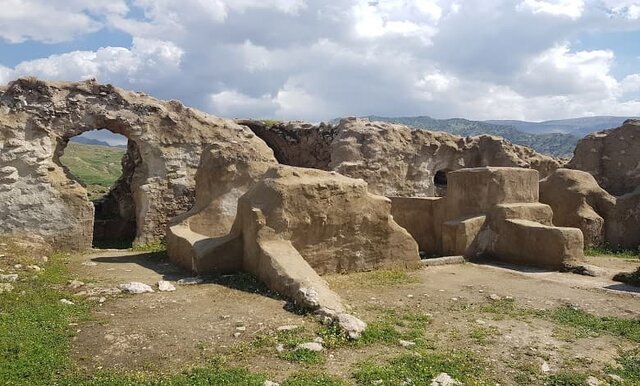
Tehran – The ancient city of Sylvan in Ilam, known for its unique architecture, exists as evidence of the rich regional civilizations of the Sassanid period and early Islamic centuries, according to prehistoric archaeology expert Habibora Mahmoudian.
He told ISNA that comparing the city with Seymareh (Darrehshahr) shows similarities in the architectural style, the type of arches and the materials used.
Mahmoudian added that the architectural style of the Silvan buildings is comparable to several monuments such as the ancient city of Sheimare and the castle on the slopes of Mount Kabir Kou, as well as the slopes of the castles of Sheikh Makan and Bharam Chobin, and that the Cham Abu Bardehe Bridge near Darshaar is also considered one of these memorabilia.
Comparing the remaining buildings in Seimare with the buildings in Sylvan, he said that important similarities are observed in the style of the building, the type of arch, and the materials used. All the buildings in Darrehshahr were made of ble tiles on the river. Seimare is a city with palaces, caravan seras and various homes, many of which still stand.
Archaeologists explained that most of the alleys and streets of this ancient city are regularly investigated and planned. French archaeologist Des Morgan wrote about the buildings in Seimare (now Darhashar) that the house usually consists of a single floor on a ground level with a painted arch.
Mahmoudian explained that the tile bleach used in the Seimare building comes from the banks of the Simare River and is of the same type of bleach used in the construction of Silvan city. The plaster used in both cities was obtained from the surrounding mountains and hills, and the roofs of the buildings in both cities were built in dome shapes or crescent arches, he added.
He continued that Seyfola Kambavschfad wrote in an article entitled “Dallehar.” “Currently, these sites have signs of arches and curves.
“In many cases, the arches show the change in architectural form from Sassanid to the Islamic era. These changes and the new style of Dalhara are phenomena that represent two schools of architecture that change together for some reason.
Mahmoudian concluded that, taking into account the cases mentioned, Sirvan was one of the ancient cities of the contemporary era of Seymareh city (now Darhshahr), and that it can be concluded that the architectural styles of the two cities are roughly the same and comparable. He said Silvan was also an important and honorable city during the Sassanid period and the early centuries of Islam, and had a suitable place for social life due to its favorable natural and climatic conditions, water resources and fertile land. The city’s architecture is comparable to the ancient city of Seimare in terms of architectural style, crescent arches and material types, he added.
Regarding the cultural identity of the region, he stated that ancient cities, castles, squares, fortified fortress, ruins of pottery, stone-made ceramics, stone blades and tools density are visible evidence and cultural identity indicating human settlements during different historical periods.
Mahmoudian added that the historic and ancient regions on the banks of the Silvain River are located at the foot of Charmin Heights and close to mountains and plains, temperate climate, rich water resources, and the fertile land and irrigation lands of this geographical area.
He said that while the low valley of Sarab-e-Callan on the banks of the Servan River is warmer, the ancient city of Sylvan is a temperate mountainous region.
KD