
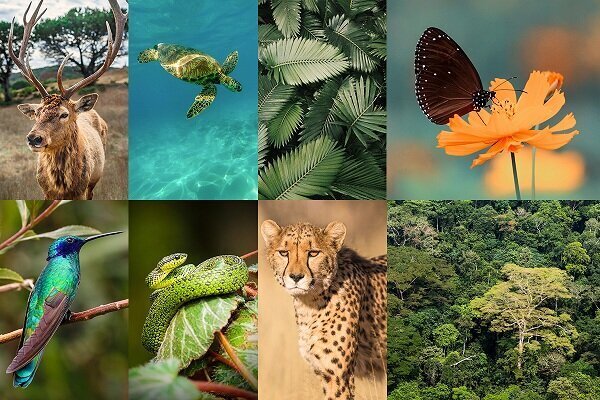
Tehran – The Ministry of the Environment (DOE) revised its comprehensive plan and set strategic goals for the conservation and sustainable use of biodiversity for the Iranian calendar year from 1430 (March to March 2051).
In May, President Masoud Pezeshkian issued an order, requiring the DOE to prepare a comprehensive plan for the conservation of the country’s biodiversity, covering various environmental sectors.
Several meetings were held in the line with the participation of faculty, environmental experts, managers and NGOs, the IRNA reported.
During the meeting, participants agreed to five key goals. It promotes biodiversity integrity and resilience, conserves biodiversity for sustainable use, equitably share benefits from genetic resources, raise public awareness, enhance expertise, strengthen effective biodiversity management, and strengthen national mechanisms to implement financial activities.
Finally, the National Biodiversity Conservation Program will be amended by the relevant executive bodies, academic experts and non-governmental organizations under the National Biodiversity Strategy and Action Plan (NBSAP3) for approval by the DOE.
Preservation of endangered species
According to the latest report from the International Union for Conservation of Nature (IUCN), around 154 Iranian vertebrates are extremely at risk of extinction.
Iran is a rich country in terms of biodiversity, with around 37,500 species and over 8,000 plant species. Additionally, it is home to 579 bird species, 214 mammal species, 284 reptile species, 23 amphibian species, 309 freshwater fish species, and 763 marine fish species from the Persian Gulf, Oman Sea and Caspian Sea.
In addition, approximately 35,283 invertebrates have been identified in the country, of which more than 32,600 are arthropods. Over 94% of the country’s animal species diversity belongs to invertebrates, with less than 6% for vertebrates. At least 26,800 species of insects account for more than 70% of the country’s total species.
Asian cheetahs and ostricis are one of the species that has lost their natural population to under the age of 25, but are at risk of extinction. Furthermore, there are five species of Caspian sturgeons, which are unique in the world, disappearing from the waters of Caspia.
Extinction of species is a natural phenomenon, but the rate at which they disappear is a concern, according to experts. Unfortunately, the current rate of extinction is accelerating in the present era due to human activity. It will have serious consequences for ecosystems and planetary well-being.
Referring to the country’s biodiversity, DOE official Hamid Zorabi said, “Sadly, the unsustainable exploitation of biological resources has affected and destroyed ecosystems in several areas.”
Officials made their remarks on the occasion of World Biodiversity Day, celebrated annually on May 22nd.
DOE is in charge of the Convention on Biodiversity. The three main objectives of the treaty include saving biodiversity, promoting sustainable use of natural resources, and equal sharing of biodiversity benefits.
To realize these goals, community involvement is required. Environmental protection must be sustainable and social and economic factors must be taken into consideration in the planning, officials noted.
When it comes to water resource management, the situation is unfavourable as one of the most important ecosystems in maintaining biodiversity.
Almost a majority of the country’s wetlands are depleted. With many rivers depleted or becoming seasonal rivers, these ecosystems effectively lose most of their biodiversity conservation capabilities.
Forest ecosystems are also in extremely unstable and inappropriate conditions. Forest ecosystems are degraded for many reasons, including fires and uncontrolled livestock grazing. This leads to pests and diseases controlling the ecosystem. Soil erosion increased, and sand and sandstorms became more common.
The first meeting on the development of a strategic plan for the conservation of the country’s biodiversity will be held with expert participation and will continue until the plan is completed, Zohrabi noted.
mt/mg