
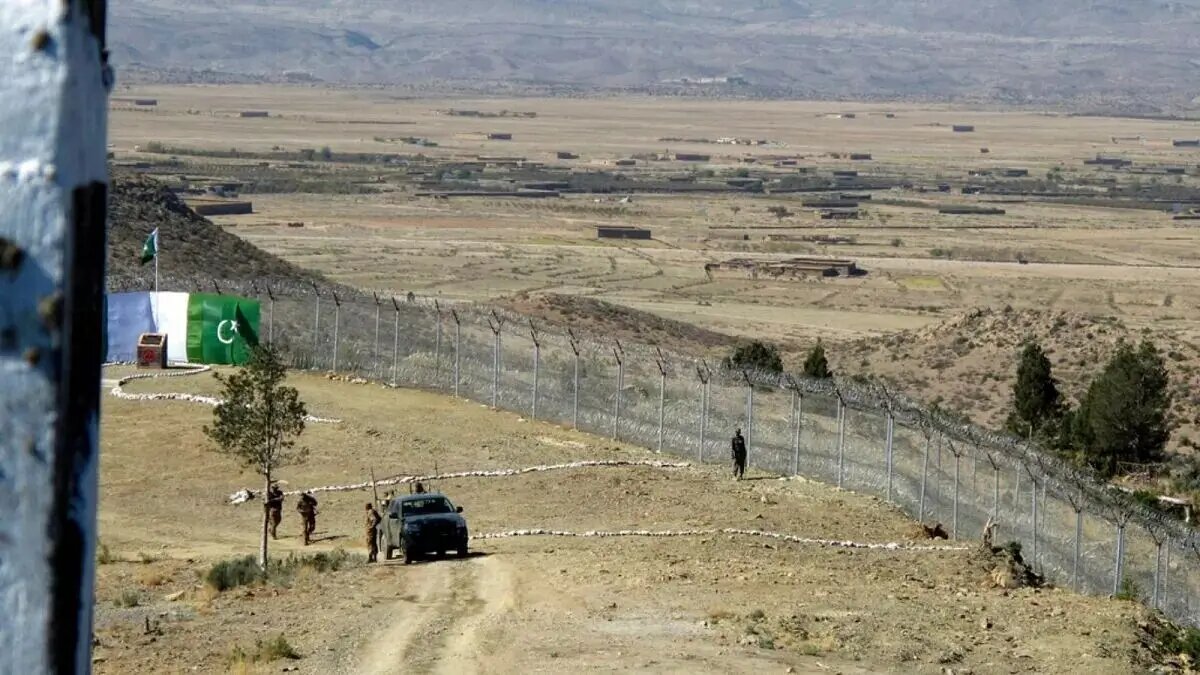
TEHRAN – An explosion in Kabul on the night of October 9th, widely reported as an attack targeting Tehreek-e-Taliban Pakistan (TTP) leaders, set off a rapid spiral of violence that, by October 11th-12th, was the most intense conflict between Afghanistan and Pakistan in years.
Heavy artillery and small-arms exchanges have erupted in several frontier areas, major crossings have been closed, and independent observers have yet to reach a settlement, with massive casualties and territorial claims in both capitals. The direct facts are stark. Their meaning is dangerous.
The general sequence is simple: a Pakistani attack inside Afghan territory, a TTP attack inside Pakistan, an Afghan operation along the Durand Line, and a Pakistani counterattack.
Each move begat the next, creating a classic escalation spiral. A spokesman in Kabul said Afghan forces had killed dozens of Pakistani soldiers and captured the stronghold. Islamabad acknowledged the loss of soldiers but claimed the militants suffered far higher casualties and also claimed to have captured or destroyed Afghan positions.
In the absence of independent verification, the numbers became a means of pressure rather than a shared reality, and social media was flooded with videos and claims (many of which were later flagged as misattributed or unverifiable), amplifying danger and uncertainty.
This conflict cannot be reduced to a single tactical choice. It is built on several interlocking realities.
First, the Durand Line, one of the world’s most disputed border areas, remains a living border that cuts through Pashtun communities, maintaining cross-border commerce, kinship networks, and porous governance.
Second, the reported resurgence of the TTP further increases Islamabad’s appetite for kinetic measures. A year of suspected deadly attacks inside Pakistan has narrowed political patience and increased the cost of domestic inaction.
Third, the regional strategic environment is becoming increasingly complex. After brief clashes between India and Pakistan in May, Islamabad moved closer to Washington, and Army Chief of Staff Gen. Asim Munir forged a relationship with President Donald Trump, going so far as to offer him the Nobel Peace Prize.
In July, Pakistan honored then-CENTCOM Director General Michael E. Kurilla for his “exemplary performance” in promoting military cooperation with the United States.
Meanwhile, the United States is trying to use security and economic engagement to drive a wedge between China and its regional partners, including Pakistan.
Pakistan has reportedly proposed a new Arabian Sea port in Pasni near the Afghan-Iranian border to US authorities, with US investors envisioning building and managing the terminal, highlighting how economic projects are now intertwined with strategic calculations.
Who benefits from a clash between Kabul and Islamabad? In the short term, strong security regimes on both sides will gain nationalist legitimacy from a robust response. Intermediary states such as Qatar and Saudi Arabia gain diplomatic capital by intervening. Terrorist groups, unless truly degraded, may take advantage of the chaos to recruit or redeploy personnel.
Geopolitically, prolonged crises affect external powers seeking to provide security and economic carrots, but chronic instability ultimately undermines the agenda of all actors, from trade corridors to regional investment.
The plausible trajectory is narrow. The most reliable short-term path is mediated cooling. Interlocutors in the Persian Gulf call for a halt, borders reopened, and immediate economic pain eased.
A more dangerous medium-term outcome is the continuation of low-intensity conflicts such as raids, blockades, and forced displacements, militarizing border life and hollowing out trade. This nightmare remains a miscalculation that would drag conventional forces into a wider conflagration–unlikely, but catastrophic if it were to occur.
The solution is political. Military strikes can blunt the threat. It cannot repair porous governance, revive broken institutions, or erase historical grievances.
Neutral incident review, military hotlines, confidence-building in conflict sectors, and development-related incentives that make protecting extremists more costly than tolerating them are not elegant prescriptions, but they are practical ones.
Without sustained and verifiable political action, the Durand Line will continue to function less as a shield and more as a seam that, if pulled, will cause fragile stability to crumble, leaving civilians to sew back what leaders have torn apart.