
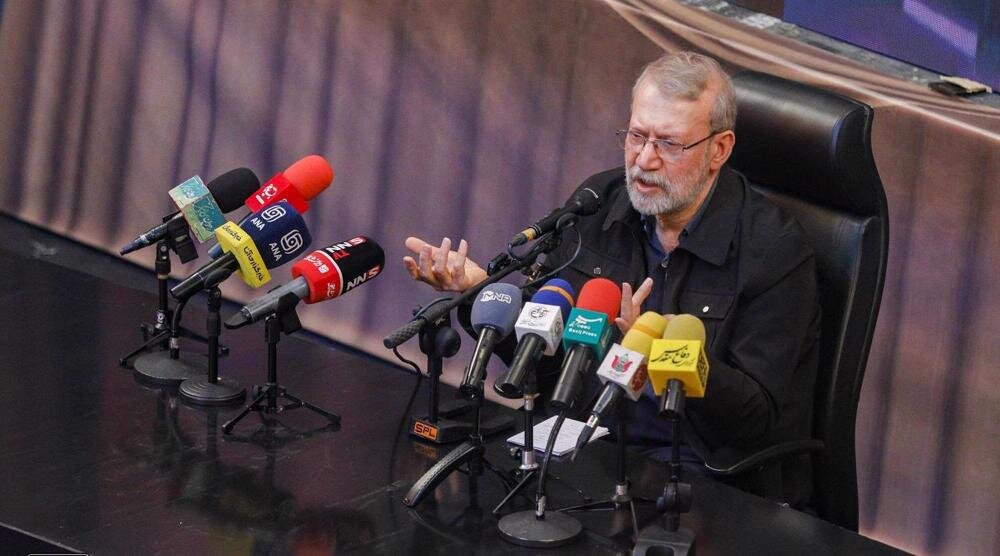
“Western countries believe that economic pressure may reduce Iran’s resilience,” Larijani said, adding, “The Iranian state will also pass this stage with resistance and faith.”
Speaking at a local event in Tehran on Thursday, Larijani pointed to efforts made by Tehran to prevent the so-called snapback mechanism.
“Every effort was made to reach a conclusion on the snapback issue, but the West conditioned Iran to reduce its missile range to less than 500 kilometers, effectively depriving the Iranian state of its most important defense weapon.”
He added that the request concerns Iran’s “national security.”
Iran rejects the legitimacy of the E3 (France, Germany, UK), which triggered the snapback of UN sanctions, calling the mechanism “ineffective” and a “fabricated” term. On Saturday, Tehran announced the expiration of UN Security Council Resolution 2231 and its related provisions and restrictions.
Iran’s Foreign Ministry stressed that with the expiration of the 10-year deadline set in Saturday’s resolution, the Islamic Republic’s nuclear program must be treated like the nuclear programs of other non-nuclear states under the Treaty on the Non-Proliferation of Nuclear Weapons (NPT).
Iran has been under sustained economic pressure in recent years, particularly since the United States unilaterally withdrew from the Joint Comprehensive Plan of Action (JCPOA) in 2018 and reimposed comprehensive sanctions under its so-called “maximum pressure” policy.
Despite these pressures, Iran has sought to adapt through increasing domestic production, non-dollar trade mechanisms, and expanding economic ties with Asia and neighboring countries.
MNA/