
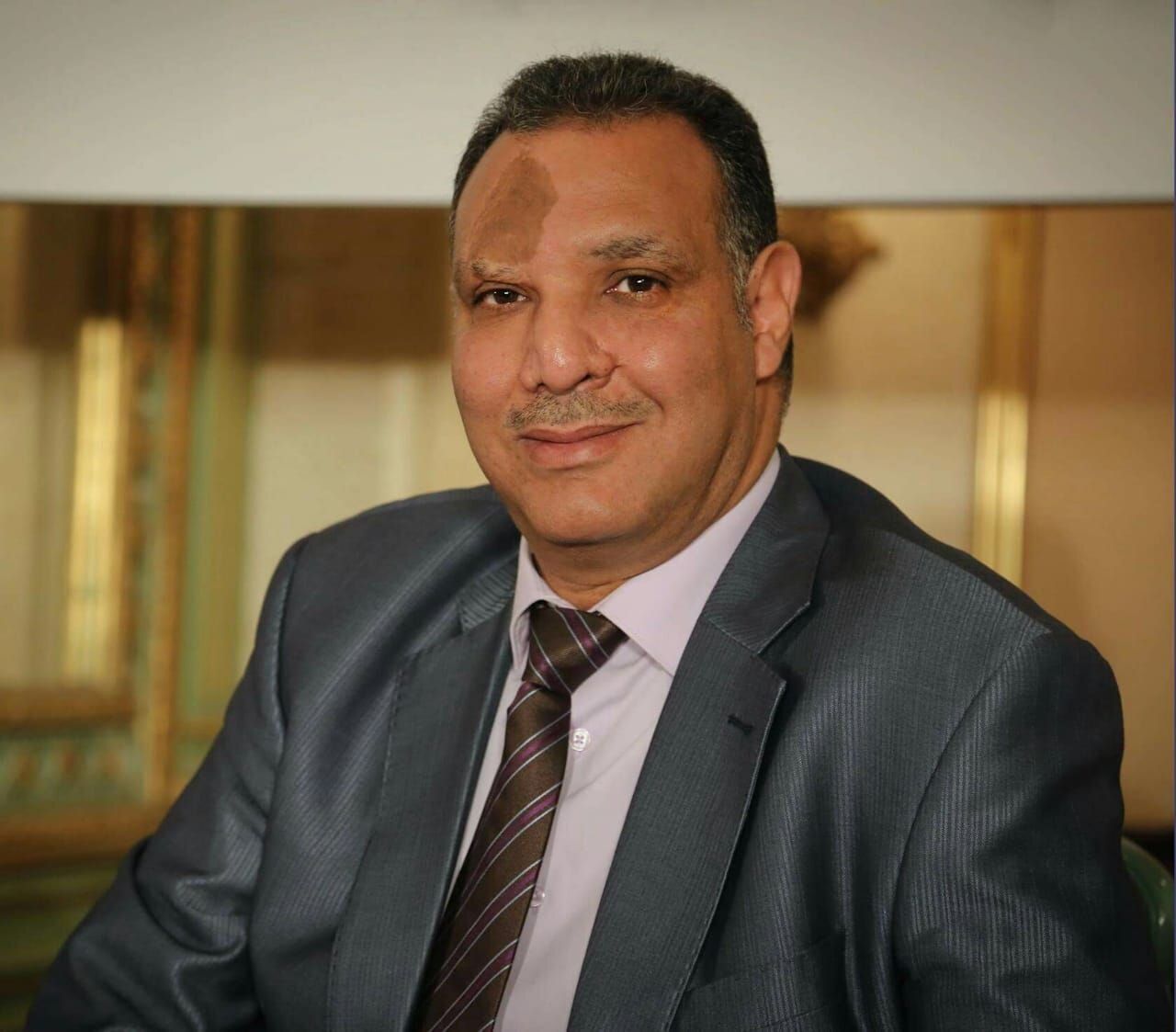
TEHRAN – Egyptian political analyst and political sociology professor Mohamed Saeed Ahmed has given a scathing assessment of the Gaza ceasefire after nearly two years of devastating war in an exclusive interview with Tehran Times.
Professor Saeed Ahmed argues that while the agreement is essential, it serves as a temporary respite rather than resolving a deeper conflict. Ahmed said the ceasefire halts Israeli military operations and allows for humanitarian relief and reconstruction, but falls short of addressing core issues of occupation, displacement and Palestinian statehood.
He also criticized President Trump’s controversial 20-point plan, rejecting Western-led plans to govern Gaza and stressing that Palestinians must maintain control. Cairo, he argues, played a decisive role. Above all, in an interview he predicts that the struggle will continue. He also argues that this is not just a war for territory, but a war for survival.
Below is the full text of the interview.
How do you assess the importance of the Gaza ceasefire agreement after nearly two years of devastating war?
I think this is very important because this is the longest war that the Zionist enemies have fought against the Palestinian people. For two full years, the siege, destruction, and true annihilation of the Palestinian people continued. It was therefore vital that the fighting cease and this agreement be accepted so that the Palestinian people and the Palestinian resistance could breathe.
The Palestinian project lives on, and so does the resistance.
We know very well that the war is not over. This conflict with the enemy is not about borders, but about survival. A ceasefire was very important at this time because it does not mean an end to the conflict, but a pause in the conflict. I believe that the Palestinian people, together with the resistance forces, have to some extent defeated the Zionist enemy.
Their stated goals were not achieved. People were not evacuated and resistance forces were not eliminated. That in itself is a victory for the resistance and the Palestinian people over the Zionist enemy.
What are the main factors pushing both sides to accept this deal at this particular moment in Israel and Hamas?
The Zionist enemy agreed to the agreement because the war could no longer continue and there was international and domestic pressure. The situation inside Israel has deteriorated significantly. For two years, the colonists lived in constant fear and threat, and the morale of the occupying forces reached its lowest level.
The settlers attacked Prime Minister Benjamin Netanyahu and his government, confirming that they cannot win and the war must stop. These internal pressures, combined with economic, social, military, and political losses, forced Israel to end the war.
International public opinion also took a toll, not only on Western governments but also on public sentiment. Sympathy for the Palestinians grew and awareness of the Palestinian cause spread.
Israel was forced to halt the war due to internal and external pressure. The narrative that Palestinians are terrorists has collapsed. Instead, Palestinians were seen as defending their homeland and asserting their right to liberate occupied lands. On the contrary, the Zionist narrative has been weakened.
As for Hamas, it also faced tremendous pressure and severe losses on the ground, leadership, political and military fronts.
Palestinians in Gaza suffered extensive damage, with tens of thousands killed, hundreds of thousands injured, starvation, a brutal siege, and about 80 percent of their buildings destroyed. All these factors put pressure on Hamas to accept the agreement at this stage.
What is your assessment of the so-called Trump 20-Point Plan, which has sparked widespread debate in political circles?
In my assessment, Trump’s plan is a Zionist plan. It is not in the interests of the Palestinian people or the Palestinian resistance. Many of the provisions, aimed at dismantling the resistance and establishing an international or externally-led government under figures such as Trump himself or Tony Blair, are unfavorable to the Palestinians.
Hamas’s response was prudent in avoiding the destruction of resistance weapons. This response maintained Hamas as a partner on the ground in Gaza. I believe that President Trump’s objectives were not fully achieved because Hamas refused to dispose of its weapons or accept external control.
This leaves room for breathing room and realignment, and confirms that Hamas will not accept disarming or taking control of Gaza away from the Palestinians themselves.
The narrative that Palestinians are terrorists has collapsed. Instead, Palestinians were seen as defending their homeland and asserting their right to liberate occupied lands.
Some argue that the plan seeks to redefine the Palestinian issue without addressing the roots of the occupation or the right to an independent Palestinian state. Do you agree with this view?
I agree. This plan does not address the root of the problem and does not give the Palestinian people the right to establish a state. This is primarily a stopgap measure to stop bleeding and provide breathing space. This conflict with the Zionist enemy will continue, albeit at different stages.
We must use this time to rebuild Gaza, stabilize the population, reorganize resistance and Palestinian factions, and seek unity. Resistance remains the only solution to confronting this enemy, as this is a fight for survival, not borders.
Enemies still raise expansionist slogans from the Nile to the Euphrates and seek to displace not only Palestinians but also a wide range of Arab populations.
Because they see this as a sacred mission, they will not actively recognize the establishment of a Palestinian state, despite international law and the fact that 157 countries (out of 193 members of the United Nations) support the establishment of a Palestinian state.
The 1947 UN partition decision has not resulted in the creation of an Arab-Palestinian state, almost 80 years later. Sadly, liberation doesn’t happen except with weapons. Once the Resistance regains power, it must regroup and prepare for a new struggle.
The plan reportedly appointed Tony Blair to oversee Gaza’s post-war administration. How is this proposal being received in Egypt and the Arab world?
Tony Blair’s proposed role in governing Gaza is completely rejected by Egypt and the Arab world. Egypt played a major role in shaping Hamas’s response and helped reject the idea.
Egypt insists that the fate of Gaza must be decided by the Palestinian people themselves, including all Palestinian factions. Hamas explicitly rejects external control, which would effectively invalidate the proposal if the first part of the agreement were implemented. President Donald Trump accepted Hamas’s response, which categorically rejected external control of the Strip.
The Palestinian people, together with the resistance forces, defeated the Zionist enemy.
Do you think Western oversight could weaken the Arab role in the management of the Gaza file or undermine regional sovereignty?
I don’t think Western directors will strengthen the Arab role. If anything, it will detract from it. Gaza is the center of the Palestinian cause. If Hamas had agreed with Western regimes to withdraw their weapons, the Palestinian cause would have been effectively sidelined.
The main objectives of the Gaza war – the forced displacement of Palestinians, the settlement of Sinai in Egyptian territory, and the elimination of Hamas – were not achieved. As a result, the Palestinian project survived and so did the resistance. The struggle for the complete liberation of occupied Palestinian lands is likely to continue.
Egypt has long acted as an intermediary between Israel and Palestinian factions. How do you assess Cairo’s role in achieving the recent ceasefire agreement?
Cairo’s role was central and far more than a mere intermediary. Calling Egypt an intermediary underestimates its contribution. Egypt did not give up. It remained active and contributed to achieving the agreement.
At the beginning of the war, when Prime Minister Benjamin Netanyahu talked about temporarily evacuating Palestinians and settling them in the Sinai Peninsula, he was effectively declaring war on Egypt.
Egypt rejected the plan and mobilized its military in the Sinai Peninsula, ready to confront any threat. Israel understood Egypt’s strength and the potential for a broader conflict, which prevented further escalation. Egypt supports the Palestinian people and will not allow its territory to be violated. It has become a strong partner for Gaza against this Zionist enemy.
Do you think this agreement can pave the way to a durable political solution, or is it only a temporary truce before the next stage of escalation?
I believe this agreement is unlikely to result in a durable political solution. In my opinion, a permanent two-state solution is unacceptable to Zionist enemies. What we have is a temporary solution before a new escalation occurs.
Palestinian resistance forces insist on liberating all of occupied Palestine. Our struggle with this enemy is not about borders, but about survival. Therefore, I consider the current agreement to be a moratorium rather than a final solution.