
Shanghai – In the 30th year of the 21st century, West Asia and broader international politics are undergoing rapid and profound transformation. The Trump administration’s aggressive policies, including the Ukraine crisis, the escalation of tensions in West Asia, the 12-day war between Iran and Israel, and the attacks on Iran’s nuclear facilities and tariff wars, are all parts of this dynamic landscape.
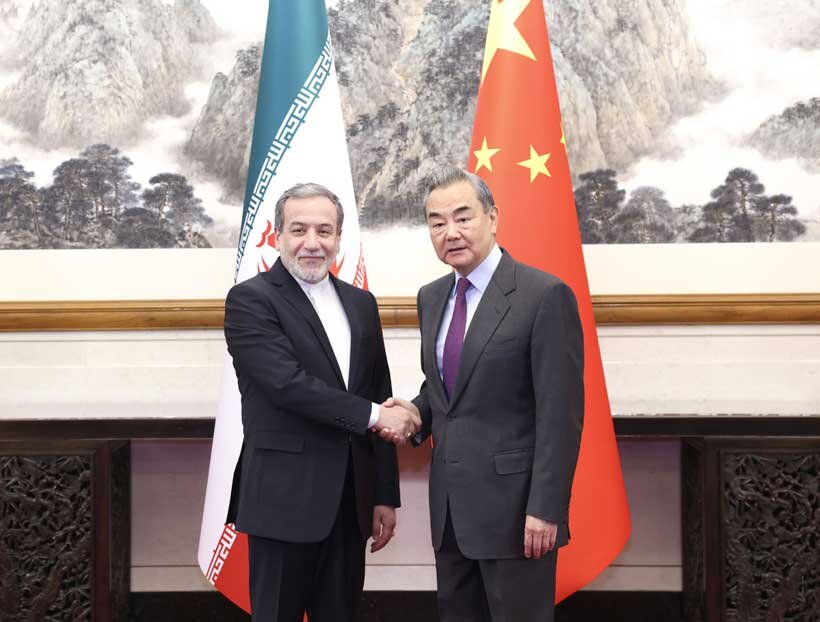
As two influential actors of the evolving regional and global order, Iran and China have the ability to shape new multipolar systems. In this context, strengthened coordination and multifaceted cooperation between Tehran and Beijing is not only possible, but essential. The bilateral relations were significantly upgraded during President Xi Jinping’s 2016 visit to Tehran, resulting in a comprehensive strategic partnership. This framework was further institutionalized by foreign ministers of both countries with the signing of a 25-year comprehensive cooperation agreement in 2021.
For such strategic partnerships to be successful, both parties must develop a nuanced understanding of each other’s capabilities, limitations and strategic priorities. The deeper this mutual understanding becomes, the broader and more sustainable scope of cooperation. Historically, the gap between perception and discordant expectations is sometimes tense in bilateral relations. One notable example is the nuclear issue where expectations and policy divergence have led to temporary dissatisfaction. As the world enters a critical and transformative phase, misunderstandings and strategic miscalculations can impose substantial costs on bilateral relations. Therefore, it is more urgent than ever to promote institutionalized dialogue to strengthen elite level diplomacy and strengthen mutual understanding and strategic trust between the two countries.
Three key categories of academic elites, political elites and public opinion must be considered when promoting mutual understanding between Iran and China. Among these, countering the distorted portrayal in the public sphere due to the dominant presence and influence of Western media narratives presents an important challenge that requires long-term progressive policy efforts. Meanwhile, political elites are often influenced by academic elites, particularly in shaping long-term strategic visions and policy decisions. In particular, there is a strong and clear political will at the highest leadership level in both countries to deepen strategic partnerships. This suggests that the most effective strategy for fostering comprehensive mutual understanding is to strengthen academic and intellectual exchanges between the elite communities of both countries. Ripple effects can be expected by investing in such elite-level academic cooperation. It first influences the political elite, gradually shaping public discourse.
Unfortunately, in today’s world, much of the mutual recognition between Iran and China is mediated through the lens of Western media. Despite the deep, positive historical and regional relations between Iran and the Chinese people, the West has historically pursued hostile policies towards both countries, asking them to hamper the formation of a robust and friendly Iranian-China strategic partnership. Limited engagement between Iran and China’s academic elites and institutions has, to some extent, facilitated the success of these external efforts to undermine bilateral trust. Therefore, it is essential to strengthen academic diplomacy and elite dialogue to overcome these misconceptions and to build a resilient foundation for long-term strategic cooperation.
In the context of cooperation among great Asian civilizations, the role of academic elites is crucial and influential. In fact, throughout the history of civilizations thousands of years ago, both Iran and China, intellectuals and scholars have consistently played a prominent role in shaping the decision-making process of the state. It is essential that academic elites from both countries create more opportunities for engagement in mutual dialogue, sharing knowledge and exchanging strategic insights. This process of strategic understanding should include not only veteran experts, but also younger generations of scholars and intellectuals who shape the future of bilateral relations.
A variety of cultural diplomatic tools can be effectively utilized to enhance academic engagement. These interactions should be framed as victory cooperation with long-term possibilities. Practical instruments to strengthen mutual understanding include joint academic conferences, short- and long-term academic scholarships, online seminars and webinars, and other academic exchanges.
A deeper understanding at the elite level can be expected to gradually expand bilateral relations based on a realistic assessment of the competences and constraints of each country. This will allow Iran and China to more effectively complement each other’s role within the new multipolar world order. Their rich and enduring history has made Iran and China’s countries uniquely erected to contribute to regional stability and global development, and to help guide a new era of peace and prosperity beyond West Asia.
Amir Mohammad Esmaeli is an author, researcher and doctoral candidate for International Relations at Shanghai International Research University.