
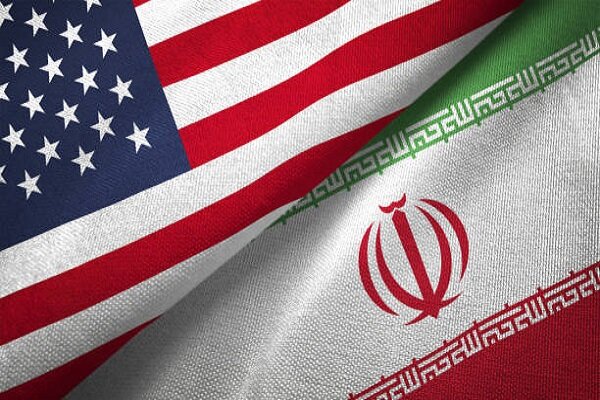
One of the key themes of Islamic Revolution leader Seyyed Ali Khamenei’s statement on November 3 was that he emphasized the “essential differences between the Islamic Republic of Iran and the United States.” He made it clear that the contradiction between the arrogant nature of the United States and the independence-seeking nature of the Islamic Revolution was not a tactical or temporary contradiction, but rather had its roots in two very different perspectives and worldviews. The clear interpretation of this statement is that the issue between Iran and the United States is not a political conflict between governments or states that can be resolved through negotiation and diplomatic smiles. Rather, the conflict is between two types of views on “man, power, and freedom.”
On the one hand, there is an American worldview based on humanism and infinite human freedom. This mindset actually leads to a power advantage. Within this framework, any means necessary to maintain advantage and profit are justified. From wars and the occupation of countries to the killing of innocent people, genocide, human rights violations, and interference in the internal affairs of nations. This is the same spirit of arrogance in which America considers itself to be the “axis of the world” and does not recognize the boundaries between morality and humanity in achieving its goals.
In contrast, the Islamic Republic of Iran, based on Islamic teachings and national beliefs, believes that power is for dignity, not domination. Power defined in the service of humanity and within the framework of God’s morality. In this view, humans have inherent dignity and society must be organized on the basis of divine duties and the teachings of the prophets, especially the Prophet of Islam (PBUH). Therefore, power in the logic of Islamic revolution is for “human improvement” and not for human humiliation.
The contradiction between these two worldviews – one based on the declining liberal mindset of Western democracies, the other arising from Islamic spirituality and independence – has caused the differences between Iran and the United States to not only be irresolvable but also deeper and deeper.
One of the most obvious manifestations of this essential difference is the question of the Zionist regime. In order to maintain this false occupation system, the United States believes that any crime can be tolerated. From supporting weapons and nuclear weapons to turning a blind eye to the killing of Palestinians and aggression against regional countries. The United States finds its survival in continuing the artificial life of this system. The Islamic Republic of Iran, on the other hand, fundamentally does not recognize Israel’s legitimacy and considers it a cancerous tumor in the heart of the Islamic world, created by the armed occupation of the lands of Palestine, Syria and Lebanon.
For this reason, the leaders of the Islamic Revolution believed that a condition for cooperation with the United States was that the United States cease supporting the Zionist regime, cease its crimes, and refrain from interfering in the internal affairs of other countries, including Iran. Indeed, in order to provide a basis for cooperation between Iran and the United States, Iran should abandon the spirit of arrogance. Of course, this is not possible in the short term and may require fundamental changes in the structure and nature of the American political system. This is the same point that the revolutionary leaders made clearly.
The leader’s words are yet another reminder of the fact that the difference between Iran and the United States is not one between two governments, but rather a conflict between two fronts. The front of power and control and the front of human dignity and independence.