
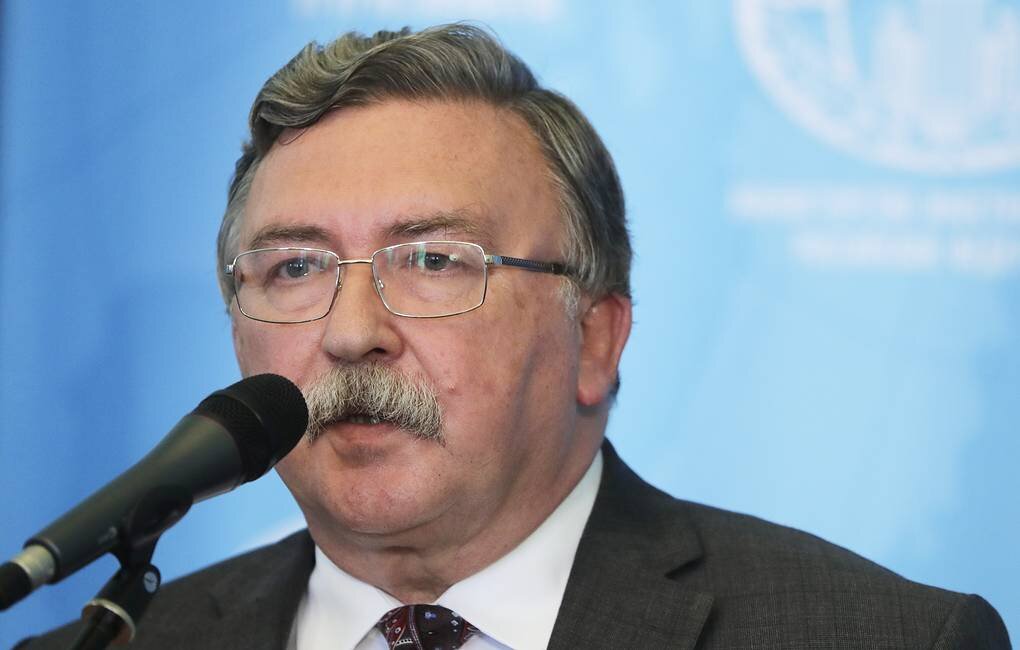
Mikhail Ulinov, the permanent Russian envoy to Vienna’s international organizations, made a statement on Saturday in a post on his X account.
He proposed to put aside legal and procedural issues that sparked a snapback mechanism in E3 and did not guarantee that they would be right to address the issue from a purely political perspective.
The Russian diplomat asked the trio if they had a vision of an exit strategy and how to find out if they were about to create a deadlock.
“The answers to these questions seem negative,” Urinov emphasized.
Snapback will implement six previous Iran-related Security Council resolutions adopted between 2006 and 2010. This would revive the expired UN Arms Embargo that barred the country from supplying, selling or transferring most military equipment to Iran, and banning Tehran from banning the export of arms.
It also imposes export controls, travel bans, assets freezes and other restrictions on individuals, entities and banks.
In a telephone call with representatives of EU foreign and security policy and his UK, French and German counterpart, Iranian Foreign Minister Abbas Aragut warned that there will be consequences for causing a snapback, as the country is a European signatory to the 2015 nuclear agreement.
Top Iranian negotiators have once again emphasized that European countries do not have legal and moral authority to rely on mechanisms.
China’s mission to the United Nations on Wednesday declared the country’s firm opposition to the European party’s threat to the 2015 nuclear deal that stimulates snapback mechanisms within the framework of UN Security Council Resolution 2231.
The mission of the United Nations headquarters in New York has distributed explanatory memos to the Security Council stating that the difficult situation in implementing JCPOA and Resolution 2231 is not a result of Iran’s actions, but rather the destruction of the implementation of JCPOA by the US and three European countries.
China and Russia’s support plays a key role in Iran’s diplomatic efforts to counter the threat of snapbacks. The two countries are permanent members of the UN Security Council and have a veto resolutions, including those related to Iran’s nuclear program.
MNA