
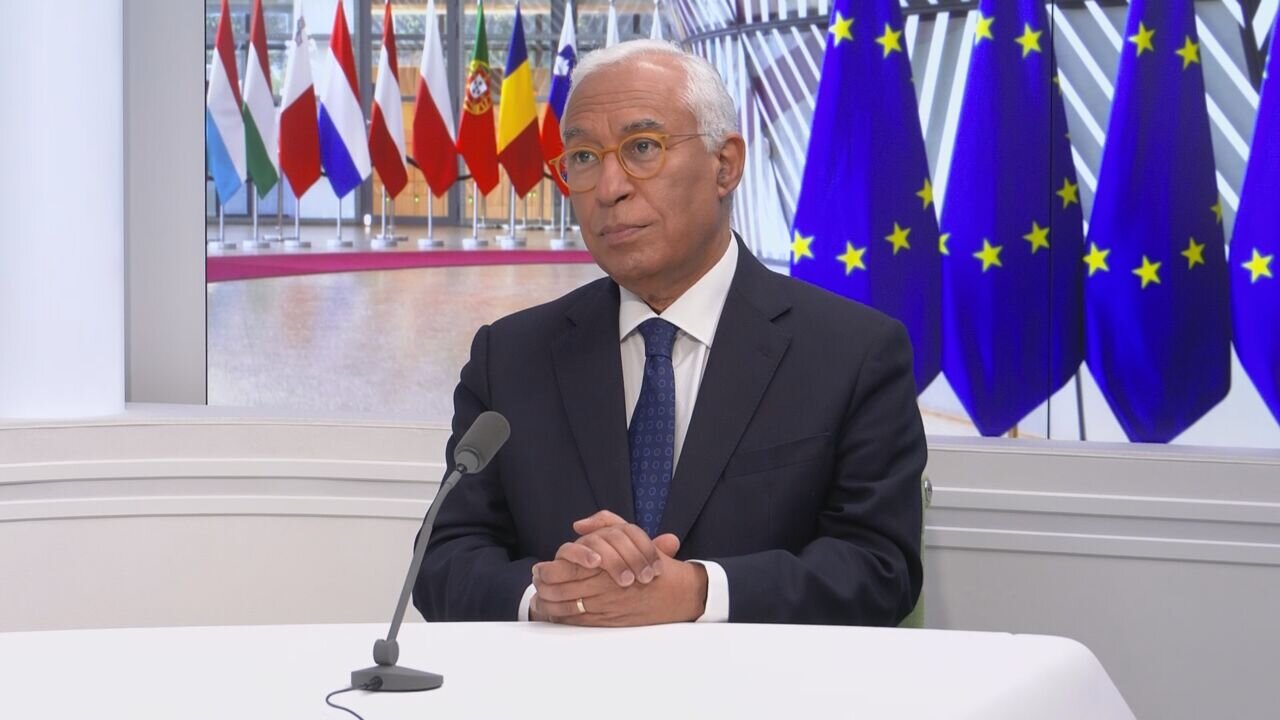
European Council President Antonio Costa said on Monday that the United States “should not threaten to interfere in the democratic life” of European allies, according to Politico.
Costa’s remarks were some of the first from a senior EU leader since the White House released the U.S. National Security Strategy, which sets out the approach to geopolitical challenges facing the United States and the world.
Speaking at the Jacques Delors conference in Paris on Monday, Costa said Europe and the United States remain partners, but the foundation of that partnership requires mutual respect, especially in moments of political disagreement.
“Certainly, this (US) strategy continues to call Europe an ally, and that’s a good thing,” Costa said. “But if we are allies, we must act as allies. And allies do not threaten to interfere with the democratic life or domestic political choices of allies. They respect their allies. They respect each other’s sovereignty.”
Costa said that US Vice President J.D. Vance’s critical comments and President Donald Trump’s social media posts are no longer isolated outbursts, but now constitute “American doctrine.”
“We must pay attention and act accordingly,” he said. “This means we need more than just new energy. We need to focus on building a Europe that needs to understand that relations between allies and alliances have changed since World War II.”
Mr Costa’s central message was that Europe refuses to accept political pressure from outside. “The United States cannot replace the European people in deciding which is the right party and which is the wrong party,” he said, referring to part of the U.S. strategy that referred to supporting “patriotic European parties.”
Mr. Costa also pointed out that the United States’ new approach reflects a broader shift away from multilateralism, a weakening of its commitment to a rules-based international order, and an abandonment of climate action as a strategic priority. “We have different worldviews,” he warned.
Costa also offered a direct defense of the EU’s regulatory autonomy, including the high-profile fine imposed on social platform X under the Digital Services Act last week. He said Europe’s actions were based on a democratic model and rejected criticism from Washington and U.S. tech leaders.
“The United States cannot replace Europe in its vision of free speech,” he said. “Our history has taught us that without freedom of information, there is no freedom of speech. And freedom of information exists where pluralism is respected.”
He added: “If the public’s freedom of information is sacrificed to protect America’s tech oligarchy, there will be no freedom of speech.”