
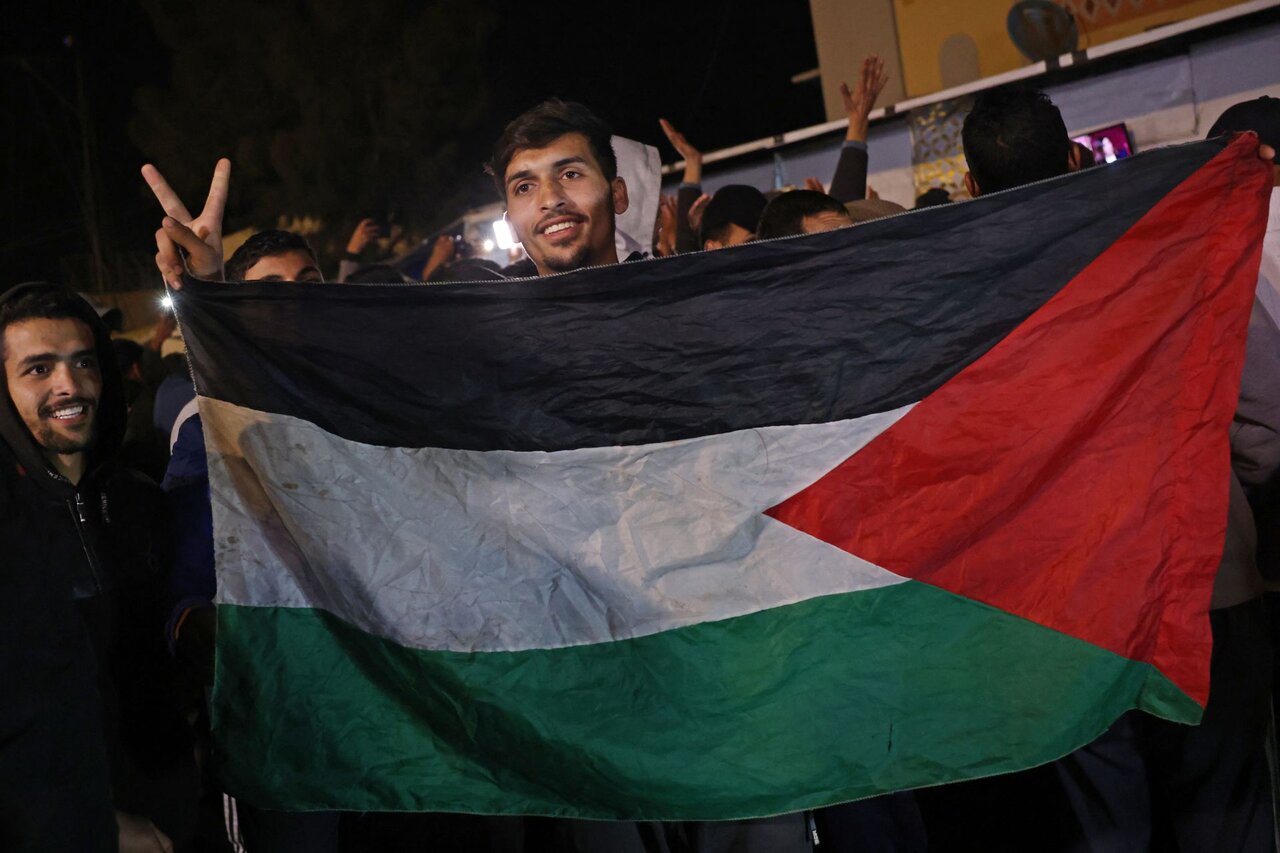
TEHRAN – After two years of devastating war and unprecedented human suffering in Gaza, Hamas and Israel on October 9 accepted a US-brokered ceasefire under Donald Trump’s controversial 20-point plan. The agreement temporarily suspends Israeli military operations and paves the way for a prisoner exchange and phased withdrawal, but analysts warn that the root causes of the conflict remain unresolved and could only postpone a flare-up of violence.
To better understand the political dynamics behind the ceasefire and its broader implications, Tehran Times spoke to Arif Sabagh, a Palestinian political analyst who specializes in the Zionist regime’s strategic actions and colonial policies.
In this exclusive interview, Quds (Jerusalem)-based Sabbagh analyzes the internal and external pressures that forced both sides to accept the deal, the role of Washington and regional mediators, and the future of Gaza’s political and humanitarian landscape under President Trump’s “peace” framework.
Below is the full text of the interview.
What do you think were the main political and diplomatic factors that led Hamas and Israel to agree to President Trump’s 20-point plan?
A number of significant pressures on both Israel and Hamas led to this partial agreement. First, it is a partial agreement that deliberately avoids deeply strategic issues and serves both sides’ short-term objectives. For example, it responds to Hamas’ demands to halt extermination operations and prevent plans for destruction and displacement.
“The United States aims to act as a power capable of imposing solutions favorable to Israel as an alternative to the United Nations, exempting Israel from the need to implement relevant UN resolutions, and protecting Israeli war criminals from prosecution at the ICC.” For Israel, this satisfies the demands of hostage families and the majority of Israeli society for the release of their loved ones at almost any cost. These demands were presented to President Trump by prominent American supporters of the families of Israeli hostages, including Mrs. Adelson, who is very close to Trump.
Regarding Israel in particular: 1) Israel faced tremendous international pressure, including political isolation in the United Nations and the real threat of economic sanctions from countries considered friendly to Israel. Some of these effects, such as canceling arms contracts and expelling Israeli diplomats, were already in place and the Trump administration was aware of the developments. The situation comes as Trump is said to have said in his last conversation with Prime Minister Netanyahu before the deal was accepted: “You can’t fight against the whole world.”
2) Trump gave Netanyahu enough time to carry out all military measures to defeat Hamas, but the attempt failed. President Trump concluded that it was impossible to eliminate Hamas militarily, that plans to deport Gaza residents to the Sinai Peninsula had failed, and that he was confident that Egypt, Jordan, or any other state would not accept forced displacement of Palestinians.
3) The Israeli military also put pressure on the political leadership. The Chief of Staff reiterated his concern that troops would be forced to remain in Gaza, especially in populated areas, for long periods of time and that ambushes and military operations would result in heavy casualties. There were many other factors as well.
Regarding Hamas: 1) In addition to the above factors, Arab and Islamic leaders put strong pressure on the movement and offered written Arab, Islamic, and American political guarantees if Hamas accepted the proposal. These guarantees promised to release the largest possible number of Palestinian detainees, particularly Gazans detained after October 7, including some elites.
2) Ensure that President Trump announces an end to the war before implementing the first phase.
3) Arabs and Muslims will ensure that the Arab-Islamic interpretation of the Trump plan is implemented and amended as necessary to ensure that Gaza does not fall under a Western international trusteeship and that its reconstruction is supervised by Arab and Palestinian parties.
“President Trump has concluded that it is impossible to eliminate Hamas militarily and that plans to relocate Gaza residents to the Sinai Peninsula have failed.” Even if Hamas were not a partner in the regime, political and security administration would remain in Palestinian hands. The guarantees included that Palestinian resistance weapons would not be handed over to Israel, but would instead be frozen and monitored by Palestinian and Arab authorities. These promises are likely to evolve in the coming days and months.
What impact will the withdrawal of Israeli troops alongside the prisoner exchange have on the balance of power in the region? Could it lead to a redefinition of power between the two countries?
The withdrawal of occupation forces from populated areas does not in itself change the balance of power. Rather, it is in Israel’s interest to withdraw from dangerous positions, such as ambush-prone areas, and it is also in the Palestinians’ interest for Israel to accept the principle of withdrawal, even if it is only a partial withdrawal.
At the same time, withdrawal is a logistical necessity. It creates the necessary conditions to search for dead prisoners of war and facilitate the provision of relief supplies to civilians without interference from occupying forces.
Considering the role of regional mediators (Qatar, Egypt, Turkey) and the United States in the negotiations, how do you assess the future of regional relations and the role of these actors?
Each mediator wants to prove to the world that they have the decisive influence and the greatest credit for securing an agreement. Egypt, in particular, is trying to emphasize this role even more than Qatar. Turkey participated in the mediation at the request of the United States to put pressure on Hamas and to act as a guarantor for some of Hamas’s demands.
“President Trump had given Prime Minister Netanyahu ample time to carry out all military measures to defeat Hamas, but that attempt failed.” As for the United States, it has never been a neutral intermediary between Israel and Hamas. Rather, they were perfect partners in campaigns of invasion and annihilation.
The United States currently seeks to act as an alternative to the UN as a power capable of imposing solutions favorable to Israel and exempting Israel from the need to implement relevant UN resolutions. It may also be aimed at protecting Israeli war criminals from prosecution at the International Criminal Court.
What do you think about the prospects for rebuilding the Gaza Strip and addressing humanitarian needs after two years of brutal war and destruction?
Gaza’s reconstruction will be a complex political struggle between regional and international actors. On the one hand, there is an American plan to seize parts of Gaza, especially the coastline, sea, gas and oil wells in Gaza’s economic zone, for international investors, including Trump associates. On the other side is the Palestinian interest in using the land and sea for Palestinian interests.
This struggle requires a unified Palestinian position, official Arab and Islamic political support, and international law protection for Palestinian land and sea rights.
Among other things, the reconstruction process will be conditioned by Israel and the United States on issues such as the current status of Gaza’s weapons and possibly the expulsion of resistance leaders from the Strip. These political battles could delay recovery for years.