
Tehran – The scientific meeting of the “Silaj City Nation of East Africa” was held by the Research Institute of the Ministry of Cultural Heritage, with the involvement of Institute Director Mohammad Vahim Zarei.
According to Miras-e Arya (CHTN), Morteza Rezvanfar, a faculty member at the Institute, has introduced many of the heritage left by these city-states based on field research in Tanzania and Kenya.
He said that many studies and books have been compiled by British, German, Portuguese, African, Arabic and Iranian researchers on Siraj civilizations in eastern Africa.
Referring to the history and role of the Shiraj people who form the city-states of the eastern Africa, he states: Language, religion, rituals. ”
He added that based on field and historical documents, many people and groups in eastern Africa, including Mozambique, Tanzania, Kenya and Sumari, call them Shiraj, is extremely competitive, committed to maintaining the Shiraj race, and cites the broad basic services of Shiraj ancestors, and the wide range of services of urbanization, global trade, global sternships and global trade in Africa.
Pointing to some of the Shiraj city-states in eastern Africa, including Kilwa Kishiwani, Karl, Zanzibar, Mombasa and Ram, he said: and by responding to the Ministry of Foreign Affairs and other related institutions. ”
Zaray reminded us to investigate the issue of cooperation with the governments of Tanzania and Kenya to protect the common legacy of Iran and the aforementioned countries, following the pursuit of the Ministry of Foreign Affairs and Islamic culture and communications organizations.
In this regard, he added that meetings will be held with researchers and related institutions to explain relevant aspects and areas and determine roadmap.
Iran and East African relations are well captured by portraying the influence of Siraj (Persian) civilizations on the East African coast. However, some influential scholars argue that historians tend to dismiss or do minor things the role played by East African silages.
The demonstrable impact of the Siraj civilization in East Africa is evident in the expansion of trade and Islam between the East African coast and the Persian Gulf region.
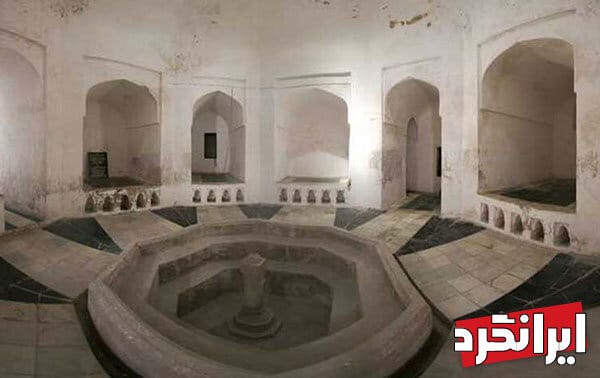
Persian has been bequeathed to the Kiswahili language to many lexicons that are still accessible in the region. Persian poets influenced Kiswahili’s literature through classic works. The influence of Persian architecture can be seen in the Siraj building styles throughout the city, including Zanzibar, Kilwa and Manda.
Therefore, Siradis brought Persian traditions and customs to East Africa, and some Siradis married Arabs and local communities. There is enduring historical evidence that is debatefully endowed with the influence of silazis on the social, economic and political aspects of East African life. This legacy undoubtedly justifies greater modern cooperation between East African countries and the Islamic Republic of Iran.
KD