
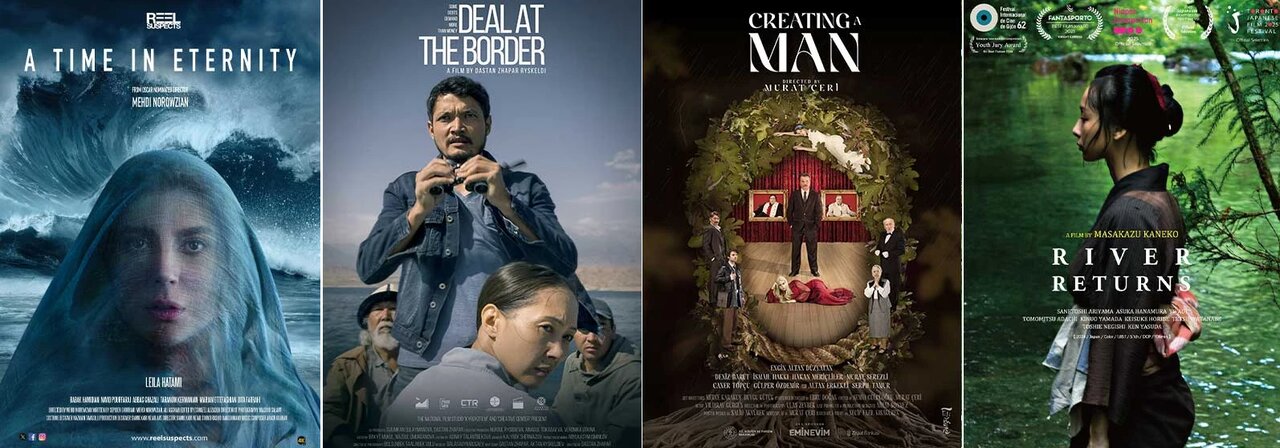
TEHRAN – The 43rd Fajr International Film Festival (FIFF) opened on November 26 in Shiraz, Fars province, with 14 films competing for the Kristal Simurg Award in the international competition category.
Featuring works by Iranian and foreign filmmakers, the lineup offers diverse perspectives on the modern world and Iranian cinema, IRNA reported.
Films to be screened include Turkey’s Murat Celi’s The Creation, South Korea’s Shin Kyung-soo’s The Time to Bloom, Hungary’s Balint Simler’s Lessons, Japan’s Masakazu Kaneko’s The River Return, Egyptian-Swedish director Mohamed Sham’s The Smell of the Father, Romanian-Italian Ioana Misci’s Catan and Deal at the Deal. “Border” by Dastan Zapar Uluru from Kyrgyzstan; “Pyre” by Vinod Kapri from India; “Made in EU” by Stefan Komandarev from Germany, Bulgaria and the Czech Republic; “March to May” by Martin Pavol Repka from the Czech Republic; “Look at Me” by Vladimir Gramatikov from Russia; “Endless” by Vasilis Mazomenos from Greece. The three Iranian films include Reza Jamali’s “He Doesn’t Sleep,” Mehdi Norzian’s “A Time in Eternity,” and Mehdi Asghari’s “The Bridge.”
“Creating a Man” is the story of a writer who loses the line between reality and fiction when he gets caught up in a tragedy he wrote.
In When It Blooms Again, the story is told from two different perspectives. A father grieving the loss of his daughter in the Sewol Ferry accident tries to piece together his lost memories. The wife, a depressed mother, is trying to regain her mental health.
“Lessons” depicts Jussi, a young teacher who rebels against outdated school education, while new student Palko struggles to adapt to Hungary’s harsh education system. Their stories reflect social oppression.
“River Returns” centers on Yucha, a village threatened by a typhoon in 1958, who goes into the mountains to confront Oyo, the spirit of sorrow who has been causing devastating floods for centuries, and returns a bowl of sacred water to the place where Oyo drowned.
“Scent of the Father” depicts a tense night in which a father and son are forced to sit with their memories, frustrations, and thoughts of each other in a desperate attempt to settle their score and try to mend their broken time.
In “Katan”, panic erupts in the village of Katan when the locals learn that each family has declared themselves disabled to avoid paying taxes to the state and will be subject to an investigation, led by the village chief and an assistant at the communal pharmacy. A team of inspectors from the Disability Commission is sent to uncover the truth.
The “border trade” takes place on the border between Kyrgyzstan and Kazakhstan, where Aza and Samat work as members of a drug trafficking organization. One day, they meet Nazik, who has narrowly escaped from a human trafficker.
“Pyre” follows an elderly Padam and Tulsi who struggle with loneliness and abandonment as their Himalayan village becomes deserted. However, a sudden letter from their long-absent son reignites their feelings.
In “Made in the EU,” a factory worker in rural Bulgaria becomes the town’s first coronavirus patient, sparking a wave of condemnation and social ostracism. As the virus spreads, she faces increasing persecution from her employer, colleagues, family and neighbors.
“March to May” depicts the rhythmic life of a family in a village home faced with turmoil when aging parents unexpectedly find themselves expecting another child, and challenges dynamic changes as the growing children ponder their future paths.
The story of “Look at Me” takes place in 1948. Nina Levitskaya, a former opera singer and mother of four children, knows nothing about the fate of her husband, who disappeared almost a year ago. Rumor has it that Alekandr, the father of the family and a responsible employee, must be somewhere in Moscow. Clouds gather around the family, and in order to avoid possible arrest, Nina urgently sells all her possessions, gathers her children and leaves Sverdlovsk for the capital.
In “Endless Land,” Lazarus grows up in a remote village in Epirus after losing his father in a hunting accident and experiences loss, loneliness, and displacement in a story about memory and identity.
“He Never Sleeps” is the story of a 65-year-old man who lives in a remote border village and suffers from insomnia due to the trauma of war. As the villagers search for a cure, he spends sleepless nights unexpectedly finding himself able to tirelessly and selflessly help others, offering a meditation on human perseverance and empathy.
“A Time in Eternity” follows a woman on a journey to find her missing husband while negotiating complex family relationships. The film explores loss, longing, and resilience through a deeply human lens.
“The Bridge” is set during the Iran-Iraq War and tells the story of Musa, a boy who discovers an enemy infant on the battlefield. Torn between revenge and mercy, Musa must protect his child while trying to reunite him with his family, highlighting the moral ambiguity and humanity that persists even in the midst of conflict.
opening film
A restored version of the film “Through the Olive Trees” by renowned Iranian director Abbas Kiarostami opened the 43rd Fajr International Film Festival.
“Through the Olive Trees” is a 1994 drama written, produced, edited, and directed by Kiarostami. The final film in Kiarostami’s Koker trilogy, the story is set in earthquake-ravaged northern Iran and revolves around the making of “And Life Goes On…”, a reimagining of his earlier work “Where’s My Friend’s Home?”. In typical Kiarostami fashion, the film cleverly blurs the lines between fiction and truth and explores the interplay between art and reality.
The film follows Hossein Rezai, a local mason turned actor, who faces challenges both on and off set as he proposes to his co-star Tahereh. Misunderstandings arose due to his social status and illiteracy, and Tahereh’s family rejected his offer. As the lines between their on-screen roles and personal lives blur, love and communication become even more complex.
The film was originally selected as the Iranian film for Best Foreign Language Film at the 67th Academy Awards, but was not nominated. Nevertheless, Through the Olive Trees is hailed by many as a masterpiece of cinema for its nuanced storytelling and rich exploration of relationships and human emotion. A moving and thought-provoking story, the characters journey through an olive grove, symbolizing the ambiguity of life’s answers and leaving viewers to ponder the loose ends.
The film received high praise from international film critics, especially in France, and was nominated for the prestigious Palme d’Or at the 1994 Cannes Film Festival. In 1994, he further cemented his reputation by winning the Espiga de Oro at the Seminci in Valladolid. The film’s mysterious final scene sparked lively debate and was praised for its thought-provoking nature.
In a 2012 Sight & Sound poll, Through the Olive Trees was recognized as one of the top 10 films of all time by six critics and four directors.
The 43rd Fajr International Film Festival will be held until December 3rd.
SS/SAB