
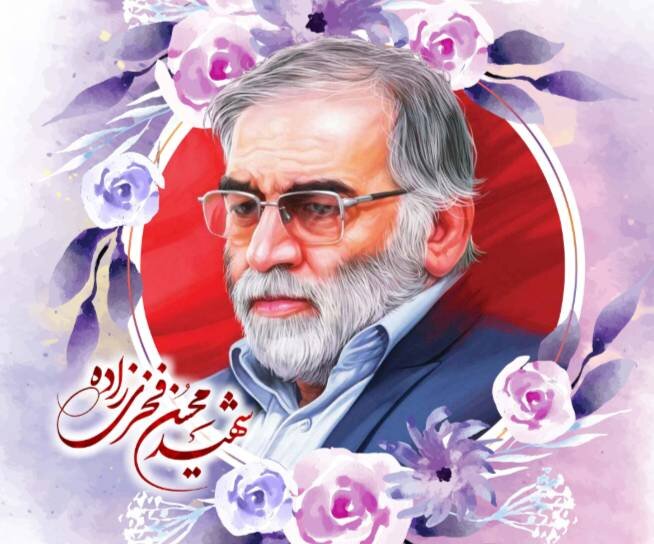
Today, the anniversary of Mohsen Fakhrizadeh’s martyrdom, Iran has officially designated November 28 as Iran’s Day of Innovation and Technology, a day to honor the enduring legacy of one of Iran’s most prominent figures in scientific and technological advancement.
Celebrated to commemorate his extraordinary contributions and tireless efforts in various scientific fields, this day serves as a reminder that true progress and independence come from dedicated scientific jihad, as exemplified by Fakhrizadeh.
On this important day, Iran commemorates not only the life of the pioneering scientist, but also the ideals he embodied: resistance, independence, faith, and unwavering patriotism.
Mohsen Fakhrizadeh, who was martyred on November 27, 2020 at the age of just 50, was awarded the Order of the Second Class by his leaders as a testament to his deep influence and extraordinary dedication.
His life story is interwoven with a story of national resilience and scientific determination.
Recognized as a symbol of jihad (struggle in the path of God), his scientific work was driven by a higher purpose: to serve Iran’s sovereignty, protect its independence, and advance its scientific standing on the world stage.
Born in Qom in 1961, Fakhrizadeh showed extraordinary talent from an early age.
Although he had a PhD in political science, his real expertise was in nuclear physics and biotechnology, areas important to Iran’s strategic goals.

His academic pursuits were driven by a sense of mission for national development, and he quickly emerged as a leading figure in Iran’s defense and scientific circles.
He was a pioneering scientist who believed that science and faith mutually strengthened each other in the quest for independence.
His early participation in defense research projects laid the foundation for Iran’s achievements in nuclear technology, medicine, and advanced materials.
Mr. Fakhrizadeh has held several influential positions, particularly as former head of the Defense Innovation and Research Organization, where he directed numerous projects to strengthen Iran’s defense capabilities.
He played a leading role in Iran’s nuclear program, overseeing peaceful efforts to develop nuclear technology despite aggressive sanctions and international pressure.
His scientific horizons expanded beyond defense. Under his leadership, Iran has made significant progress in producing indigenous COVID-19 vaccines, advances in nanotechnology, and pioneering innovations in nuclear medicine and biotechnology.
His research proved that scientific jihad involves combining faith, accurate knowledge, and practical action, turning scientific knowledge into a tool of national resilience and progress.
Colleagues described him as a humble and dedicated man who worked tirelessly in labs and research centers, often at odd hours, driven by the belief that science was a weapon against arrogance and external threats.
His unwavering dedication earned him great respect both within Iran and abroad.
In 2019, he was awarded the Order of Merit, Second Class, the nation’s highest honor for scientific excellence, in clear recognition for his role as a pioneer in scientific jihad.
This medal emphasized that true independence is achieved through scientific mastery and innovation, rather than dependence on external forces.
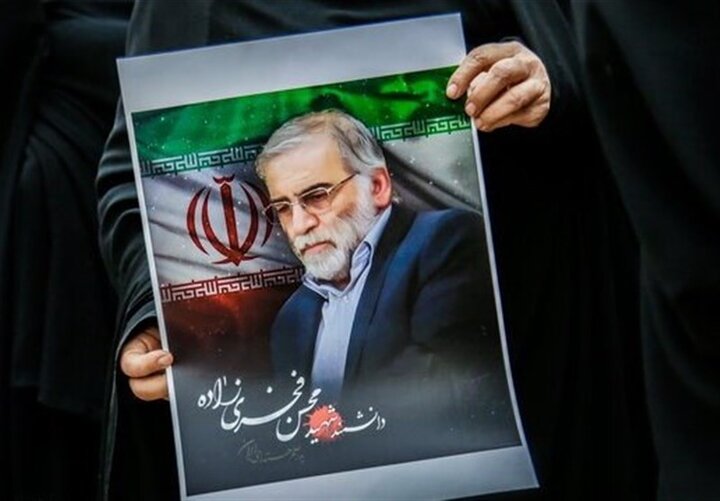
Mr. Fakhrizadeh became the target of the attack at the age of 63, after years of toiling and working at the pinnacle of anonymity. The reason for this targeting can be understood from the following statement he made to his wife: “The more I work, the less sleepy Prime Minister Netanyahu gets.”
No matter how unknown he was to the public, Iran’s enemies, especially the Americans and Israelis, were well aware of him and his influence on advancing the goals of the Islamic Republic of Iran.
This is why his name was on the assassination list for more than 20 years, and for many years he was considered the main target of the Zionists.
Their recognition of his importance was such that the American journal Foreign Policy listed Fakhrizadeh as one of only five Iranians on its list of the world’s 500 most powerful people.
Report by Tohid Mahmoodpour