
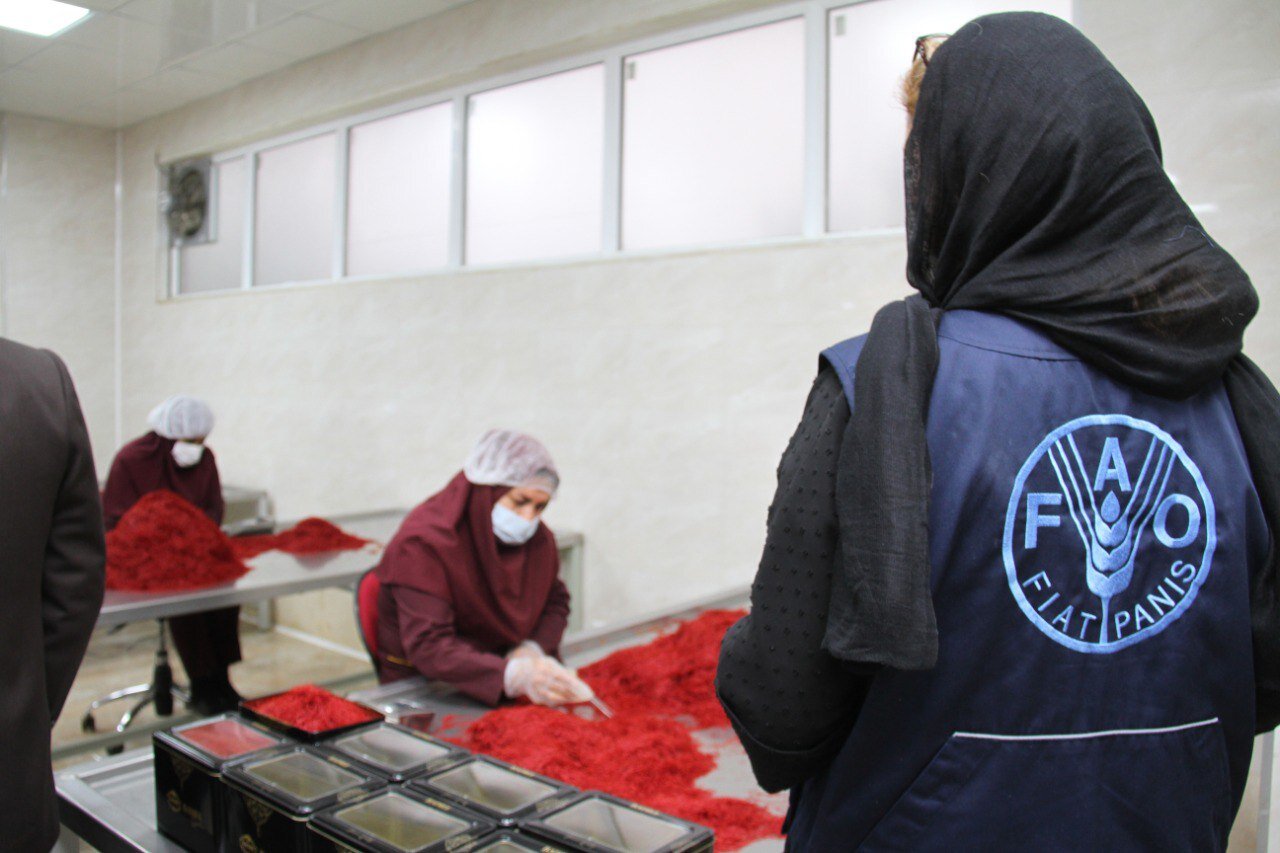
TEHRAN – The Food and Agriculture Organization of the United Nations (FAO), in collaboration with the Ministry of Agriculture Jahad (MAJ) and the Iranian Society of Horticultural Sciences (IrSHS), organized a national workshop on saffron quality conservation and value chain development.
The workshop, to be held from November 25th to 29th, will bring together farmers, processors, cooperatives, traders and national experts to strengthen capabilities in improved production practices, post-harvest handling, safety, traceability, modern marketing and digital branding.
At the opening ceremony, high-ranking officials, including MAJ Deputy Minister of Horticulture Mohammad Mehdi Boroumandi and FAO Representative of the Islamic Republic of Iran Farouk Toirov, gave speeches.
This workshop highlights the need to respond to new challenges, including the pressures of climate change, water scarcity, and increasing global competition. It was emphasized that strengthening quality integrity from cultivation to export is essential to maintain confidence in the international market.
In his remarks, the FAO representative emphasized the importance of innovation that meets modern consumer expectations. “Ready-to-use, user-friendly saffron products such as instant dissolved saffron, pre-dose packaging and smart dispensing systems are becoming central to modern consumer demand,” he said.
He added that these innovations will allow Iran to diversify into high-value saffron derivatives and expand its market reach.
Mr. Toirov emphasized that strengthening quality integrity, transparency, branding and market competitiveness will ensure Iranian saffron continues to set global standards and capture new opportunities in the modern market.
He also highlighted the role of digital platforms in shaping saffron branding globally. “Social media platforms, digital influencers and online branding can play a decisive role in promoting Iranian saffron worldwide and increasing demand for innovative saffron formats,” he said.
In closing remarks, FAO reaffirmed its commitment to support Iran in building a sustainable, competitive and innovation-driven saffron sector. Mr. Toilov expressed his gratitude for the strong cooperation of MAJ, IrSHS, the International Society of Horticultural Sciences, national experts and all stakeholders.
The FAO representative welcomed the United Nations’ efforts to designate International Saffron Day on the international calendar and expressed readiness to provide technical guidance and assistance through appropriate United Nations channels.
World leader in saffron production
Iran produces 85 to 90 percent of the world’s saffron and remains a world leader and benchmark setter of quality standards.
Saffron cultivation is deeply rooted in rural traditions, particularly in Khorasan Razavi and South Khorasan, supporting the livelihoods of hundreds of thousands of smallholder farmers and ensuring the transmission of knowledge across generations.
As a high-value, climate-resilient crop, saffron contributes significantly to sustainable agriculture in arid regions and plays an important role in food security and rural development.
The training was held under FAO’s flagship initiative “Managing food authenticity and food supply chains to achieve SDG success – piloting the saffron value chain” and aims to strengthen authenticity, quality assurance and value chain governance in Iran’s saffron sector and ensure that Iranian saffron continues to be globally recognized for its excellence.