
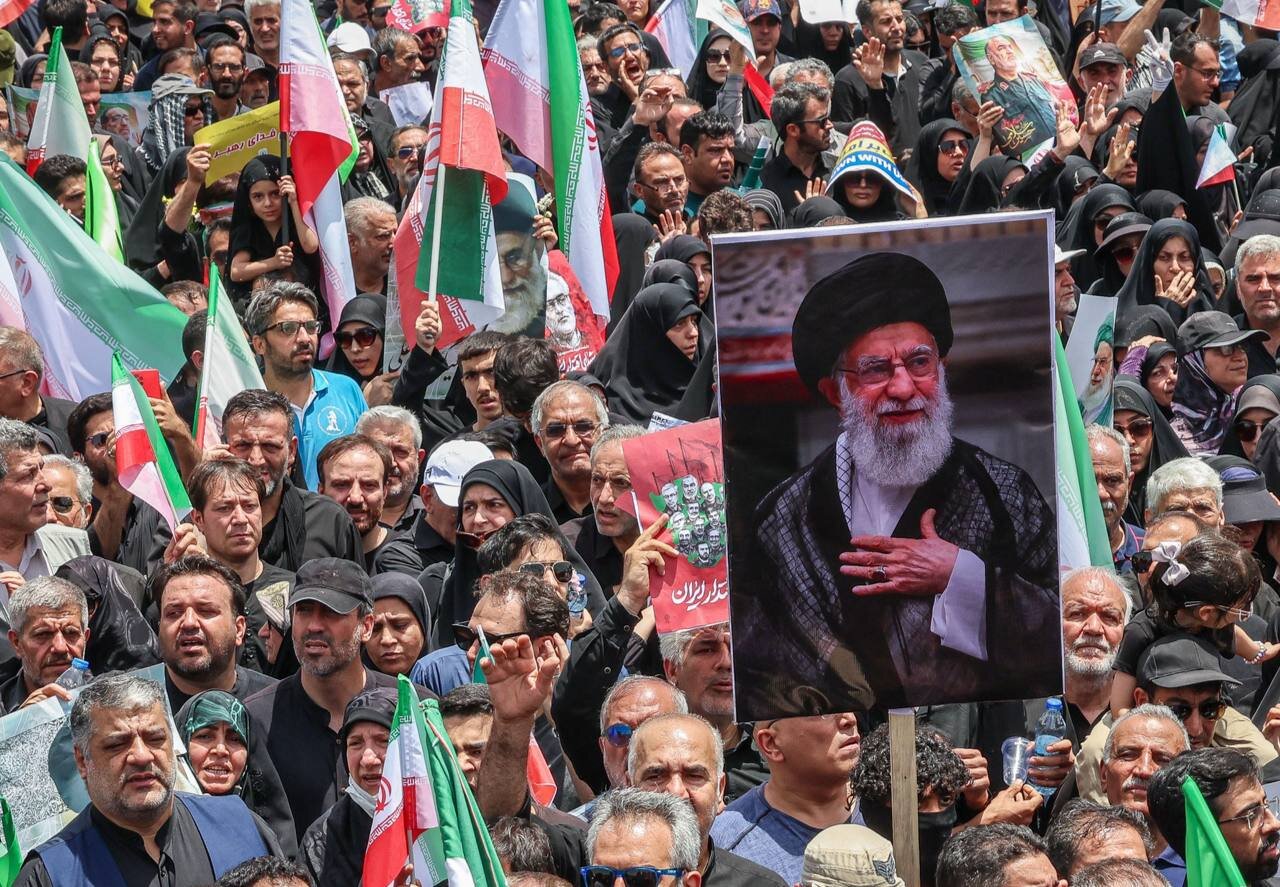
Tehran – Ayatollah Seyed Ali Khamenei, the leader of the Islamic Revolution, is more than just a political leader. He is a deeply respected religious figure. As Marja al-Taklid, who is in power, people not only seek his guidance in solving issues of Islamic law and ethics, but also view him as a central guardian of faith and its values.
This religious status of Ayatollah Khamenei is something US President Donald Trump has not considered in the past weeks, and has poses several threats of assassination of Iranian leaders in the intervening.
Trump said he knew where Ayatollah Khamenei was in the 12-day war between Iran and Israel, but he decided to refrain from assassinating him “for now.” Israeli media said the US and Israel tried to injure the leaders but were unable to grasp his location. After the war ended, Trump threatened Ayatollah Khamenei again, and was furious at the declaration that Iran would never surrender to American politicians or Warmangers.
Meanwhile, the US president appears to believe that attempts to assassinate Ayatollah Khamenei will only trigger a military response from Iran, a price that the US forces stationed in West Asia and the US forces have to endure. But there are other prices that Trump himself pays. Because he threatened not only two months of Shia Muslims, but also among countless Sunnis who have become very fond of Ayatollah Khamenei due to his solid support for the Palestinian cause in the past 20 months.
The potential impact on Trump if he acts on his outrageous threat was highlighted in a statement released Sunday by a prominent Shiite clergy. Ayatollah Naser Makarem Shirazi himself is Marja and responded to the US President’s investigation into escalating rhetoric, clearly stated that anyone who harms Ayatollah Khamenei should be punished for death.
In the written notes, Ayatollah Makarem Shiraj declared:
Under Shia Islamic jurisprudence, “Muhalib” is defined as someone who commits armed rebellion, terrorism, violent crime, or other illegal activities that spread fear and obstacles to society. The prescribed punishment for such a crime is death.
Ayatollah Makarem Shirazi’s statement is interpreted as “fatowa,” a religious order. Iran’s Ayatollah Nouri Hattan and Iraq’s Grand Ayatollah Ali Sistani have issued a similar statement deemed fat wast.
What is fatwa and how serious is it?
Fatwa is an interpretation of Islamic law issued by Marja. It holds all Muslims. In other words, individual Muslims need to ensure enforcement even if the Islamic government is unable to act on it.
In the case of Salman Rushdie, there are well-known examples of states where individual Muslims urged the problem to be put into their own hands and did not act on fatwa.
On February 14, 1989, Imam Khomeini, founder of the Islamic Republic, published a historic fatwa calling for the execution of Salman Rushdi, the author of the British Indians, a blasphemous novel against the Prophet Mohammad (Pbuh). Fatowa said:
Rushdi was forced to hide shortly after Fatwa was issued. He was placed under the protection of the British police 24/7 and lived in a safe house for nearly a decade. In 1989, a bomb exploded at a hotel in London, where Rushdee was scheduled to give a speech.
More than 30 years after Fatwa was issued, when Rushdi emerged from hiding and began to live more openly, contrary to his and the police’s expectations, the threat had not faded. In 2022, Rushdy was stabbed on stage in New York by an attacker allegedly acting on Fatowa. He has since returned to quarantine.