
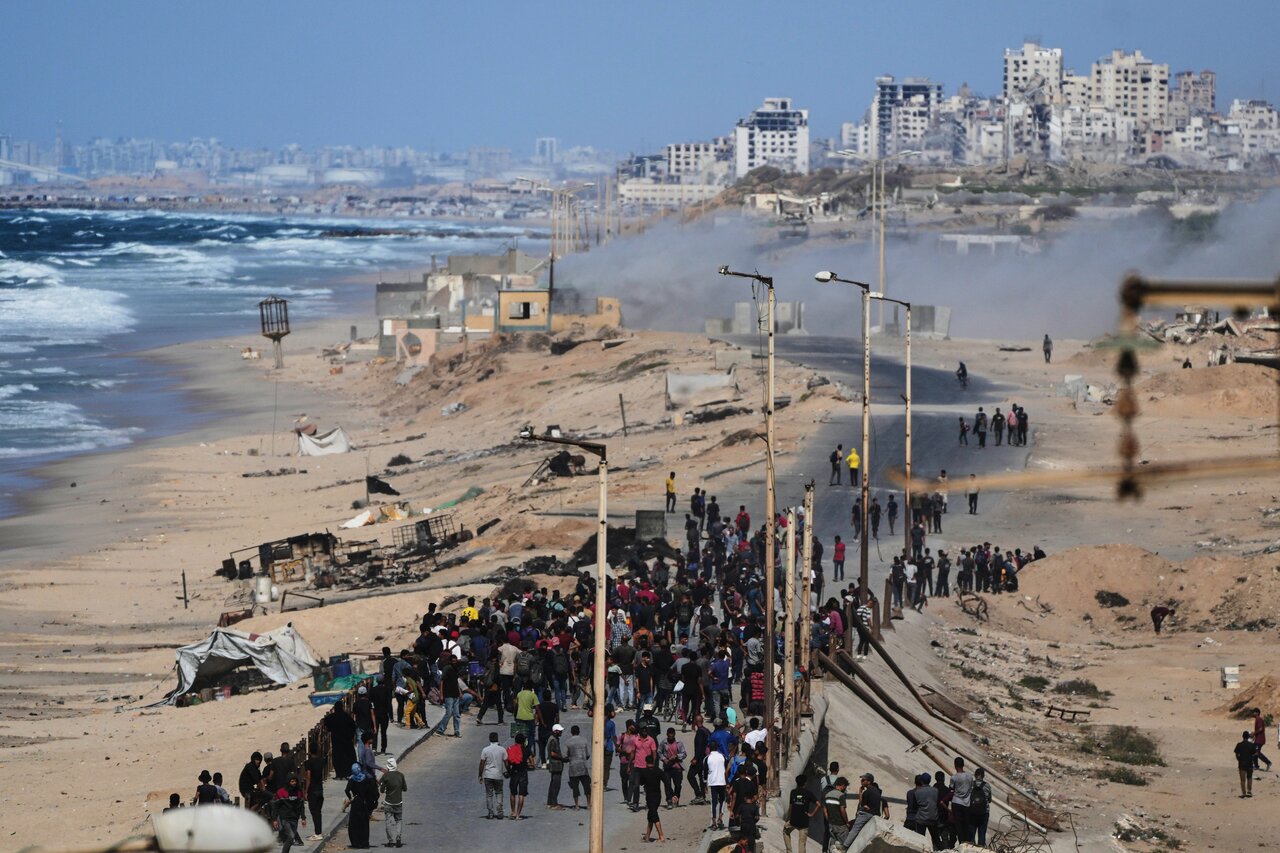
TEHRAN – Tens of thousands of Palestinians returned to northern Gaza on Friday, but the fragile relief of a ceasefire was weighed down by a political ultimatum. This was a reminder that even if there is a pause in violence, it cannot erase deeper struggles over power and sovereignty.
Israeli Prime Minister Benjamin Netanyahu welcomed the ceasefire but insisted it was conditional. He announced that “Hamas will be disarmed” and warned that if that could not be achieved in the “easy way”, Israel would pursue it in the “hard way”.
These words suggest that the moratorium is less a door to justice and more a tactic to extract political concessions from a devastated population.
Hamas and its allies responded decisively. Movement officials welcome international aid, but explicitly reject foreign “tutelage” to replace the Palestinian Authority. A senior Hamas official has declared disarmament under President Donald Trump’s plan “out of the question” and stressed that proposed arms deliveries are “non-negotiable.”
Palestinian groups argue that disarmament and lifting of the blockade are inseparable from restoring political rights. This position reframes the ceasefire as a contest over sovereignty and legitimacy as much as a contest over immediate security.
But while this rhetoric reveals deep rifts, whether the ceasefire lasts will depend on several critical flashpoints. Three fault lines in the immediate vicinity threaten to break the ceasefire.
First is the prisoner exchange. Israel’s initial list for release does not include Palestinian leaders such as Marwan Barghouti, a move that risks provoking public anger and undermining the legitimacy of the exchange.
Second, security management: Israeli forces have only partially withdrawn, maintaining positions that allow permanent surveillance of corridors and intersections, demonstrating how a partial withdrawal can maintain a strategic advantage even during a formal standstill.
Third, the same Israeli officials responsible for two years of devastating bombing and what international observers have deemed genocidal tactics remain firmly in charge, repeating the same threats and rhetoric.
Their calls for mass evacuation and control over Gaza’s future strengthen Palestinian distrust and suggest that reconstruction, rather than true reconstruction, may once again be used as a tool of coercion and demographic manipulation.
The humanitarian ledger brings to light all political issues. Independent tallies and Gaza health authorities put the death toll among Palestinians at more than 67,000, and document massive destruction of homes, hospitals and farmland. Returnees face rubble, unexploded ordnance, and collapsed services.
Three scenarios are currently shaping expectations about what will happen next. The first, and most likely, is fragile stagnation. Gradual prisoner-to-prisoner exchanges and subdued aid create an uneasy calm for months, while Israel maintains a decisive security influence and Palestinian political discontent petrifies.
The second is supervised suspension. Donors have mobilized funds to clear debris and restore infrastructure, but international trustees and technical committees have effectively sidelined Palestinian governance.
The third and most dangerous scenario is rapid collapse. A stalemate over disarmament or high-profile prisoners could give Israel an excuse to resume large-scale attacks.
With Prime Minister Benjamin Netanyahu’s far-right coalition leaning toward hawkish policies to survive, the prime minister facing possible imprisonment if removed from office, and sections of the political establishment and public demanding responsibility for the October 7 operation, the Israeli military could rearm or escalate under the guise of a “security threat.”
History warns of that risk. During the first ceasefire under the Trump administration, Hamas kept its promise to release prisoners, but Israel has broken that promise and launched a new offensive, showing how quickly calm can give way to aggression.
Turning moratorium into lasting peace requires options that current arrangements leave open. A ceasefire therefore risks becoming an interlude that saves lives in the short term while preserving the political structures that have produced the violence.