
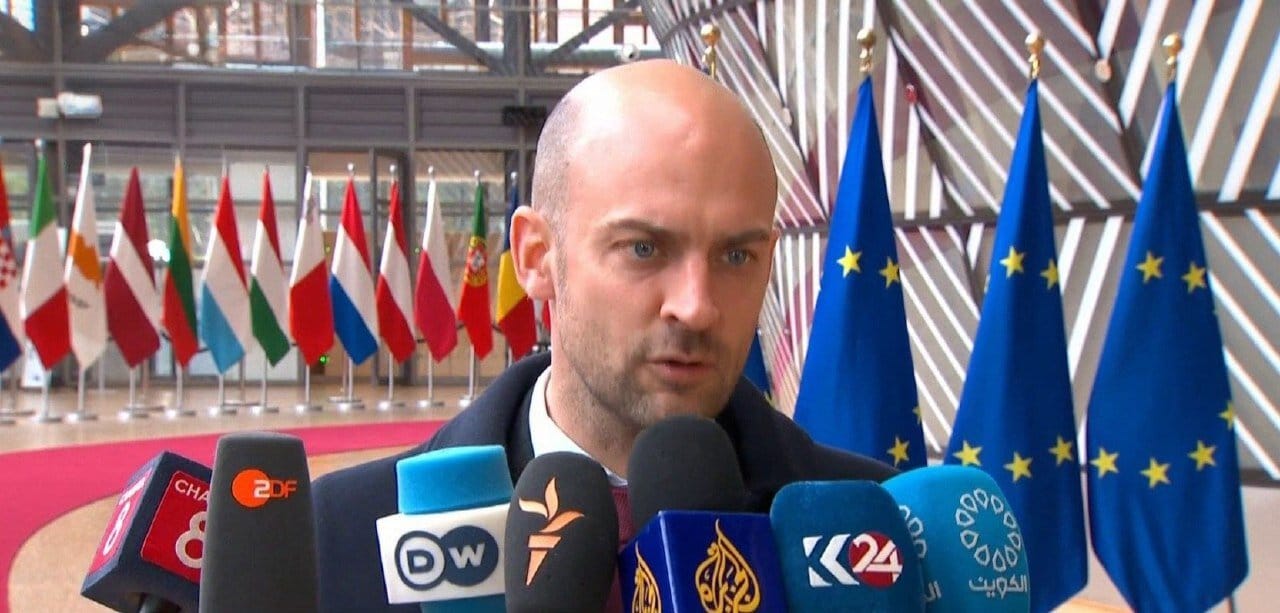
TEHRAN – France, the UK and Germany have threatened to trigger a UN snapback mechanism against Iran by the end of August unless “substantial progress” is made in the recovery of nuclear deals, French Foreign Minister Jeannoel Barro declared on Tuesday.
Speaking in Brussels prior to the meeting of the EU foreign ministers, Barott argued: “France and its partners are justified by reapplying the global embargo on arms, banks and nuclear equipment.
The snapback clause embedded in UN Security Council resolution 2231 (2015) allows participants in the Joint Comprehensive Action Plan (JCPOA) to unilaterally reimpose all pre-2015 UN sanctions on Iran, if deemed “non-compliant.”
This process requires only a formal letter to the Security Council, followed by a 30-day window where sanctions will automatically return unless the resolution is blocked.
Iranian officials have repeatedly denounced the threat as unfounded political motivation.
Foreign Ministry spokesman Esmaeir Bakai emphasized that the 12-day US and Israeli regime war with Iran, which illegally targeted and damaged Iran’s nuclear facilities, essentially undermined the rationale for snapback.
“Relying on this mechanism lacks legal, political or moral legitimacy,” he pointed out, adding that a European violation of the JCPOA further disqualifies calling that provision.
Foreign Minister Abbas Araguchi has issued a warning from Starker. Activating snapbacks would irreversibly end Europe’s role in Iran’s nuclear document.
“If European countries proceed (with mechanisms), solving Iran’s nuclear incidents will be much more complicated,” he said, stressing that diplomacy requires neutrality rather than threats.
He also questioned the credibility of Europe in an interview with Le Monde.
Deputy Minister Kazem Galibabadi suggests a more dramatic measure, suggesting that Iran has suspended all cooperation with the IAEA and proposed withdrawal from the Nuclear Non-Proliferation Treaty (NPT).
European malice and diplomacy erosion
The snapback threat follows the Israeli regime’s US-back attack on Iran, which killed nuclear scientists and targeted civilian nuclear facilities.
The Western silence during these attacks, and the description of German Prime Minister Friedrich Merz’s proxies, as “dirty work,” is exposed to the politicization of the IAEA and the malice of Europe, in Tehran’s view.
Importantly, Iran claims that Europe has confiscated its JCPOA rights by violating its commitment consistently after Washington’s withdrawal under Donald Trump’s first term.
– The Instex trading mechanism failed brilliantly, processing only minor medical transactions.
– European companies (e.g., Total, Siemens) have abandoned Iran under US pressure.
– Oil exports to Europe have plummeted from 2.5 million to less than 400,000 barrels each day since 2018.
Many in Iran believe that Europe has lost credibility in its nuclear deal. They argue that not only did European countries not compensate Iran for the losses caused by US sanctions, they also allowed them to attack Iranian soil, violate their commitments and undermine trust.
From this point of view, Europe and its allies have no right to make this transaction irrelevant and demand full compliance from Iran.
Furthermore, snapbacks destroy diplomatic channels.
Reinvigorating sanctions before 2015 will bring back six UN resolutions, including arms embargo and assets freezes. After surviving years of maximum pressure, Iran dismisses it as “redundant.”
Furthermore, the consequence could release Tehran from IAEA testing and non-proliferation obligations towards the withdrawal of the NPT.
As Iran’s top diplomat Araguchi warns, Europe faces the choice of “constructive role or provocation.” Choosing the latter would render E3 irrelevant in West Asia’s most unstable crisis, he warned.
With the October expiration of resolution 2231 approaching, the August deadline for E3 may determine whether diplomacy is alive and alive.