
“We not only underestimate Iran’s strategic, technical, technical and scientific depth, but also its natural resources,” LeCornu told the French magazine Le Club in an interview.
“We see Iran as if it were a very small country,” he said. The Islamic Republic said it has survived since 1979 despite vast security challenges and is proficient in navigating international sanctions.
Lecornu’s remarks come after Iran brought about a strong response to the US and Israeli attacks last month. On June 13, Israel carried out a clear and unprovoked attack on Iran, targeting and assassinating several senior military commanders and nuclear scientists.
A few days later, on June 22, the US escalated the conflict by attacking three Iranian nuclear facilities. This is a violation of both the UN Charter and the Nuclear Non-Proliferation Treaty. By June 24, following the attacks of 22 Iranian missiles at Israeli military bases, the Israeli regime had declared a one-sided end to that attack.
The attack came when Iran and the United States were in the midst of discussions on Iran’s peaceful nuclear program. Despite consistently saying it has no intention of developing nuclear weapons, Iran is facing pressure and accusations, primarily from the western provinces. Iranian officials argue that the nuclear program is intended for civilian use only under the framework of the Nuclear Non-Proliferation Treaty (NPT), which Iran is a signator.
In his interview, Lecorne mentioned the attacks on Iran’s nuclear infrastructure, claiming that Natantz, Isfahan and Fordau facilities suffered significant damage, adding that “we need to go underground” to fully assess the extent of the damage.
He further stated that Tehran’s technical knowledge has progressed over the past 20 years and is not vulnerable to retreat through targeted assassinations. “Eliminating a small number of scientists will no longer erase their entire knowledge. It may simply create fear and delay the program,” he said.
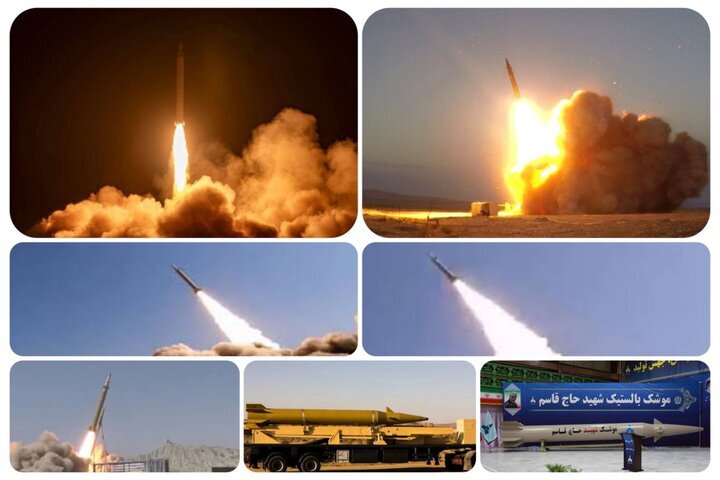
He also points to Iran’s advances in missile technology, calling them “probably the most spectacular in recent years” and says that he now has “full mastery of missile propulsion.”
In his interview, Lecorne mentioned the attacks on Iran’s nuclear infrastructure, claiming that Natantz, Isfahan and Fordau facilities suffered significant damage, adding that “we need to go underground” to fully assess the extent of the damage.
He further stated that Tehran’s technical knowledge has progressed over the past 20 years and is not vulnerable to retreat through targeted assassinations. “Eliminating a small number of scientists will no longer erase their entire knowledge. It may simply create fear and delay the program,” he said.
He also points to Iran’s advances in missile technology, calling them “probably the most spectacular in recent years” and says that he now has “full mastery of missile propulsion.”
MNA/