
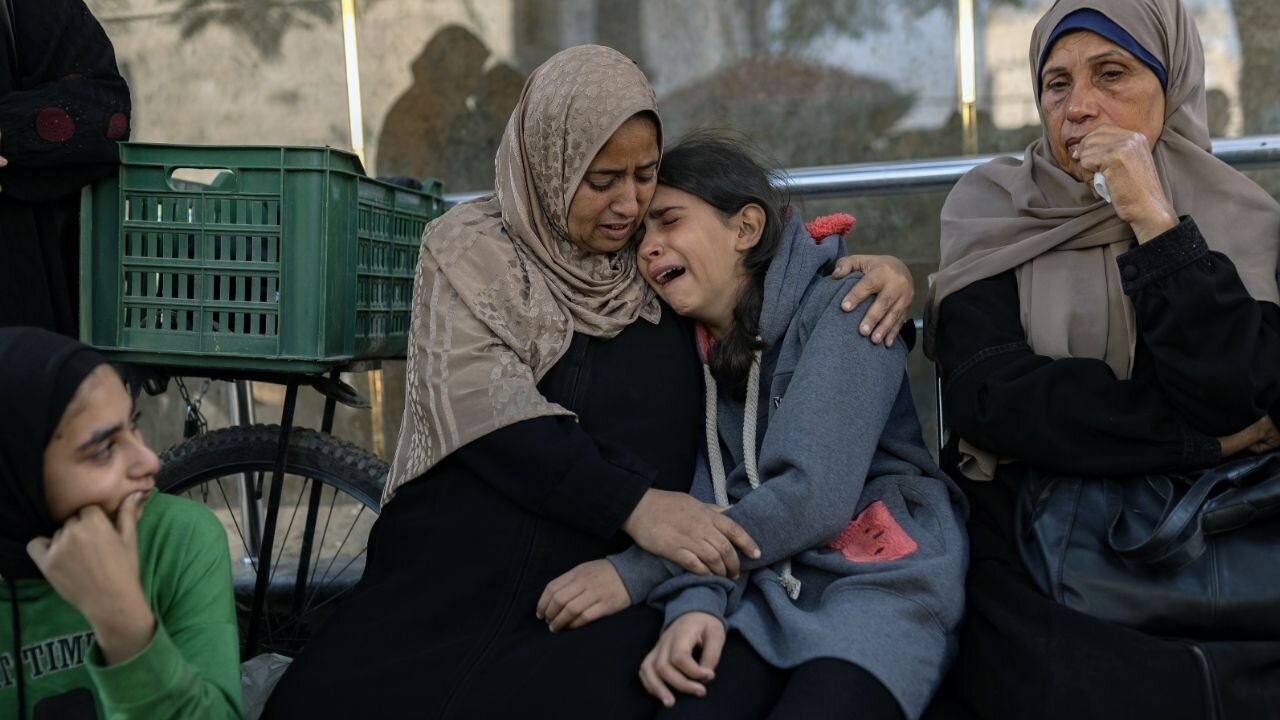
TEHRAN — Despite a ceasefire agreement with Hamas that took effect on October 10, the death toll in the Gaza Strip continues to rise as Israeli forces step up military operations. Israeli forces have advanced across the designated “yellow line,” pushing tanks and armored vehicles into areas where displaced Palestinians have begun to cautiously return.
The invasion has caused new displacement, with families once again fleeing west of Gaza City. Aid agencies report that the advance has disrupted key access routes, forced a reassessment of safe passageways, and delayed the delivery of humanitarian aid to civilians already living in extremely volatile conditions.
Israeli airstrikes between Wednesday and Thursday killed at least 32 Palestinians, including 12 children and eight women, according to the Palestinian Health Ministry. The latest escalation brings the total number of Palestinian deaths since the start of the ceasefire to more than 310. UNICEF confirmed on Friday that at least 67 children have been killed by Israeli shelling since October 10, with an average of two children per day during the ceasefire period.
In southern Gaza, Israeli forces have stepped up attacks on Khan Yunis from both land and sea. On Friday, Palestinian media reported heavy gunfire from Israeli military vehicles east of the city while warships targeted the coast of Khan Yunis. Al Jazeera recorded artillery, air strikes and tank shelling within the yellow line east of Khan Yunis. The Health Ministry said Israeli forces killed displaced Palestinians outside the yellow line south of the city and destroyed nearby residential buildings.
The Israeli military said the attack targeted Hamas fighters after firing on Israeli soldiers in Khan Yunis, calling the incident a violation of the ceasefire. Hamas condemned the attack as a “dangerous escalation”, accusing Israel of justifying its ongoing violations and called on the United States to apply “immediate and serious pressure” to halt the aggression.
The attack came days after the U.N. Security Council approved US President Donald Trump’s plan to move beyond a fragile cease-fire toward what it calls a “sustainable peace” and rebuilding Gaza. But Palestinians on the ground say the plan only serves as a diplomatic cover for Israel to pursue its war. Instead of easing tensions, the Israeli military expanded its operations, undermining the very ceasefire that the resolution was meant to protect.
Despite repeated ceasefire violations, the international community has failed to hold Israel accountable. The U.S. draft resolution passed by the Security Council lacks an enforcement mechanism, meaning Israel faces no sanctions for violations. The resolution does not force Israel to cease attacks or abide by a ceasefire. As a result, Palestinians continue to suffer without significant consequences from the ongoing attacks.
The lack of accountability highlights a broader problem. The resolution calls for calm, but does not prevent Israel from escalating violence. For Gaza’s civilian population, the promise of a ceasefire has proven hollow, replaced by renewed displacement, destruction, and grief.