
TEHRAN – US media reports have blown the lid off the White House’s plans for regime change in Venezuela, revealing an unsubstantiated and flimsy excuse for possible military action.
Ostensibly, President Donald Trump’s administration is framing its potential escalation as a war on drug trafficking, citing allegations of cocaine and fentanyl in Venezuela. But US and UN reports suggest otherwise. Venezuela is not a major source of cocaine, most of the fentanyl that enters the United States does not originate there, and many of the boats targeted by the U.S. military in the Caribbean cannot even reach U.S. waters.
CNN reports that President Trump is considering attacking cocaine facilities and trafficking routes in Venezuela, although officials have acknowledged that the country’s role in the drug trade is minimal. The United Nations and the U.S. Drug Enforcement Administration have confirmed that coca cultivation is concentrated in Colombia, Peru, and Bolivia, not Venezuela. Nevertheless, Secretary of State Marco Rubio and other officials are actively portraying President Nicolas Maduro as a “narco-terrorist” and using these drug claims to justify possible military intervention.
Drop site reports shed more light on the mechanics behind this campaign. Mr. Rubio, a longtime supporter of regime change, has directed millions of dollars in so-called “democracy” funds to military preparations, while U.S. contractors ramp up operations such as combat boats, virtual training programs and intelligence assessments. The leaked documents suggest a concerted effort to position U.S. forces for action and reflect decades of covert interventions, ranging from CIA operations to USAID-backed programs targeting Venezuelan institutions. Presented as “democracy promotion,” these programs have historically served the strategic interests of the United States rather than those of the Venezuelan people.
Narratives about drugs are becoming increasingly proverbial. Access to Venezuela’s oil resources appears to be the real priority, with regime change framed as the most efficient path to securing the resources.
Even military operations ostensibly targeting drugs raise serious ethical and legal concerns. Dozens of people have already been killed in U.S. attacks on suspected drug smuggling vessels, but there is little evidence linking the ships to any smuggling that can reach U.S. shores.
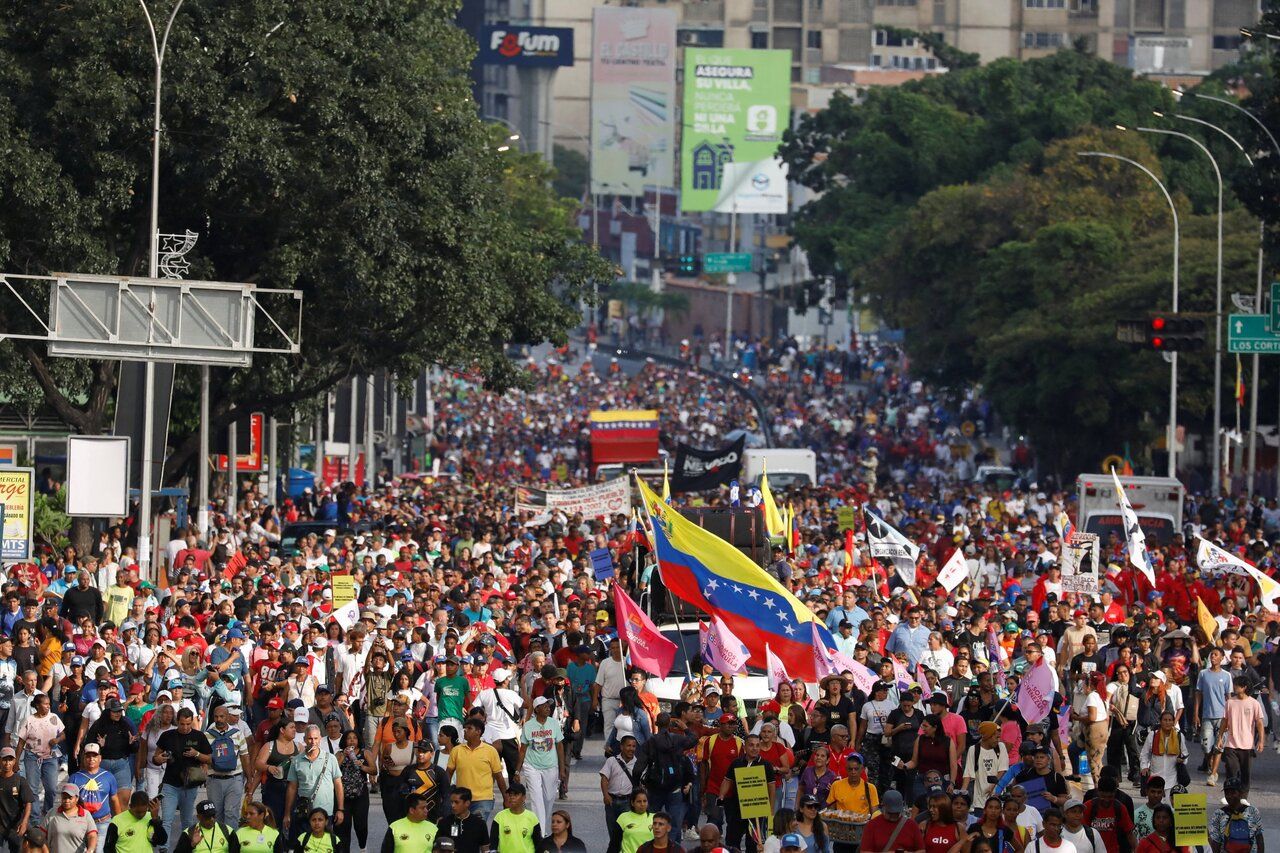
Venezuelans are keenly aware of America’s underlying motives. As journalist Kleiberger Gonzalez told the Tehran Times: “We Venezuelans have made it very clear that the real intention of the US government is to seize natural resources, including oil and rare earths in the south of the country. Therefore, many have responded by supporting President Maduro’s call for mobilization. Furthermore, although we approach our work with strong patriotism and civic spirit, we remain wary of military escalation by the US.”
For decades, the United States has sought to influence Venezuela’s internal politics in the name of promoting democracy. From the CIA’s covert operations to USAID and National Endowment for Democracy programs, Washington has consistently invested in shaping political outcomes consistent with its economic and geopolitical interests. The stakes are now clear: Venezuela’s oil and other natural resources. Caught in the crossfire, Venezuelans remain at the mercy of a foreign policy driven by a desire to control resources rather than security concerns.
In short, the White House’s stated rationale for military action – the war on drugs – masks a resource-driven agenda. Venezuela’s sovereignty and stability remain unbalanced as foreign interests pursue interests that are not their own.