
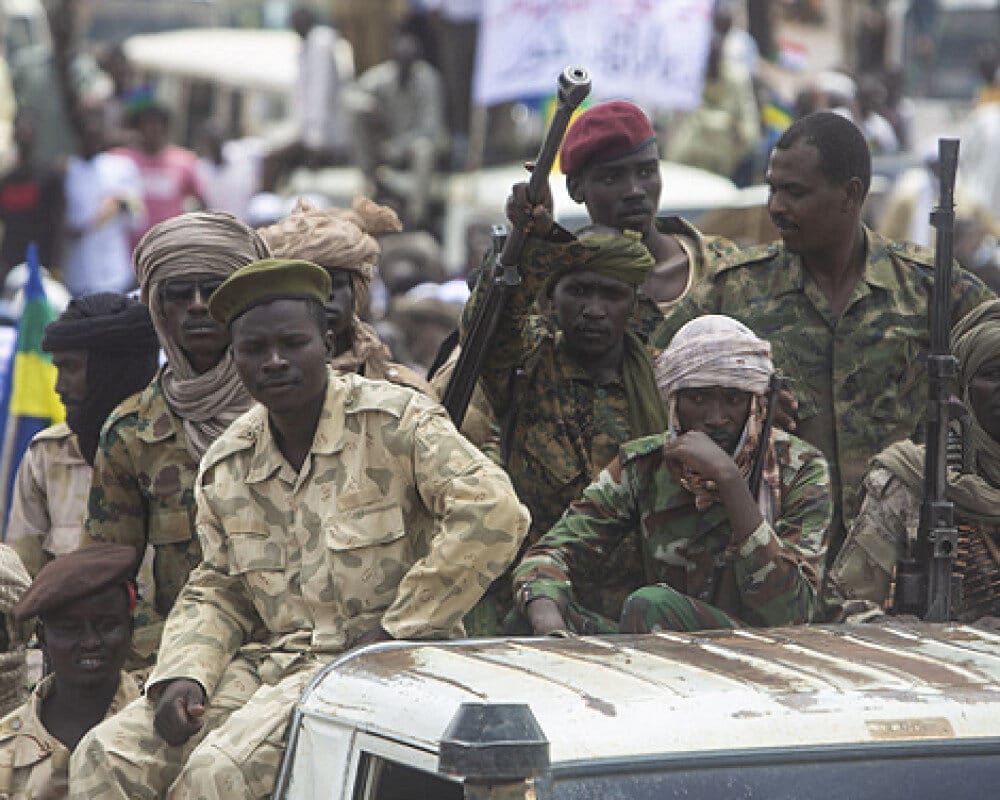
TEHRAN – As the Rapid Support Force (RSF) tightens its grip on western Sudan following the fall of North Darfur state’s capital El Fasher, questions are growing about the involvement of foreign actors, particularly Israel and the United States, in shaping the trajectory of the civil war.
Although Israel does not formally recognize either the RSF or the Sudanese Armed Forces (SAF), there is growing evidence that it is secretly leaning towards it, prioritizing long-term strategic interests over short-term foreign policy. Meanwhile, the United States has publicly condemned the RSF’s atrocities but has done little to curb its closest allies’ support for the group.
Changes on the front lines
On October 26, RSF captured El Fasher, the last SAF stronghold in Darfur. The fall of the city reached a difficult turning point. RSF now effectively controls more than a quarter of Sudan’s territory. The takeover was accompanied by genocide, with RSF fighters reportedly separating men from women and children before executing civilians, according to the United Nations and witnesses. Sudan’s government says at least 2,000 people have been killed, but medical sources cited by Al Jazeera and local witnesses suggest the real number could be significantly higher. The Red Cross described the situation as “completely beyond what we can tolerate” and warned that tens of thousands of people were trapped without food, water or medical aid.
The United States has officially recognized the RSF’s actions in the Darfur city of Juneina during the early stages of the two-and-a-half-year civil war as genocide, and the fall of El Fasher could soon be included in that recognition.
geopolitical interests
Israel’s pivot to the RSF is not ideological but strategic and transactional, deeply rooted in regional calculations.
Future influence: RSF currently controls major areas of Sudan, including parts of Darfur and Kordofan states. By supporting the RSF, Israel becomes involved in the post-war order, especially if RSF commander Mohamed Hamdan Dagalo, widely known as Hemedi, emerges as Sudan’s leading power broker.
Access to the Red Sea: Sudan borders the Red Sea, a vital corridor for Israel’s maritime security and trade. RSF’s territorial gains bring the country closer to Port Sudan and the Red Sea logistics route, giving Israel indirect influence in a region increasingly contested by Persian Gulf states and global rivals.
UAE-Israel-RSF collaboration: A major supporter of the RSF, the United Arab Emirates is also one of Israel’s closest regional allies. Coordination between Mossad and Emirati intelligence services reportedly facilitated covert support to the RSF, including drone warfare tactics and battlefield logistics.
Normalization calculation: Hemedi signaled that he was open to finalizing Sudan’s normalization of relations with Israel, a process that has stalled since 2020. General Abdel Fattah al-Burhan, SAF commander and Sudan’s internationally recognized leader, has also expressed interest in normalization, but Israeli involvement leans more decisively toward Hemedi and the RSF. Unlike the SAF leadership, which is burdened by a rigid chain of command and a legacy of repression, the RSF claims to be agile and pragmatic despite its record of mass atrocities.
Gaza playbook
RSF has begun to mirror Israeli military rhetoric, citing “human shields,” “urban warfare,” and “terrorist enclaves” to justify attacks on shelters, clinics, and mosques. These are not just linguistic echoes, but reflect common strategic principles, such as the use of civilian infrastructure as a battlefield, the deployment of drones for precision strikes, and the framework of mass violence as a counterterrorism measure.
This comparison is very troubling. Just as Israel faces global condemnation for its operations in Gaza, including formal charges of genocide to the International Court of Justice, the RSF is now accused of genocide in Darfur with eerily similar justifications. The fusion of tactics and messages suggests ideological alignment as well as influence in how the war is fought and talked about.
US role
Despite condemning the RSF, the US has done little to rein in its foreign sponsors, primarily the UAE and Israel. This contradiction reveals a deeper truth. Washington’s condemnation may function more as a rhetorical gesture than a policy directive.
The United States continues its close strategic partnership with both the United Arab Emirates and Israel in the rise of the RSF. Sudan’s normalization of diplomatic relations with Israel remains a US foreign policy goal. If RSF is the only actor willing to enter into that agreement, Washington may quietly tolerate Mossad’s involvement, even if it undermines its own genocide designation.
Israeli support is unofficial and channeled through intelligence channels, giving both sides plausible deniability. The result is a policy that allows for strategic ambiguity while demonstrating moral clarity. This is a characteristic of realpolitik during a decade of intense war.