
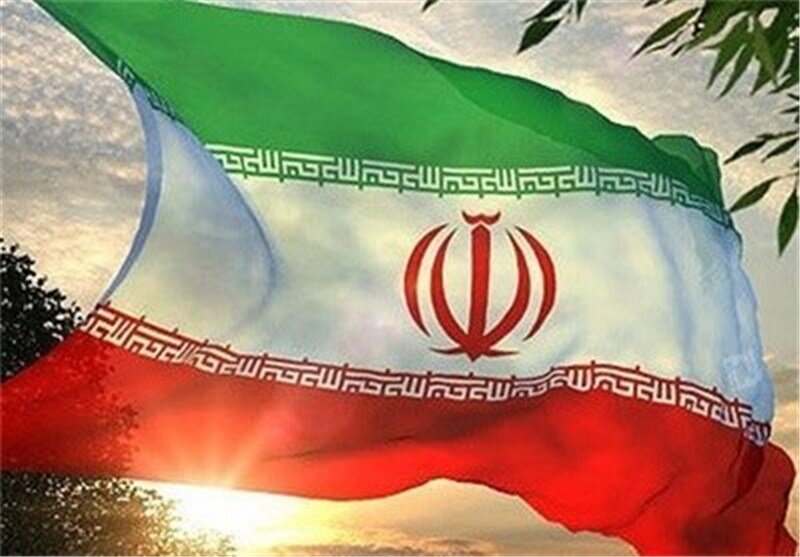
Among the many Western projects and strategies for the country, few are as enduring and deeply rooted as the effort to separate the Iranian people’s national identity from their religious beliefs.
Since the early 20th century, Western think tanks have concluded that Iran’s greatest source of soft power lies not in its natural wealth or military might, but in its unbreakable ties to its faith and national identity. This bond has protected Iran’s identity throughout history, from Alexander and the Mongol invasions to the era of colonialism and the Iran-Iraq War.
It is in this context that figures such as Zbigniew Brzezinski, who served as National Security Advisor under President Jimmy Carter, are often quoted, making it clear that our adversaries understood this connection deeply. Although none of Brzezinski’s direct and documented statements explicitly calls for the separation of “Iranian nationalism” from “Shiaism,” the spirit of such a strategy is clearly visible in the broader U.S. and Western geopolitical agenda. In his famous book, The Grand Chessboard, Brzezinski described Iran as a “crossroads of civilization and identity,” and argued that if a rift developed between Iran’s religious and national elements, the “spirit of resistance” across the region would collapse. This perspective continued to shape Western media and psychological operations against Iran decades later. Although the campaign was launched under the banner of “cultural freedom” and “revival of Iranian nationalism,” it was actually aimed at weakening the ties between faith and homeland.
Soft war against Iran is no longer limited to military threats and economic sanctions. It has evolved into a complex battleground of cultural identity erosion. In recent years, foreign media and Western think tanks have promoted slogans such as “Islam without a homeland” and “Iran without religion,” trying to instill a false sense of duality in the minds of young Iranians. Through targeted content on social media, this cognitive war seeks to suggest that religion impedes national progress and that patriotism is antithetical to Islam.
However, Iran’s historical experience from the Safavid era to the present day refutes this claim. In every era when Iranians came closer to true Islam, their cultural and scientific achievements flourished. The Islamic Iranian civilization that spread from Khorasan to Shiraz and from Isfahan to Tabriz was born not from the separation of faiths and nationalities, but from their union. The Iranian mind never saw Islam as alien, but as a natural continuation of its own culture, a culture that combined Zoroastrian justice and Islamic mysticism in a continuing moral and intellectual tradition.
Islamic Republic: Guardian of Historical and Spiritual Identity
In modern times, the only state that has succeeded in institutionalizing this historical bond is the Islamic Republic of Iran. In contrast to hostile media coverage that attributes religion to backwardness and loss of national identity, the Islamic Republic has defended Iran’s intertwined heritage of history, culture, and faith since its founding.
A glance at modern history reveals that from the Qajar to the Pahlavi dynasties, parts of Iranian territory were lost, from the Caucasus and Herat to parts of the Persian Gulf. Only under the Islamic Republic not an inch of Iran’s land has been ceded. During eight years of war, the nation defended both its territory and its faith with its bare hands. This achievement was not just military, but a product of cultural beliefs that linked religion to national identity and united the Iranian people during the most difficult times.
A number of initiatives have been undertaken in recent years that reflect the Islamic Republic’s dedication to preserving Iran’s national and cultural heritage, from the restoration of ancient ruins and civilized buildings to the revival of the Persian language and the honoring of classical poets. One emblematic example of this cultural integration is the statue depicting the defeat of the Romans before the Sasanian king in Tehran’s Revolution Square. This is a monument that connects Iran’s ancient glory with its Islamic and revolutionary identity.
Islamic revolutionary leader Seyyed Ali Khamenei has repeatedly emphasized this relationship. At a meeting with writers and artists, he said, “Persian is the only means by which we can fully access a huge part of humanity’s ancient heritage.”
He also expressed his aspirations: “I hope that someday Persian will become the world’s scientific language.”
And elsewhere he warned, “I’m really concerned about the Persian language, because it’s being eroded in the general flow of society. Don’t let it be destroyed.”
Seen from this perspective, the Islamic Republic’s cultural policy is not about erasing pre-Islamic history, contrary to Western media depictions, but about integrating Iranian civilization and Islamic teachings. In Revolution Square, national museums and educational systems, names like Ferdowsi, Hafez, Saadi and Mullah Sadra stand proudly alongside those of imams and Islamic scholars. This intentional integration sends a clear message. Islamic Iran does not shy away from its historical memory and civilizational roots. It illuminates them through the light of faith.
In his speeches, the leader often recalled the greatness of Iranian civilization, declaring, “Iran is a country with a glorious history, a people who has preserved its knowledge, literature, and faith through the ages.This country has deep roots and will never be defeated.”
This statement embodies the essence of the Islamic Republic’s view of Iran’s history. History is not a frozen past, but an asset for the future. Within this framework, concepts such as the “new Islamic civilization” are based on the same historical Iranian identity, a civilization that encompasses Ferdowsi and Avicenna along with Motahari and Chamran.
Both faith and patriotism exist in Iran
The Iranian nation is the land of Husayn and Fatima and has always been a defender of Islam and revolution. The bond between the people and their leaders is the secret of Iran’s staying power and honor. This is precisely the axis of cultural resistance to the divisive policies of the West. In the Islamic Republic’s logic, patriotism is born out of faith, not against it. The famous words of the Prophet Muhammad, “Love for the motherland is part of faith,” have long had deep meaning in Iranian culture. From local uprisings against foreign invaders to today’s resistance to global threats, Iranians have always viewed their homeland as an inseparable element of their faith.
Despite billions of dollars being spent on Western media and cultural projects, the truth is that the enemy is failing to achieve its core objectives. The Iranian people have repeatedly shown at critical moments that the link between religion and state is not a government slogan but a deeply rooted national belief. Throughout the imposed wars, terrorist attacks, and even the recent 12-day conflict in the region, Iranians have united across political and class divides in one spirit of defending their homeland and faith.
This sense of togetherness is not just emotional. It comes from the roots of civilization. From ancient times, when Iran was known as the “Land of Faith and Truth,” to the Islamic era, when Persian mystics called on the world to surrender to the reality of God, the Iranian spirit has always lived between two loves: love of God and love of the motherland. In the hearts of Iranians, these two loves are one.
On a grand scale, the Islamic Republic represents the historical crystallization of this enduring bond. Its ideological structure does not deny nationality or dissolve it into religion. Rather, it embodies the coexistence of Iranian civilization and Islamic mission. It is precisely this coexistence that allows Iran, unlike many countries in the Middle East, to maintain its cultural and political independence.
The West and its allies are well aware that no sanctions or attacks can subdue the Iranian state as long as this bond remains alive. In this way, they replaced hard wars with soft wars and media wars. But this too will fail. Because it seeks to separate two inseparable forces in Iranian culture.
history and future match
If we draw a line through history from Persepolis to Karbala, we discover a common truth: tolerance against oppression and defense of human dignity. Persepolis represents the glory of ancient Iran. Karbala represents the steadfastness of believers against oppression. The combination of these two symbols in the consciousness of Iranians today forms the essence of Islamic Iran, the very reality that unsettles its adversaries.
Under the Islamic Republic, this connection has not weakened, and national self-awareness has reached new levels. Today’s youth preserves the poetry of Hafez and Rumi, drawing inspiration from Ashura and the Quran. This integration is what keeps the Islamic revolution alive.
After all, the enemy’s plan to separate religion and nationality is doomed to failure. Because in Iranian culture, homeland and faith are mutual. Throughout its long history, the Iranian people have stood firm, sometimes with the sword, sometimes with the pen, and today with consciousness, whenever an enemy threatens its soil or beliefs.
The Islamic Republic of Iran stands at the intersection of these two eternal principles: a system that protects not only geographical borders, but also cultural and spiritual boundaries. Ayatollah Khamenei said: “The Iranian nation is a nation that is not ashamed of its history and will never abandon its faith. The nation will carry both its history and its religion into the future.”
From Persepolis to Karbala, the path of this land has always been one of faith and steadfastness. Western politicians, biased media, and psychological warfare cannot change this truth. Because in the Iranian soul, love for the motherland is faith, and faith is Iran.