
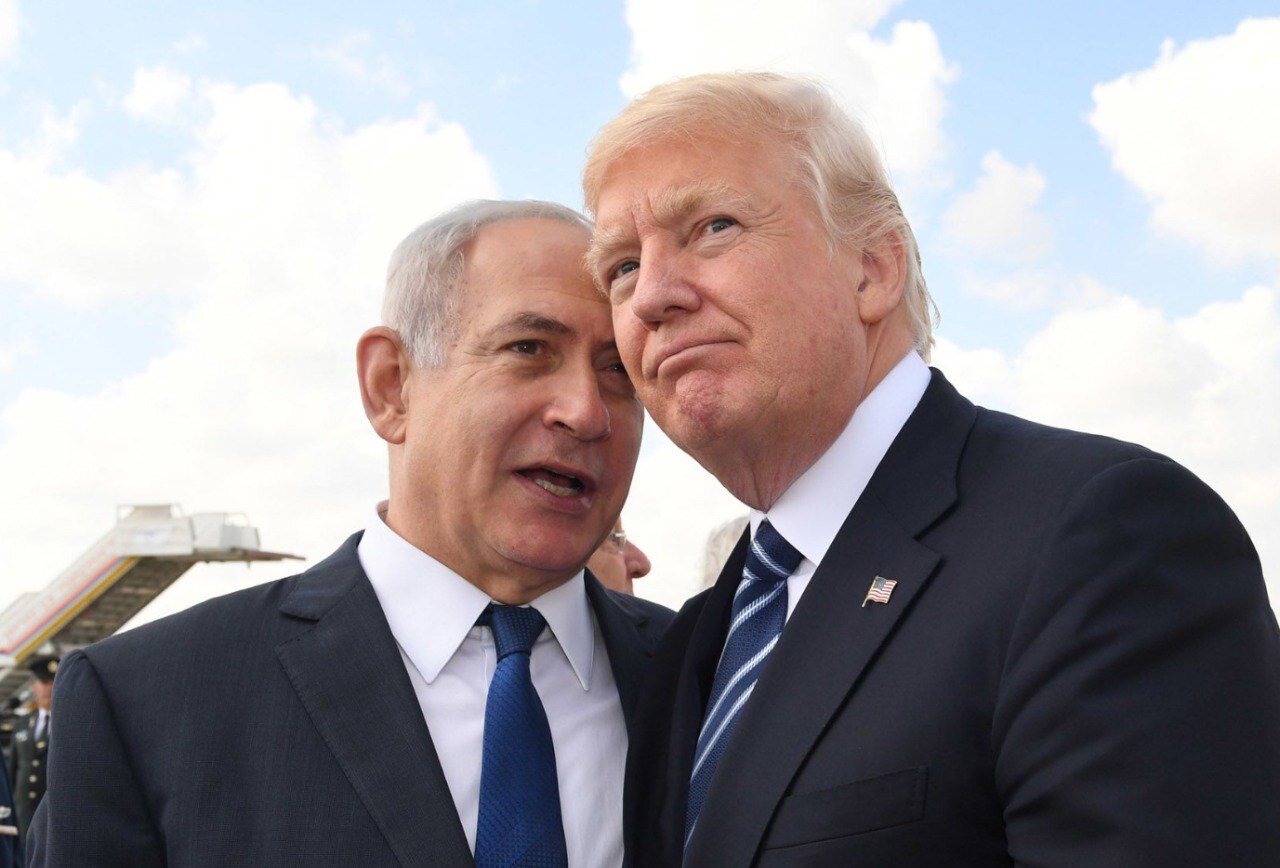
TEHRAN – Israeli Prime Minister Benjamin Netanyahu was belatedly eaphort and euphoric when he addressed the camera on June 13, claiming that he attacked two nuclear sites in Iran, attacking its finest military officials and nuclear scientists, and avoiding the “nuclear holocaust” by targeting the country’s infrastructure.
Twelve days later, when the war ended, he made the same statement with an uneasy expression. He said he achieved a “great victory” by dismantling Iran’s nuclear program and thanked US President Donald Trump for taking part in a fatal campaign and dropping his own bombs at an Iranian facility. Trump also calls the war a victory based on the fact that Iran’s nuclear program has been “decapitated.”
But now, more than a week after the battle halted on June 24th at the request of Washington and Tel Aviv, the facts and justifications presented by the two leaders simply cannot bear it. Several American media have questioned the possibility of completely destroying Iran’s nuclear sites. The most important of them is underground and protected by mountains. Most importantly, the location of Iran’s hundreds of kilograms of concentrated uranium remains unknown.
Furthermore, if Trump and Netanyahu succeed in abolishing Iran’s nuclear program, this will not prevent the country from rebuilding it. If anything, Iranians will face a much easier path if they decide to pursue nuclear weapons given the new mistrust of the International Atomic Energy Agency (IAEA) and the substantial increase in domestic calls for nuclear weapons.
The consequences that the US and Israel had to face to launch a war with Iran were also insignificant. A large strip of Israeli cities in the occupied territory is now abandoned, indicating that this is the first time that settlers have experienced life in the war zone despite having fought several wars with the Arabs in the past 70 years. Furthermore, Iran slammed the US most important military base in West Asia, Qatar’s Al-Udeid Air Force Base, the day after Americans struck the country’s nuclear site. Iran fired 12 missiles at the base, six of which were attacked by targets. In fact, Trump is consistently trying to deny it.
Despite the surprising events of international observers, the truth behind the issue is that none of these and consequences were truly unexpected for analysts and officials who have warned for years that Iran’s nuclear program could not be dismantled for years, even if the US and Israel could physically damage it at some point. Also, Trump and Netanyahu knew best that Iran had a large, sophisticated missile weapon, and that it was sufficient to consistently strike Israel for several months.
All this asks for an important question: Why did Trump and Netanyahu start a war that they knew not to dismantle Iran’s nuclear program? The answer is, very simply, their true purpose lies elsewhere.
A fantasy replicating Syria, Iran
In December 2024, Hayat Taharil al-Sham (HTS)’s army entered Damascus, the capital of Syria, and essentially ended President Bashar al-Assad’s government 24 years and five months after he came to power.
Before his fall, Assad weathered a trial that the rulers of the region had never faced before. He fought against Dahsh terrorists for over a decade, successfully driving most of them from the country throughout the 2010s. He was able to maintain the functioning of the government despite crippling US sanctions that destroyed Syrian economy and created widespread shortages. Recently, he was shunned by many Arab countries in 2011, then slowly and surely returned to the international stage and folded to Arab leaders.
But the government had endured so many things, but it collapsed surprisingly easily in December. To everyone’s surprise, even the Arab Army in Syria, a much-contested unit built over the course of 70 years, could not fight a group of terrorists imported from China and Central Asia. The Syrian army was less equipped than the HTS and was less than the number. It simply did not receive an order involved.
Once the formation of the HTS semi-government in Syria, and the dust settled, local media, which had maintained contact with the previous state, reported that a considerable number of Syrian army commanders and key ministers and associates of Assad had been purchased by the US and Israel through Arab and Turkish intermediaries. Those who remained loyal to Assad eventually fled when they realized that the president himself had no intention of staying. Assad currently lives in Russia, and many of his former commanders currently work for the HTS, and his ministers have either disappeared to him or are against him. It is also believed that a few people who stayed and fought are dead.
When the war with Iran began, many speculated that Israel’s purpose was to replicate its strategy with Hezbollah: decapitation. The argument was that by assassinating Iran’s finest military leader, the regime believed that it would indefinitely delay retaliation, seize the opportunity to destroy Iran’s massive belts, and eliminate the remaining commanders and officials. Ultimately, Israel remains merely a shell of Iranian government and has no real control over the country.
At the time, some of the information we have today was unavailable. After assassinating the generals and scientists on June 13, we know that Israel contacted many Iranian political and military officials and told them that they should announce that they are no longer part of the Islamic Republic or that they are facing the deaths of themselves and their families. The Washington Post has released the audio of one such phone call. There, an unnamed official was instructed to send Israel a video announcing his leave. Ali Larijani, a senior adviser to the leader of the Islamic Revolution, confirmed that he was one of those who received these contacts. About 2,000 staff members received the call, according to an unofficial report.
The idea was that individuals would either side of Israel or simply flee Iran to reflect events in Syria. In doing so, Iran’s formidable military capabilities remained undeveloped, allowing Israel and the United States to overthrow the government. Unlike Syria, there was no need for someone like Al Jolani. The ultimate goal was to collapse Iran and create new governments in several states, so the Tehran Times understands through its sources.
The plan was actually hinted at in a video message released on June 13th. “There are indications that senior Iranian leaders are already packing bags. Shortly afterwards, the Israeli regime spread a video aimed at showing Tehran’s Merabad airport, with black cars heading for the plane. “Look how they’re running away,” a woman’s voice said in the background. The caption accompanying the video circulating on social media claimed it portrays an Iranian official fleeing the country. Of course, this video was produced with the aim of robbing fear among Iranian political and military officials.
I’ve done it before but I can’t do it again
Ultimately, Iranian officials remained loyal and committed. The army quickly appointed a new commander within 12 hours, and all political falls gathered alongside the population behind the leader of the Islamic Revolution of Ali Khamenei, who had vowed to make the enemy “miserable.” Despite the threat of Israel and assassination, Ayatollah Khamenei fulfilled his promise.
We now leave another question: why did Netanyahu and Trump think they could pull Syria away from the move in Iran? Answer: They had already done it in 1953.
In 1953, the Iranian government fell into a coup supporting the United States and the UK, which dismissed Prime Minister Mohammad Mosadegu, who had nationalised Iran’s oil industry. Kermit Roosevelt Jr., CIA operative and grandson of US President Theodore Roosevelt, arrived in Iran that year with a suitcase containing millions of dollars. He used the money to bribe important figures in the military, media and clergy, securing support for the coup. He also funded anti-Mosadegu propaganda, paid protesters in the riots and funded the pro-shah group to destabilise the Mosadegu government. Mosadegu was exiled, arrested and spent the rest of his day under house arrest.
Fast forward to the 2025 battle with Iran, Netanyahu once again seemed to dream of a Roosevelt suitcase. Except this time, the luggage was supposed to include belongings from Iranian authorities.
The final and most important questions remain. Why can’t we accept that the West and its colonial project, Israel, have been fundamentally changing since 1979 and are not enforced through force, threat, or incentives?