
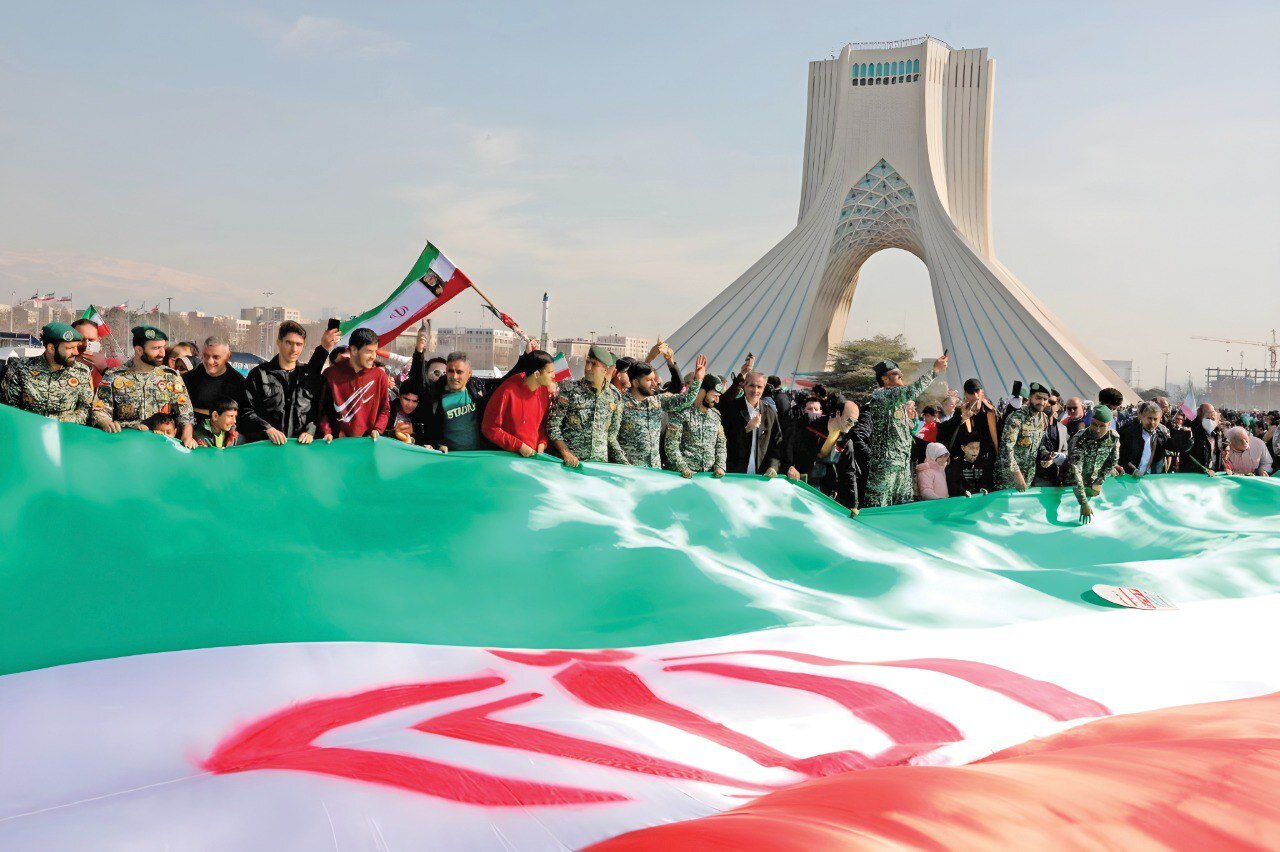
Tehran – Iran is a country made up of different groups of people. The Persians, Azeris, Giracus, Mazandaranis, Balotis, Takmen, Kurds, Lors and Arabs have lived with one another for a long time in a geographical spread that was far greater than what was once known as Iran.
For thousands of years, these communities maintain their own culture and language, connecting the regions close and far, using Persian (farsi) as a general means of communication. Over the past few decades, rising literacy and deeper social integration have only strengthened these ties and solidified the identity of a resilient Iran. This is further supported by DNA studies that reveal intimate genetic links between the diverse ethnic groups of the country. The Iranians of Sistan and Balchestan share more with the Kurds of Karmansha than the outsiders.
It, coupled with all the years that Iranians fought, traded, married and buried under the same sky, has supported Iran for thousands of years, making it the oldest country in history. Whether facing Alexander’s army, the Arab caliph, the Mongol horde, or the British oil baron, the unity and loyalty of the Iranian people is widespread. Today, in 2025, its unification appears to be a major target for Iranian enemies, especially Israel and the United States.
“Great Israel” needs the collapse of Iran
When Jewish refugees arrived in Palestine in the 1940s to escape the horrors of World War II, the Zionist organizations had already worked for several years to establish a Jewish state. Jordan, Lebanon, Syria, Iraq, and even Saudi Arabia. Although Israeli officials have not publicly acknowledged the ideology, Israel has failed to define its borders and continues to define the annexation of the West Bank and Syrian Golan Heights.
Realizing the larger Israeli vision not only requires the removal of existing central governments and autonomous regions within these regions, but also requires neutralising the forces of key regions that can oppose Israel’s expansion. As a result, Iran, the most important non-Palestinian hurdle to achieving this expansionism, must be addressed.
Israel and the United States have used a variety of tactics to hurt Iran over the past 46 years. From sanctions to military action, the two have exhausted different measures to weaken the central government, creating chaos within Iran. One notable tactic involves fueling and spurring separatist sentiment within the country through propaganda campaigns and funding and arming of separatist groups near the Iranian border.
Recently, during the 12-day Iran-Israel war in June, Israeli media has exaggerated the core objectives of the regime. For example, the Jerusalem post writes that Washington must establish a regional coalition for the “division” of Iran and encourage a long-term plan for split or federated Iran. The plan aims to separate Azeris, Kurds and Baltis from the remaining Iranian population. However, Israel’s important focus has always been Kurdish people, scattered across the regions of Iran, Syria, Iraq and Türkiye.
What is the origin of the Kurds?
“The Kurds are one of Iran’s most authentic Iranians,” said Professor Mahmoud Jafari Dehagi, a well-known scholar of Iranian history and ancient Iranian language at Tehran University. He explains that “Kurdish is a modern Iranian language and was linguistically classified as part of the northwest language spoken on the Iranian plateau.”
In Feldouzi’s Shaname, a basic epic poem of Persian literature, composed more than a thousand years ago, the Kurds joined the blacksmith’s Kabe uprising against Zahak, the most notorious full-time figure in epics, to help liberate Iran.
“The Kurds are the main population group within Iran,” Professor Dehagi added. “Historically, they lived under Iranian sovereignty, until after World War I, after the colonies divided Kurdish regions among their neighboring countries.”
However, in their efforts to destabilize Iran, Israel is constantly creating Kurdish and Iranian history. A recent post on X by the son of Israeli Prime Minister Benjamin Netanyahu illustrates this blatant attempt to sow discord between Kurds and other Iranians.
“The Kurds are the world’s largest stateless people, with a population of about 45 million. They are secular and western ally. Their territory is divided and occupied by Turkey, Iran, Iraq and Syria. The son of a war criminal wrote last week.
Aldesil Pashan, a Western Asian scholar and expert on Kurdish affairs (author of the Kurds of the Iran-Iraq War), says that Kurds were sometimes used as Israeli tools. “Let’s be clear – Israel’s sudden “pro-Kurdish” rhetoric is pure political theatre,” he told the Tehran Times. “Israel’s 70-year record proves that they were not Kurdish supporters. In fact, at various points, they have hit Kurdish movements and leaders.”
Pashang spoke about how Mossad operatives helped capture PKK leader Abdullah Ocalan in 1999, and how Israel repeatedly provided Turkey with strategic support for anti-Kurdish operations.
“These latest PR gestures are transparent attempts to destabilise Iran, Turkey, Syria and Iraq by exploiting Kurdish aspirations. Ironically, most Kurdish factions have historically stood against Israeli occupation.