
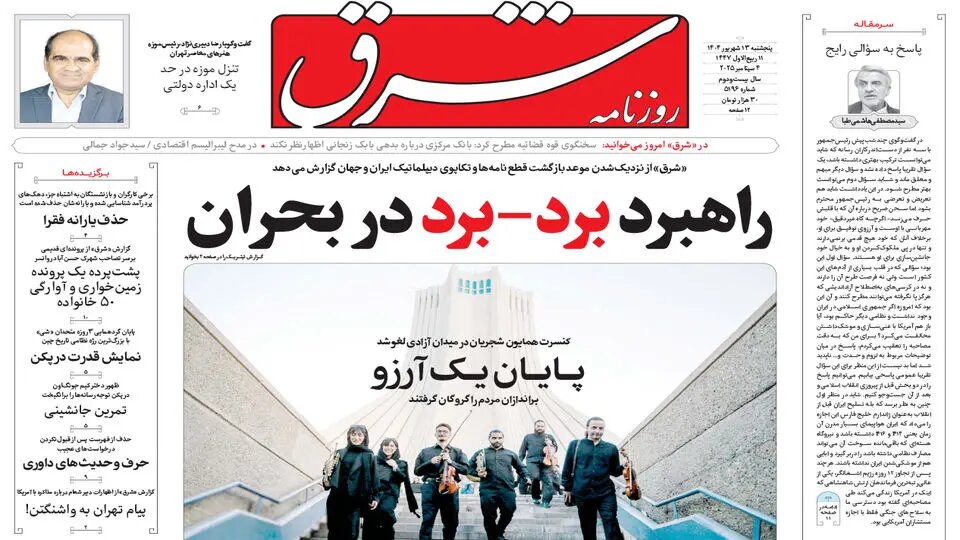
TEHRAN – Sharg investigated new diplomatic moves on Iran’s nuclear issue as European trioes in Iran, France and Germany called out snapbacks to return a UN Security Council resolution against Iran.
It writes, but emphasizes that the three European countries, together with the United States, will maintain maximum pressure on Tehran, Russia and China. Despite Russia and China’s moves and proposals by Iran, the fate of the new resolution remains unknown. Analysts believe Russia may be simply trying to present itself as a mediator, and blame the US and Europe if a failed negotiation occurs. Meanwhile, Europe and the US want to keep Iran in a permanent halt by maintaining its pressure policy on Tehran. Tehran considers this approach a politically frightening email. Iran believes it must work with its Eastern partners legally and economically to create an environment. Ultimately, the future of nuclear negotiations and the fate of the snapback mechanism appears to depend on the extent to which actors can create global consensus and take advantage of diplomatic opportunities. It’s limited, but still an opportunity to exist.
Etemad: National unity is Iran’s most important victory card in negotiations
In an interview with Etemad, Hossein Nourani Nejad, vice-chairman of the Islamic and Iranian Union Party, said Iran’s strength in negotiations with the United States is the unity of its people. He said: Given previous experiences, greater attention should be paid to negotiations with Americans. But the problem that makes up the red line of negotiators is the national interest, maintaining the country and creating security for Iranians. The shadow of a prolonged war, accompanied by a heavy burden of tension and anxiety, must be lifted not only from the hearts of the people, but from the soul of the nation itself. In the current situation where Iran went through a 12-day war, internal unity is Iran’s most important victory card. We must support Iranian negotiators to achieve the best results. This card from the Iranian game must be saved and enhanced. In the past, it was stated that Iran must resolve issues in the field of foreign policy to resolve economic issues. Given the events following the October 7 incident, Iran must resolve issues in the field of foreign policy to resolve economic issues. Today, Iran’s most important victory cards for solving foreign policy problems are national unity and social unity.
Farhikhtegan: Iran opens the door to diplomacy
Fahhictegan writes that Tehran is trying to keep the path of dialogue open despite US attacks on Iran’s nuclear infrastructure during negotiations. With an emphasis on Iran’s compliance with diplomacy, even amidst the halt of the war, it is important in several aspects. Despite the attacks on Iran, the US has always tried to portray Iran as a threat to the region. Iran’s emphasis on trying to solve the challenges through diplomacy sends a clear message to the world that Iran does not only want war, but also tries to manage the crisis through negotiations. Despite responding to aggression, Iran does not welcome war and tries to use peaceful means to manage tensions as much as possible. This time, Iran will be sitting at the negotiation table on the premise that Americans will provide guarantees (not launching war during consultations). This approach shows that Iran is trying to keep the door open to diplomacy and not completely closed. But it doesn’t accept the hopes of the Americans and will not give them any concessions they desire.
Iran: Eastern Front Against Snapback
The Iranian newspaper writes that Iran, Russia and China are forming the front against the return of UN sanctions by European trioes in the Islamic Republic. It said: While only three weeks are left until the UN Security Council’s important 30-day deadline for votes to activate snapback sanctions on Iran, Tehran is relying on decisive diplomatic support from Russia and China to counter Western pressure. By forming the Eastern Diplomatic Front, Iran, together with Russia and China, is trying to neutralize or at least delay this mechanism. Iran is focused on bringing together other permanent and non-permanent members of the Security Council, including Algeria and Pakistan. This targeted diplomacy is rooted in common geopolitical interests and deep global sectors after the Ukrainian War. Russia and China are sectors that seek to maintain balance on the international stage by supporting Iran while keeping space open for negotiations as two main authority over Western hegemony.