
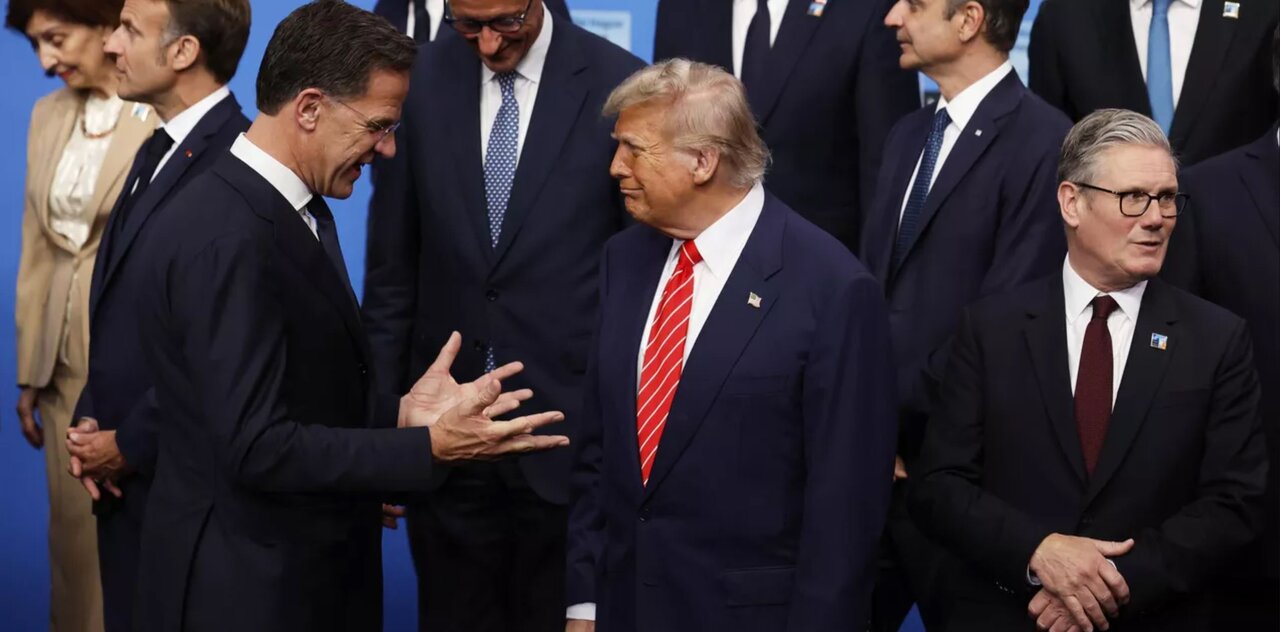
The modern world is experiencing a transition from a unipolar to a polycentric order, one in which power is distributed among many actors, and the ability of states to influence world affairs increasingly depends on their geopolitical capabilities, deterrence, strategic independence, and ability to shape their regional environments.
Through this transformation, the West, understood as a collection of political, economic, and security structures that have dominated world affairs for centuries, now faces serious structural challenges that reduce its ability to maintain hegemony. This situation not only reveals the gradual decline of Western power, but also creates unique opportunities for countries like Iran, which enjoys a privileged geopolitical position, historical depth, and strategic capabilities. Considering these opportunities in relation to Western challenges leads to a more accurate understanding of Iran’s potential role in the emerging world order.
What is the challenge?
Over the past two decades, Western countries have faced a series of intertwined crises that have weakened the foundations of their global hegemony. One of the most significant of these crises is the decline of soft power and decline in normative legitimacy. Expensive and futile wars, interventionist policies, double standards on human rights and security, and support for cooperative but undemocratic regimes have all tarnished the moral and cultural image of the West. This trend has become less persuasive, leaving more room for alternative political and security models to emerge.
Economically, Western countries are facing serious difficulties. Economic stagnation, high government debt, dependence on Asian supply chains, the energy crisis, and intense competition from China and other emerging powers have reduced the economic capacity of the West to maintain its global dominance. A weakened economic sector naturally affects foreign policy and limits the ability to intervene abroad.
Domestically, Western countries are experiencing social fragmentation, political polarization, identity crises, growing extremist movements, and declining trust in elites. These internal pressures force governments to devote energy and resources to managing their internal affairs, reducing their ability to shape their external environments.
Another defining trend is the decline of Western military superiority. The failed experience in Afghanistan, Iraq, and elsewhere, along with high military costs and the inefficiency of the classic war model, shows that Western hard power no longer guarantees success. The rise of asymmetric warfare, advanced drones, cyber operations, and hybrid tactics has reduced the West’s strategic advantage and changed security dynamics.
Meanwhile, the liberal international order, once based on institutions, cooperation, and free trade, is suffering a performance crisis. The inefficiency of global organizations, double standards, and the dominance of power politics over the rule of law weaken the ability of these organizations to manage global crises. This has opened up more space for independent non-Western actors to propose new mechanisms for cooperation, security, and trade.
Taken together, these developments indicate that the structural power of the West is declining, creating a global and regional environment that is increasingly conducive to Iran’s expanding role.
chance
Amid the relative decline of the Western powers, Iran recognizes that its geopolitical assets place it in a position to play a decisive role in shaping regional order and influencing international relations. These opportunities can be analyzed in three main areas: regional impact, economy and energy, and security.
Regionally, the West’s failure to manage the crisis in West Asia has created a power vacuum that Iran could fill. Iran’s influential presence in Iraq, Syria, Lebanon, and Yemen, as well as its role in the security of the Persian Gulf and West Asia, strengthens its position as a pillar of regional stability. This influence is not based on direct intervention, but on organically functioning social, cultural, political, and security networks. As the West’s military presence declines, these strategic networks become more effective and influential.
In the economic and energy fields, Iran remains one of the most important actors in the world. The European energy crisis and the growing demand of East Asian economies for stable resources have reaffirmed the global importance of Iran’s energy geography. Iran’s vast oil and gas reserves, access to the open sea, and location at the crossroads of global energy routes could allow it to play a stronger role in shaping global energy dynamics. Furthermore, the restructuring of world trade routes and the increasing importance of land routes have increased Iran’s position in Eurasian transport projects. North-South Corridor, East-West Corridor and other regional connectivity initiatives could make Iran a future global transportation hub.
On the diplomatic front, the emergence of new international alliances and frameworks such as the Shanghai Cooperation Organization (SCO), BRICS, and various regional economic and security mechanisms are creating new opportunities for Iran to participate in non-Western platforms. The West’s declining legitimacy and diminished ability to impose its preferred international order has given Iran space to propose alternative political, security, and economic narratives. This narrative emphasizes national sovereignty, South-South cooperation, and regional mechanisms for security, an alternative approach to Western military alliances.
In the field of security and defense, Iran’s development of indigenous technologies such as drones, missiles, electronic warfare, and asymmetric strategies has created a stable deterrent force. The decline in Western powers’ ability to carry out military operations has increased the weight of Iranian deterrence and strengthened Iran’s influence in the regional security equation. This deterrence not only protects Iran’s borders, but also helps maintain the regional balance of power, allowing Iran to extend its security beyond its immediate geography.
To effectively exploit the opportunities arising from the West’s structural challenges, Iran can pursue a multi-layered foreign policy strategy. First, it should stimulate a balanced diplomacy that takes advantage of great power competition to maximize bargaining power and prioritizes engagement with the East, the Global South, and independent powers. Second, it needs to expand its energy and transportation infrastructure to strengthen its strategic position and connect its economy to major regional networks. Third, Iran can propose region-building efforts in security, economic cooperation, and crisis management. This is an effort to position Iran as a central player in regional dialogue and provide an alternative to foreign intervention. Finally, strengthening our strategic depth remains essential to ensure national security and neutralize potential threats.
If the structural decline of the Western countries continues, the international system will become even more multipolar. In such an order, states with political independence, defense capabilities, and geopolitical superiority will play an important role. Given its strategic capabilities, Iran is well placed to secure a stable position within this emerging power structure. Reducing Western pressure, increasing bargaining power, and Iran’s ability to act as a bridge between an evolving East and West are among the potential outcomes of this trajectory.
Structural changes and multilayered crises in the Western world have created a series of geopolitical opportunities for Iran. Through its privileged geography, vast energy resources, defense capabilities, strategic depth, and regional networks, Iran is positioned to play a decisive role in the ongoing global transition. By adopting an active foreign policy, balanced diplomacy, strengthening deterrence, and expanding regional cooperation frameworks, Iran can strengthen its role in the future world order and emerge as one of the key players in international politics.