
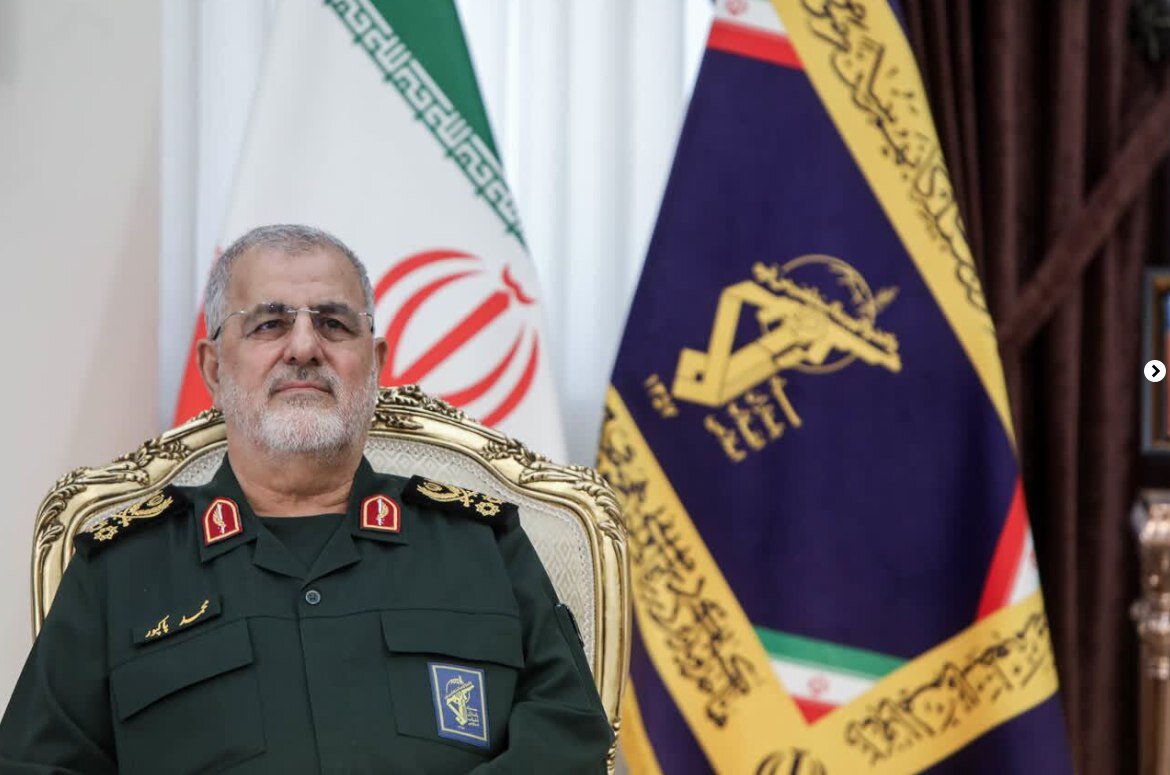
TEHRAN – The Supreme Commander of Iran’s Islamic Revolutionary Guards Corps (IRGC), Major General Mohammad Pakpour, has declared that Iran is fully prepared to respond decisively to any future acts of aggression, warning that “we will give hell to our enemies.”
The announcement was made during a meeting in Tehran with Iraq’s National Security Adviser Qassim al-Araj and his delegation. Both sides discussed regional security, bilateral cooperation, and continued efforts towards implementation of the Iran-Iraq Security Agreement.
Mr. Al-Araj conveyed greetings from the President and Prime Minister of Iraq to Major General Pakpour, reaffirming Baghdad’s determination to prevent Iraqi territory from being used against Iran. “Iran’s security is Iraq’s security,” he said, stressing that the misuse of Iraqi soil for hostile activities is firmly rejected. It also announced the creation of a joint committee to monitor the implementation of bilateral security agreements and prevent illegal activities along the border.
Commenting on recent developments in Gaza, al-Araj expressed skepticism about Israel’s commitment to the ceasefire and warned that violations were likely. He stressed that regional unity is essential to maintaining peace and stability. “During the 12-day war between Israel and Iran, the enemy expected the Iranian people to revolt against their government, but the nation demonstrated its commitment to revolutionary principles through national unity.”
Foreign Minister Pakpour welcomed the Iraqi delegation and said that this meeting was particularly meaningful considering the current political and security situation in Iraq. He warned that regional adversaries aim to weaken the internal cohesion of neighboring countries. “During the 12-day war, Israel attempted to disrupt Iran’s national unity by targeting its commanders and inciting unrest, but the leadership of the Supreme Leader and the vigilance of the Iranian people thwarted these plots,” Pakpour said.
The head of the Revolutionary Guard emphasized Iran’s military capabilities, saying, “Although the enemy initially assumed that our missile power would be reduced, we acted decisively and precisely destroyed the target.” He reiterated Iran’s readiness to respond strongly to any future aggression, declaring: “We will give our enemies hell.”
Pakpour also praised Iraq’s efforts to control the insurgency during the conflict and called for full implementation of the security agreement, including the establishment of field committees to monitor border areas. He stressed that such groups are a threat to both countries and must be managed through joint cooperation.
Mr. Al-Araj reaffirmed Iraq’s determination to thwart all threats against Iran from within Iraq. “During the 12-day war, we did not allow rebel activities, and we will continue to resolutely prevent such activities,” he said.
The meeting ended with both sides stressing the importance of strengthening security cooperation and operationalizing bilateral agreements, and with Iraqi officials reaffirming their political and moral commitment to Iran.
President Pezeshkian praises ‘exceptional’ level of Iran-Iraq relations
Iranian President Masoud Pezeshkian said in a meeting with Qassim al-Araj on Tuesday that relations between Iran and Iraq are “exceptional” and called for deepening cooperation across political, economic and security fields.
Pezeshkian said expanding ties between Tehran and Baghdad will not only strengthen bilateral relations but also promote unity among Islamic countries.
“If unity prevails among Islamic countries, the conspiracy of the United States and the Zionist regime will fail,” he said.
The President highlighted the Iran-Iraq rail project as a key priority and urged Baghdad to expedite its implementation. He said the link would strengthen trade, tourism and cultural exchanges while connecting regional economies and promoting stability.
“Completion of this project will help establish a joint free zone that will facilitate cross-border commerce and bring prosperity to the region,” Pezeshkian added.
Mr. Al-Araj reaffirmed Iraq’s commitment to the bilateral security agreement, stressing that “the security of Iran and Iraq are inseparable.” He said Baghdad is determined to keep its borders among the safest areas in the region and deter any threats against Iran.
He called the rail project a strategic initiative and said it would further promote political and economic integration between the two countries.
Kurdistan Regional Government Interior Minister Leber Ahmed also attended the meeting, expressing support for Iran’s stability and pledging to uphold the security agreement. “We are already taking practical steps to do that,” he said.
Iraq must not allow Iran to use its territory and airspace: Iraqi government official
Iraq’s National Security Adviser Qassim Al-Araj reaffirmed that Baghdad will not allow its territory or airspace to be used for any hostilities against Iran, stressing that Iraq views Iran’s security as inseparable from its own security.
Al-Araji made the remarks during a meeting with Ali Larijani, secretary of Iran’s Supreme Council for National Security, in Tehran on Monday. He stressed that Iraq opposes the use of sanctions as a political tool and supports conflict resolution through diplomacy and dialogue. “Every country has the right to pursue peaceful nuclear energy, and any differences, including the Iranian nuclear issue, must be resolved through negotiation, not coercion,” he said.
Larijani said Iran’s National Security Council would consider further requests for negotiations by the International Atomic Energy Agency (IAEA) after three European countries activated a snapback mechanism to reinstate UN sanctions lifted under the 2015 nuclear deal.
He criticized Britain, Germany and France, calling them “illegal acts” and claiming their actions invalidate the cooperation agreement between Iran and the IAEA signed in Cairo last month. “If a government agency makes a request, it will be reviewed by the Council Secretariat,” Larijani said, reiterating that the snapback process undermines the diplomatic framework of the JCPOA.
Larijani also accused the United States and Israel of abusing Iraqi territory in the recent invasion of Iran, and thanked Baghdad for its firm stance during the 12-day conflict. He said Al-Araj’s visit was an important step towards deepening security cooperation and regional stability.
Iran, Iraq call for global action to end Israeli genocide in Gaza
Iranian Foreign Minister Abbas Araghchi and Iraq’s national security adviser called on the international community to take urgent action to stop Israel’s genocide against Palestinians in the Gaza Strip.
Al-Araji, who heads Iraq’s senior security delegation, met with Araghchi in Tehran on Monday night to discuss strengthening bilateral cooperation and the situation in Gaza and Lebanon.
Both sides expressed deep concern over Israel’s repeated violations of the Gaza ceasefire agreement and called on the world to end the atrocities and ensure the unimpeded flow of humanitarian aid.
Mr. Araghchi praised the depth of Iran-Iraq relations across various fields and emphasized the importance of continued coordination and enhanced border security cooperation.
Mr. Al-Araj briefed the Iranian Foreign Minister on progress in implementing the bilateral security agreement and reaffirmed Baghdad’s firm commitment to the agreement. He praised the unity and steadfastness of the Iranian people and stressed that Iraq will not allow its territory to be used for hostilities against Iran.
Both officials also emphasized the need for joint action among Islamic countries to counter Israeli aggression and expansionist policies.
Israel’s war on Gaza has so far claimed more than 68,100 lives and injured more than 170,000 since October 2023. A ceasefire went into effect on October 10, but Israeli airstrikes have repeatedly broken it, with Gaza authorities saying nearly 100 Palestinians have been killed and 230 injured since it began.
On June 13, Israel launched a blatant and unprovoked act of aggression against Iran, sparking a 12-day war that left at least 1,064 people dead in the country, including military commanders, nuclear scientists, and civilians.
The United States also entered the war by bombing three Iranian nuclear facilities in a serious violation of international law.
Earlier, Iraq’s National Security Adviser also visited the Iranian Parliament and met with Parliament Speaker Mohammad Baqer Qalibaf, underscoring the extensive diplomatic and political engagement between Tehran and Baghdad in parallel with continued security cooperation.