
Lebanon’s Hezbollah currently stands at one of the most sensitive crossroads in its history, a situation rooted in broader dynamics in West Asia and the strategic policies pursued by Washington and Tel Aviv.
Through political maneuvering and military pressure, President Donald Trump’s administration and its regional allies are ramping up the pressure. Under the slogan of “regional peace,” their strategy is to weaken resistance to occupation and promote disarmament.
In this atmosphere, Hezbollah’s actions in recent months reveal a deliberate and intelligent strategy to manage the movement’s two main challenges.
The first challenge is Israel’s continued sporadic and targeted attacks on Lebanon.
Since the ceasefire between Lebanon and Israel was announced, Tel Aviv has repeatedly violated the ceasefire, reportedly over 4,000 times, while continuing to carry out targeted assassinations inside Lebanon.
Many see this pattern as an attempt to provoke Hezbollah into a large-scale response, thereby fabricating a pretext for starting a comprehensive war.
Hezbollah’s response was one of tactical restraint, rather than succumbing to impulse or opening up a wide range of conflict fronts.
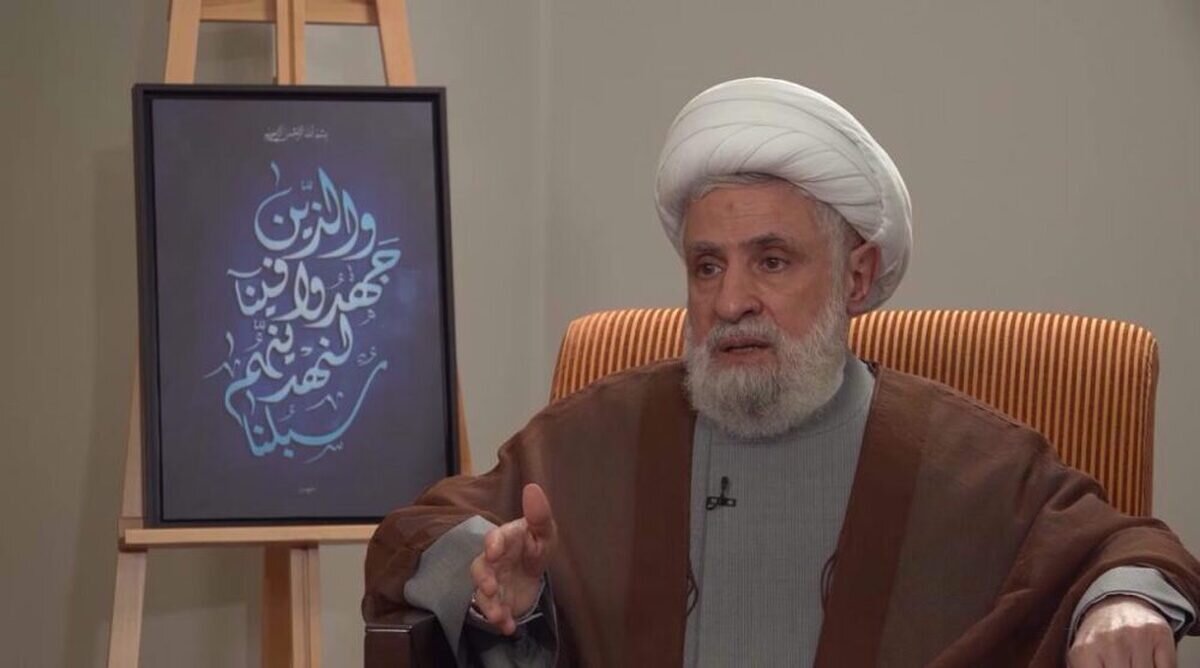
Recent statements by Hezbollah Secretary-General Sheikh Naim Qassem reflect this stance of full defense readiness and a clear refusal to accept any attempt to weaken resistance.
In an interview with Al-Manar, Sheikh Qasem stressed: “When we say we are ready, we mean ready to defend, not to start or start a war. But if combat is imposed, we will not allow the Israelis to pass, even if we only have pieces of wood.”
The second challenge is political and diplomatic pressure, primarily from the United States and Israel, aimed at disarming Hezbollah.
Lebanon itself faces a deep economic crisis and complex political divisions. Internal provocations could escalate into a long-term, country-wide crisis, and any faction could get worse.
However, Hezbollah persistently emphasizes the legitimacy of the weapon as a means of national defense and seeks to prevent the issue from triggering a civil war.
Rather than confronting Lebanon’s political currents head-on, the movement’s approach was to maintain internal stability and deny outside actors the opportunity to exploit internal rifts.
This smart strategy is based on three pillars. Restraint against Israeli provocations. Preservation of the resistance arsenal as national security. and strengthen political and social cohesion within Lebanon.
Together, these factors can maintain deterrence and avoid the risk of drawing the country into the very wars that foreign projects are about to wage.
In the end, by navigating volatile regional conditions with calculated restraint, Hezbollah was able to transform an external threat into a demonstration of national responsibility and crisis management, successfully defending its frontier while preserving the nation’s internal cohesion.
Source: Sedaye Iran, Online Newspaper of the Islamic Revolutionary Institute of Iran, October 27, 2025