
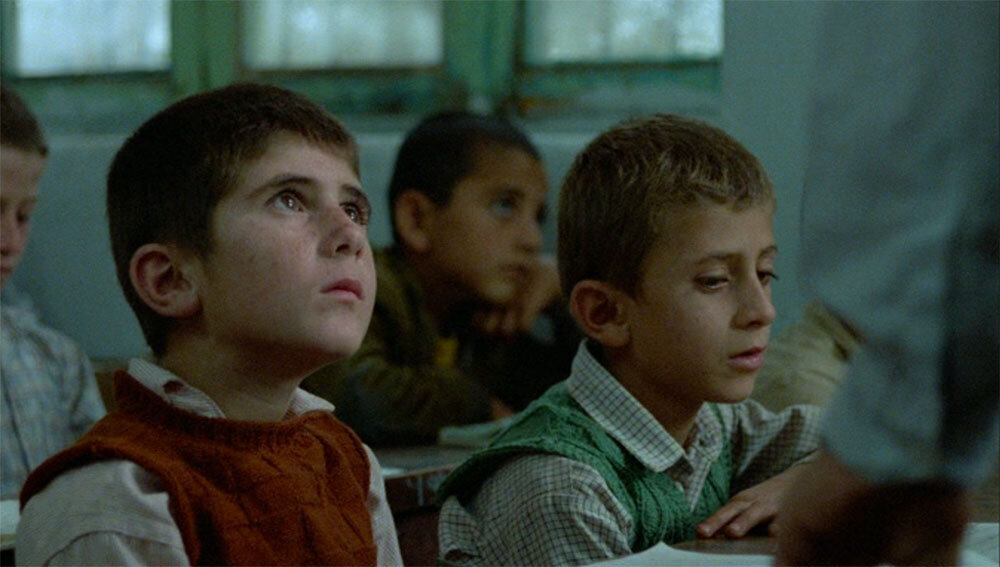
TEHRAN – The “Iranian Hometown Film” initiative was launched on Saturday with a screening of a restored version of Abbas Kiarostami’s highly acclaimed film, “Where is my friend’s house?”
The event was attended by well-known Iranian figures, including cinematographer and screenwriter Mahmoud Kalali and writer Abdul Jabal Kakai.
Announced by the Iranian Film Group (COI), the event aims to showcase five iconic and classic Iranian films restored by the Iranian National Film Archives. The initiative aims to celebrate the rich legacy of Iranian films through a series of screenings and discussions, the report added.
COI director Raed Fereidzadeh has announced that the program launched at the Film Museum will continue at various cinemas across the country.
On the first day it featured a restored version of “Where is my friend’s house?”, directed and written by the late Abbas Chiarostami. The screening was followed by a panel discussion with participation from Mahmoud Kalali and Abduljabal Kakai, moderated by Hamid Reza Modakek.
Produced in 1987, “Where is my friend’s house?” Ahmad, an eight-year-old boy living in an Iranian village, accidentally takes his friend’s notebook home. Ahmad must return the notebook to a friend’s house the next day before. Otherwise, your friend will be expelled from school.
The story may seem simple, but Kiarostami’s subtle storytelling techniques, stunning use of the landscape and understated performances enhance the film into a moving, poetic experience.
The film has received high praise from many critics and is considered to be one of Kiarostami’s most beloved works. It is also recognized as an important member of Iran’s new wave. The Iranian cinema movement rejected the commercialism of early Iranian cinema in favor of a more artistic and socially conscious approach to filmmaking.
Kiarostami’s “Where is my friend’s house?” It captures the essence of Iranian village life through the lens of a meditative, sensitive, innocent and fascinating story. The film is a masterpiece that introduces Kiarostami’s deep understanding of human emotions, modest filmmaking, and the observation of complex social and personal moments that are not noticed by the world at large. The simplicity of the film is its strength, providing viewers with a thoughtful and moving perspective on life.
“Where is your friend’s house?” It has won several awards since its release, including the bronze leopard at the Locarno International Film Festival in Switzerland. The film also won a critical award at the Sao Paulo International Film Festival and a Pacinetti Award at the Venice Film Festival.
The programme will progress in the coming days with “Girane” by Rahshan Banye Ettmad and Mohsen Abdulbahab, “Rand of the Sun” by Ahmadreza Darvish, “The Stone Lion” by Rahshan and Mohsen Abdulbahab by Captain Khorshid, and “Captain Khorshid” by Nasser Taqvai. The simultaneous screening of these films, which began on Saturday, will take place in Tehran and several other cities.
“Stone Lion” revolves around the mysterious death of the British. The British were found in the Bahuchiary area and killed with a sickle. Khoda Morad, a local artisan known for making stone lions, and his companion Kohyar, buried the bodies of the victims to hide the crime.
As the investigation unfolds, Amelie, an officer with a British diplomat, arrives to uncover the truth behind the murder. Their enquiries lead to the arrest of Kohiar, who was accused of murder. This accusation causes tensions and conflicts among villagers.
“Gilehaneh” tells the story against the backdrop of the great Year Days during the Iran-Iraq war as Tehran faces a merciless missile attack. The film follows Gilaneh, a lonely middle-aged villager. At the same time, she embarks on a journey that illegally abandons his military service, searching for his step-son with her daughter.
Contrary to the background of the Iran-Iraq war, “Land of Land” depicts the tragic chaos at the hospital of Khorramshahr, surrounded by land and air by Iraqi forces. Leading by the young and determined Jahan Ala, efforts are being made to evacuate injured, women and medical staff through ambulances. However, during the escape, they face continuous attacks, resulting in scattering of casualties and survivors throughout the city. Among them is Dr. Kasla, an ambulance driver, a widow considering surrender for safety and financial reasons, and a nurse named Honey, accompanied by two infants, a captain and an Iraqi officer taken to prisoners.
“Captain Holcid” tells the story of a one-handed sailor facing harsh living conditions in his village. Khorshid, who was initially reluctant, agrees to a dangerous mission. However, the journey takes a dark order when the criminal commits murder, steals funds and opposes him. In a fierce conflict, Holshid defeats the criminal on his own, but succumbs to his injuries.
Photo: Abbas Kiarostami’s scene: “Where is my friend’s house?”
sab/