
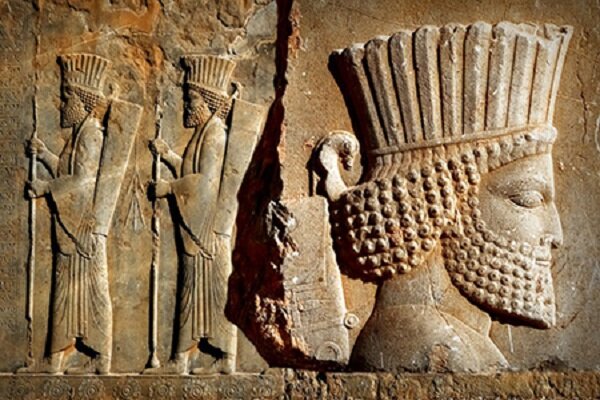
For centuries, Cyrus the Great has been remembered by the world as more than just the architect of a vast empire. At a time when conquest usually meant destruction and domination, he introduced a radically different vision based on justice, cultural respect, and human dignity. His policies, most famously preserved in the Cyrus Cylinder, continue to challenge modern assumptions about what leadership looked like in the ancient world.
Cyrus the Great is often credited with building the largest empire in history, stretching from the Nile to the frontiers of India. But what really distinguishes him is not the scale of his conquests, but the philosophy behind his rule. More than 2,500 years ago, Cyrus developed ideas about justice, pluralism, and human dignity that still resonate in global debates today.
Among some modern Islamic scholars, the theory that he is the Qur’an al-Qarnain remains convincing, but it is considered a reliable hypothesis rather than a proven historical fact.
A different kind of empire building
When Cyrus came to power in 550 BC, he began by unifying the Persian tribes and establishing Pasargadae as his capital, demonstrating a strategic focus on unity rather than domination. His regime relied on a disciplined military organization and an efficient civil system that served as a model for later empires.
Although the Achaemenid kings believed that their authority was a divine responsibility given to them by Ahura Mazda, justice in the empire was far from symbolic. District courts applied local customs and religious law, and a central body of seven judges handled major cases, an early attempt to ensure fairness across the vast and diverse territory.
Pluralism as a policy
One of the most impressive aspects of Cyrus’s reign was his treatment of his conquered peoples. Instead of imposing uniformity or exploiting resources by force, he promoted welfare and stability. After years of harsh treatment under Nabonidus, his decision to abolish forced labor in Babylon effectively ended slavery in the region and emphasized his belief in the basic dignity of the human person.
Cyrus often compared leadership to a shepherd. A ruler can only take from his city and people to the extent that he has supported and served them. It was a philosophy that placed social responsibility at the center of political power.
New diplomacy in the ancient world
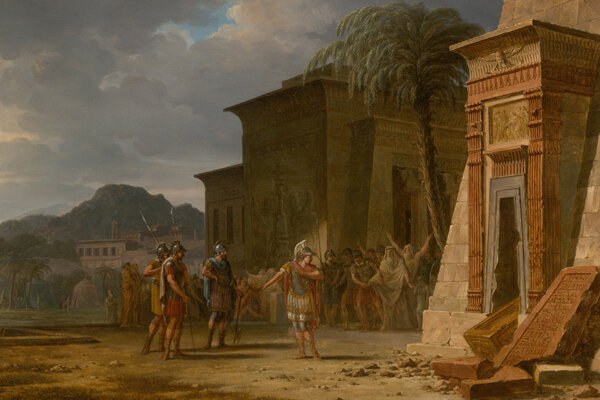
Cyrus introduced a diplomatic approach based on coexistence and respect. Under the Achaemenid Empire, local religions, customs, and political structures were preserved rather than dismantled. This respect for identity transformed the empire into one of the earliest and most successful multicultural systems in history.
He treated his defeated enemies with a generous attitude. Such acts were not merely symbolic; they helped ensure long-term stability across a vast cultural and ethnic mosaic.
Cyrus’ Column: A human rights landmark
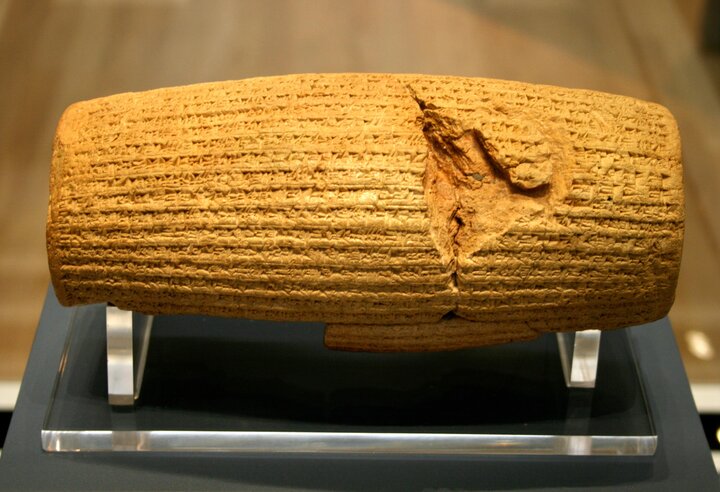
Published in 538 BC and now recognized by UNESCO, the Cylinder of Cyrus is said to be the world’s first human rights charter. The language is surprisingly progressive for its time. The document guarantees religious freedom, prohibits communal abuse, and emphasizes the emancipation of slaves.
By banning forced labor and restoring freedom to the oppressed Babylonians, Cyrus offered a vision of government based on dignity rather than fear. In many ways, he redefined what it meant to rule an empire.
A lasting comprehensive vision
Cyrus believed that empires could only survive if they embraced diverse cultures, rather than erasing them. He refused to impose a single identity on the regions he conquered, instead promoting cooperation and cultural respect. This pluralistic approach ensured the durability of the Achaemenid Empire and shaped its legacy as one of the most comprehensive political systems in history.
His commitment to fairness and ethical leadership enhanced his memory as a ruler whose power was matched by restraint, generosity, and moral clarity. Cyrus is not so much a conqueror as a reminder that even in the ancient world, empires and humans did not have to be at odds.
Cyrus’ legacy endures not because he ruled the world’s first superpower, but because he ruled with a moral clarity that is rare in politics today. He created a model of governance rooted in dignity and pluralism, combining authority and responsibility, conquest and benevolence. More than 2,000 years later, his ideas still resonate, reminding us that true power is measured not by the lands a ruler conquers, but by the humanity they choose to protect.
Reported by Mohadese Pakhravan