
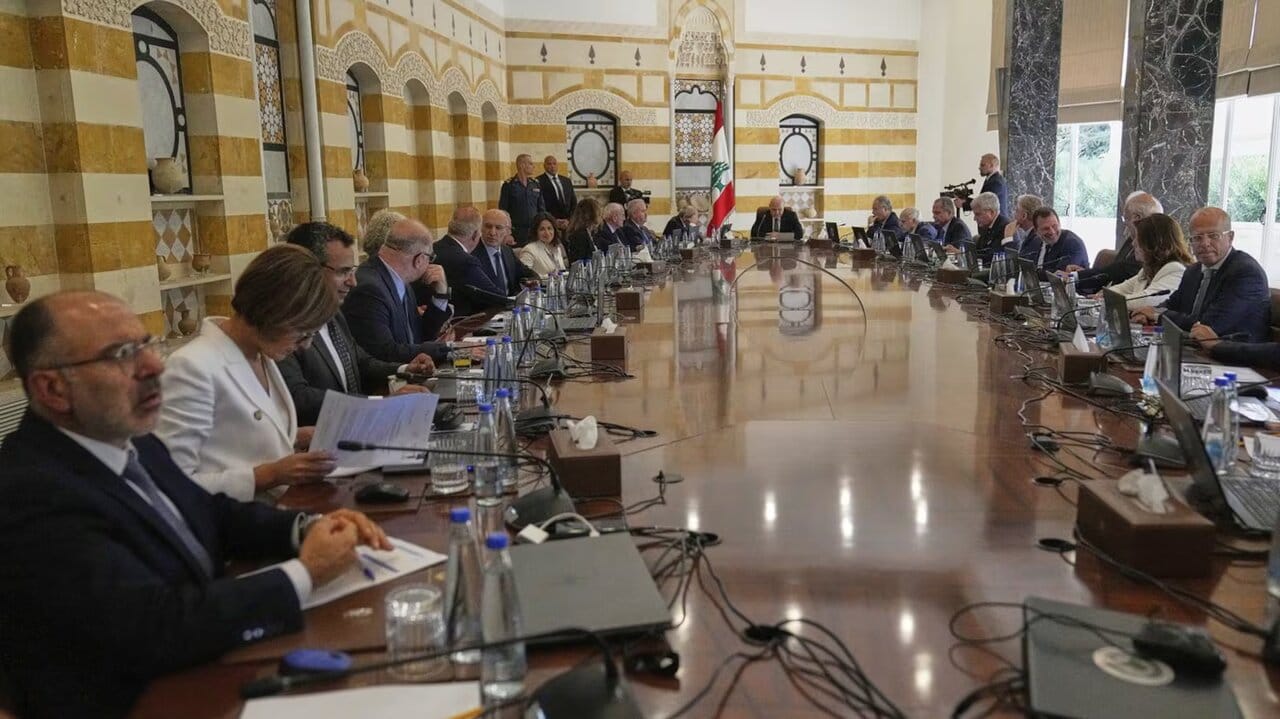
BEIRUT – What happened during the Lebanese government session on Friday was a ceasefire that could be maintained or overturned. Rather than rebelling against political authority, the Lebanese army put an end to the abuse of political establishment in a bloody, destructive conflict.
Despite being the most disturbing of what happened, the Lebanese military party’s refusal to disarm Hezbollah before discussing defensive strategies, neither did it retreat from disarming Hezbollah before discussing defensive strategies.
Sources told the Tehran Times that a government statement was drafted the night before between President Joseph Orn and Speaker of Congress, Nabi Beli. Prime Minister Nawaf Salam also approved it.
Once this talk is over, the issue will be covered by the guardian team, especially the position of Washington. In particular, Morgan Ortags, the US Central Commander (Centcom), will visit Beirut over the weekend.
These meetings only include brief security meetings with military and security leaders, except for political officials.
Riyadh’s position remains the same, as his envoy, Yajid bin Fahan, arrived in Beirut this week.
In fact, the issue ended on one hand with consensus before a cabinet session between President Ounu and Prime Minister Nawaf Salam and the duo of Amal Hezbollah.
Commenting on the government’s statement, Chair Beli said, “Things are positive. I think the toxic winds are beginning to fade.”
The threat from Hezbollah and the Amal Movement to step down from the government led to successful negotiations between the President of the Republic and Army Commander Rodolfe Haikal.
This forced the government to not set deadlines, commit to developing a national security strategy, and affirm the rights of self-defense in accordance with the UN Charter.
Five phases have reportedly been identified to limit weapons to the nation. These stages begin with the Army completing operations in the area south of the Ritani River and moving to the area between the Ritani and Awari Rivers. These phases move to Beirut, its suburbs and surrounding areas, then to Bekaa Valley. The fifth phase will restrict arms to the states and become the entire territory of Lebanon.
The aforementioned sources confirmed with the Tehran Times that the Shiite duo (Hezbollah and the Amal Movement) had warned Aoun and the Army commander that the Americans would not fulfill their promises.
Sources say the plan proposed by the Army stipulated the halting and withdrawal of Israeli attacks to implement deployment plans across Lebanon’s territory. The plan also provides for the completion of steps to control the borders of Lebanon and Syria, closure of illegal intersections, prevent the smuggling of weapons and drugs, and withdraw weapons from Palestinian refugee camps.
At a critical moment, Aoun appears to have noticed that the Lebanese army lacks logistics capabilities to implement plans to disarm the Hezbollah Resistance movement. Moreover, his mission as a new president is to maintain peace for the citizens and not cause any issues with the domestic party under any circumstances.
On that aspect, Hezbollah has repeatedly stated that he has not tried to undermine civil peace or cause clashes with the Army.