
In recent months, political developments in the occupied territories have brought the West Bank annexation issue back to the forefront of Israel’s political agenda. Recently, the Knesset (Israel’s parliament) narrowly approved in a preliminary vote a bill aimed at applying Israeli sovereignty to the West Bank. However, the move quickly sparked an international backlash. US President Donald Trump also warned Tel Aviv against rushing annexation in an interview with Time magazine, saying the move could jeopardize full US support for Israel. Vance also said the decision was foolish.
At the same time, a wave of regional and global condemnation followed. Arab and Islamic countries, including Qatar, Saudi Arabia, Jordan, Egypt, Turkey, Indonesia and Pakistan, issued a joint statement calling the Knesset’s actions a clear violation of international law and a threat to stability in the Middle East. In response to international pressure and concerns about a U.S. reaction, Israeli media announced that, by order of Prime Minister Benjamin Netanyahu, the submission of administrative plans related to the annexation had been suspended until further notice. But what is the purpose behind this annexation?
Israel’s strategic objectives behind the annexation plan
Strengthen territorial and security control:
From a geopolitical perspective, the West Bank is an important region, with its central highlands overlooking major cities and important communication routes for the occupied territories. Israeli leaders, especially those on the far right, have long argued that withdrawal from these areas would deprive Israel of its defense capabilities. The annexation of key areas in the region is thus justified under the pretext of “Israel’s security,” but in reality the goal is to permanently expand Israel’s borders.
Maintaining demographic and racial superiority:
Israel is seeking to annex areas of the West Bank with relatively low Palestinian population densities. In this context, Area C, which covers approximately 60 percent of the West Bank, is of paramount importance. This policy allows Israel to seize natural resources and fertile land while avoiding absorbing millions of Palestinians that could change the population balance.
Reinforcing religious and ideological narratives:
Radical Zionists, including Bezalel Smotrich’s Religious Zionist party, interpret Jewish history through the lens of the Talmud, viewing the West Bank as part of the holy lands of “Judea and Samaria.” According to this belief, the annexation of territory is not just a political act, but the fulfillment of a divine promise. This ideological approach completely rejects the logic of compromise.
Legal aspects and violation of international law
Under international law, annexation of occupied territories is strictly prohibited. Article 2 of the United Nations Charter and Security Council Resolutions 242 and 338 state that “no territory shall be acquired by war.” In a July 2024 advisory opinion, the International Court of Justice declared that Israel had effectively entered the stage of illegal annexation by transferring civil powers to its own government agencies in the West Bank. The court called on Israel to halt settlement expansion and respect the Palestinians’ right to self-determination.
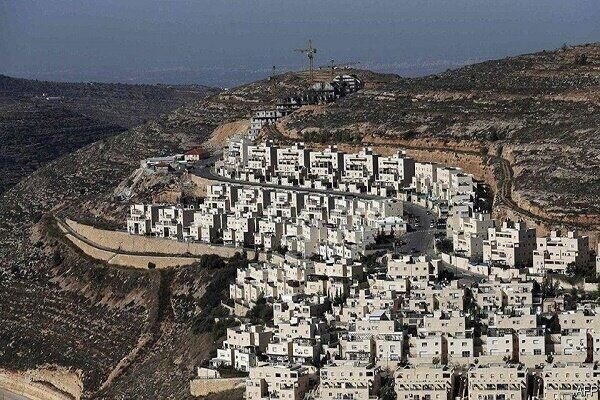
Nevertheless, Tel Aviv ignored the ruling and set a new record for settlement expansion with 27,589 new housing units approved in the occupied territories in 2024. Such measures are de facto annexations and represent the reality on the ground of changing situations without official declarations.
Economic and structural aspects of annexation
Area C, which is prioritized for annexation, contains most of the Palestinians’ natural resources and fertile land. By transferring control of the area from the military government to the Ministry of Finance under Mr. Smotrich, the Israeli regime officially began the process of “institutionalizing the occupation.” In practice, this means replacing the military with Israeli civilian institutions and turning the occupation into a permanent system.
Another economic goal is to fully integrate payment networks into Israel’s domestic economy. Projects such as the construction of dedicated roads, industrial zones, and the connection of electricity and water networks to Tel Aviv are part of the plan. The result was an economic apartheid model that cut off Palestinians from essential resources and infrastructure.
Human and social impact on Palestinians
The consequences of this process for Palestinian society are devastating.
Escalating settler violence: More than 2,200 attacks were recorded in 2024.
Destruction of housing and infrastructure: More than 1,700 Palestinian buildings were destroyed that year.
Intensifying internal displacement: Thousands of Palestinians are being forced from their land and forced into isolated enclaves.
Gradual denial of civil rights: In areas under Israeli control, Palestinians live with virtually no citizenship or equal rights.
International experts say the situation is a clear example of the modern apartheid system, which establishes two separate legal systems for the population of a single territory.
International and regional reaction
Although the international community strongly opposes annexation in words, the response in practice has been largely symbolic. The European Union has only mentioned the possibility of suspending its economic partnership agreement with Israel, but has not taken any concrete steps. In the Arab world, joint statements by Islamic countries are politically important but lack enforcement force. In fact, the silence or reluctance of the great powers has given Israel a kind of tacit license to continue its gradual annexations.
Prime Minister Netanyahu’s tactical retreat: temporary move or strategic reconfiguration?
Prime Minister Netanyahu’s announcement to suspend the annexation plan does not represent a true withdrawal from the project, but rather a readjustment of strategy. Facing U.S. pressure and fearing possible European sanctions, he chose to delay formal implementation while continuing with local measures ranging from settlement expansion to administrative restructuring.
As the International Crisis Group has explained, this is an annexation without a name, creating an irrevocable fact on the ground without a formal declaration.
conclusion
The annexation of the West Bank is not a temporary measure, but part of Israel’s long-term strategy to solidify the idea of a “Greater Israel.” Although international pressure has forced Prime Minister Netanyahu to pause, the reality on the ground shows that the gradual annexation process continues unabated.
In the absence of concrete global action, the risk of a temporary occupation turning into a permanent apartheid regime is more serious than ever. The only way to curb this trend is to combine political positions with concrete measures, from arms embargoes to suspending trade deals. Failure to do so could lead to irreversible changes in Palestine’s political map.