
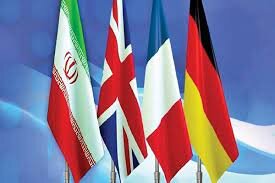
Tehran – A recent statement by foreign ministers of three European countries (France, France and Germany) relies on the activation of so-called “snapback” mechanisms against the Islamic republic.
This action, carried out externally in the name of “maintaining international peace and security,” is actually a continuation of the same unilateral and double standards that directed the world towards instability.
Iran’s complete commitment to the JCPOA and a clear violation of West
The JCPOA was signed in 2015 with the aim of solving one of the most complicated international crises through diplomacy. From the beginning, Iran fully adhered to its commitment. A number of reports by the International Atomic Energy Agency (IAEA) between 2015 and 2018 have explicitly confirmed Iran’s compliance. However, in 2018, the United States unilaterally withdrawn from the agreement in violation of international law, making it virtually impossible to implement European commitments through secondary sanctions.
Today, three European countries claiming Iran is violating its commitment did not take steps at the time to compensate for the damages caused by the US withdrawal. Instead, they effectively surrendered to Washington’s pressure. The financial mechanism known as Instex never operated, and Europe failed to meet its simplest commitments. How can the very party that breaches the contract insist on implementing a mechanism that is conditional on the mutual compliance of all parties?
Iran and NPT: Commitment in the face of non-commitment
Iran’s Islamic Republic has been a member of the Nuclear Non-Proliferation Treaty (NPT) since the launch of the nuclear programme and is still a member of the Nuclear Non-Proliferation Treaty. Unlike the Israeli regime that is not part of the NPT, Iran, which owns dozens of nuclear warheads at Arsenal, has acted consistently within the framework of international law. IAEA inspectors have been a continuous presence in Iran for many years and have repeatedly reported compliance with Tehran’s obligation to protect.
What Europe calls “reducing JCPOA commitments” was a legitimate and legal response to blatant violations of commitments by other parties. If all other parties violate their obligations, it is expected that no country will commit only to the full implementation of the contract.
Attack on Iran: a clear violation of international law
During the 12-day war between Iran and Israel in June, the US and Israel attacked Iranian territory, launched an attack on Iran’s sovereignty, pretending to be false, and they targeted civilians and residential areas. The United States itself directly targeted Iran’s peaceful nuclear facilities during the war.
This action was a blatant act of aggression and a violation of the UN Charter. This is the basic problem. Can countries that directly or indirectly participate in such attacks be argued that they are concerned about “world peace and security”?
According to Article 51 of the UN Charter, Iran has an undeniable right to defend against attacks. This defense may involve rethinking cooperation with institutions that have become tools of Western political pressure, including the IAEA. No country allows international surveillance tools to become equipment for gathering information to bomb its peaceful facilities.
West double standard: Israeli and US nuclear weapons
In their article, three European countries argued that enrichment of up to 60% of Iranian uranium poses a threat to world peace. However, these countries have never explained why massive nuclear weapons from the US, France, Britain and Israel, which together hold thousands of warheads capable of launching, are not considered a threat.
Why has Israel not stuck to any of its international disarmament commitments and committed military attacks in the region repeatedly without taking responsibility? Why is Europe’s silence on US and Israeli nuclear weapons not interpreted as an acceptance of a true threat to global security?
Illegality of snapback mechanisms under current conditions
The snapback mechanism was included in the JCPOA to allow for the recovery of UN Security Council resolutions in the event of party violations. However, the main condition for its implementation was the mutual commitment of all parties. When the US retreated from the JCPOA and three European countries and violated their commitments, no legitimacy remained to activate this mechanism.
In other words, a party that violates the agreement itself lacks the legal and political authority to invoke its provisions. The recent European movements are nothing more than political misuse by the Security Council and attempts to impose illegal wills on the international community.
Iran: A country seeking peace and historic warmers
Over 40 years, despite various threats and sanctions, the Islamic Republic of Iran has never launched a war or violated the sovereignty of other countries. In contrast, the US and its European allies have long records of warm, coups, military occupations and bloodshed in a variety of countries around the world, from Iraq and Afghanistan to Libya and Syria.
Do countries with such a track record of violating world peace and security have the authority to make judgments about Iran? Do they have political and moral justifications to determine the fate of Iran’s peaceful nuclear program?
Ultimately, recent statements by the three European countries reflect not “concerns about world peace” but alternative actions in the play of double standards and political pressure on independent countries. Iran has repeatedly emphasized that its nuclear program is peaceful, has never sought and never seeks nuclear weapons. However, the Islamic Republic of Iran is a country with high degree of indigenous abilities, unique geopolitical status and wide-ranging regional influence. Despite sanctions, threats and conspiracies over the past 40 years, it has not only endured it, but has become one of the crucial forces in regional and global equations.
Today, Iran is not just a passive actor facing Western decisions. It is a country that can respond to military, political or economic threats. Iran’s indigenous Arsenal demonstrates that pressure and sanctions, whether defensive, economic, scientific, or human, have only strengthened the country’s independence.
The message you need to hear today is clear. The era of bullying and infringement of the rights of independent states is over. The world is no longer unipolar, and states require more than ever to respect the sovereignty and equality of the nation in the international system. Trying to replicate failed policies of pressure, threats and sanctions will not only prove ineffective, but will also lead to greater isolation of violators of international law.
Iran’s Islamic Republic relies on the capabilities of its citizens, indigenous peoples and strategic geopolitical positions, and is ready to provide an appropriate and decisive response to threats and aggressions. The choice is on the west side. It is to embrace the powerful Iranian reality and move towards mutual respect and constructive diplomacy, or continue the failed policy of nothing more than distrust, anxiety and further revealing their true faces.