

Within the rich tradition of Persian literature, there are poets who stand out for their revolutionary approach to spiritual storytelling.
Farid-ud-din Attar, a 12th-century mystic from Nishapur, did not simply write poetry, but constructed a complex world of meaning through allegory.
His unique style, characterized by approachable language and powerful symbolic narratives, forever changed the course of mystical literature in Iran and abroad.
What sets Attar apart is his method. While other poets of his time wrote complex poems, Attar chose a different path.

He built his spiritual teachings around simple, compelling stories that anyone could understand.
This approach made profound mystical concepts available to all readers, not just the academic elite.
His masterpiece “Conference of Birds” perfectly illustrates this technique.
In this epic work, Attar transforms a complex journey of spiritual enlightenment into a relatable fable.
Thirty birds embark on an arduous journey to find their king, the Simurgh. Each stage of their journey represents a different spiritual challenge, from overcoming ego to embracing God’s love.
The power of Attar’s style lies in its layers of meaning. On the surface, the reader encounters a fascinating adventure story.

Beneath this surface is a detailed map of the soul’s progress towards God. This dual-layered approach allows readers to engage with the text on multiple levels, discovering new insights with each reading.
Attar’s genius extended beyond his famous bird allegory. His major works incorporate over 1,000 individual stories and fables.
Each story serves as a spiritual lesson, but collectively they form a comprehensive guide to Sufi philosophy.
His other important works create comprehensive maps of the spiritual path.
“Book of God” (Elahi name): The king guides his sons from worldly desires to spiritual devotion.
“Book of Agony” (Mosibat name): This work details the trials and purifications required on the mystic’s journey.
Monument to the Saints (Tadhkirat-ul-Awliya): An original prose work that records the life and wisdom of an early Sufi mystic.
This work further demonstrates his narrative approach, presenting spiritual wisdom through biographical stories of early mystics.
Attar’s genius lies in his pioneering use of narrative. He masterfully used allegory and simple, accessible language to convey complex spiritual concepts.
His poems are a treasure trove of hundreds of fables and are not only spiritual guides, but also valuable records of the folklore and culture of the time.
The impact of this storytelling method was deep and lasting. Attar demonstrated that spiritual truths can be effectively conveyed through stories rather than abstract philosophical discourse.
This innovation directly influenced subsequent generations of poets, especially Rumi. Its ‘Masnavi’ clearly follows Attar’s model of education through stories.
Modern scholars point out that Attar’s style offers additional value today. His works preserve not only spiritual teachings, but also a wealth of information about the culture, folklore and everyday life of medieval Persia.
The very simplicity that made his work so accessible at the time makes it equally relevant to modern readers seeking spiritual guidance.
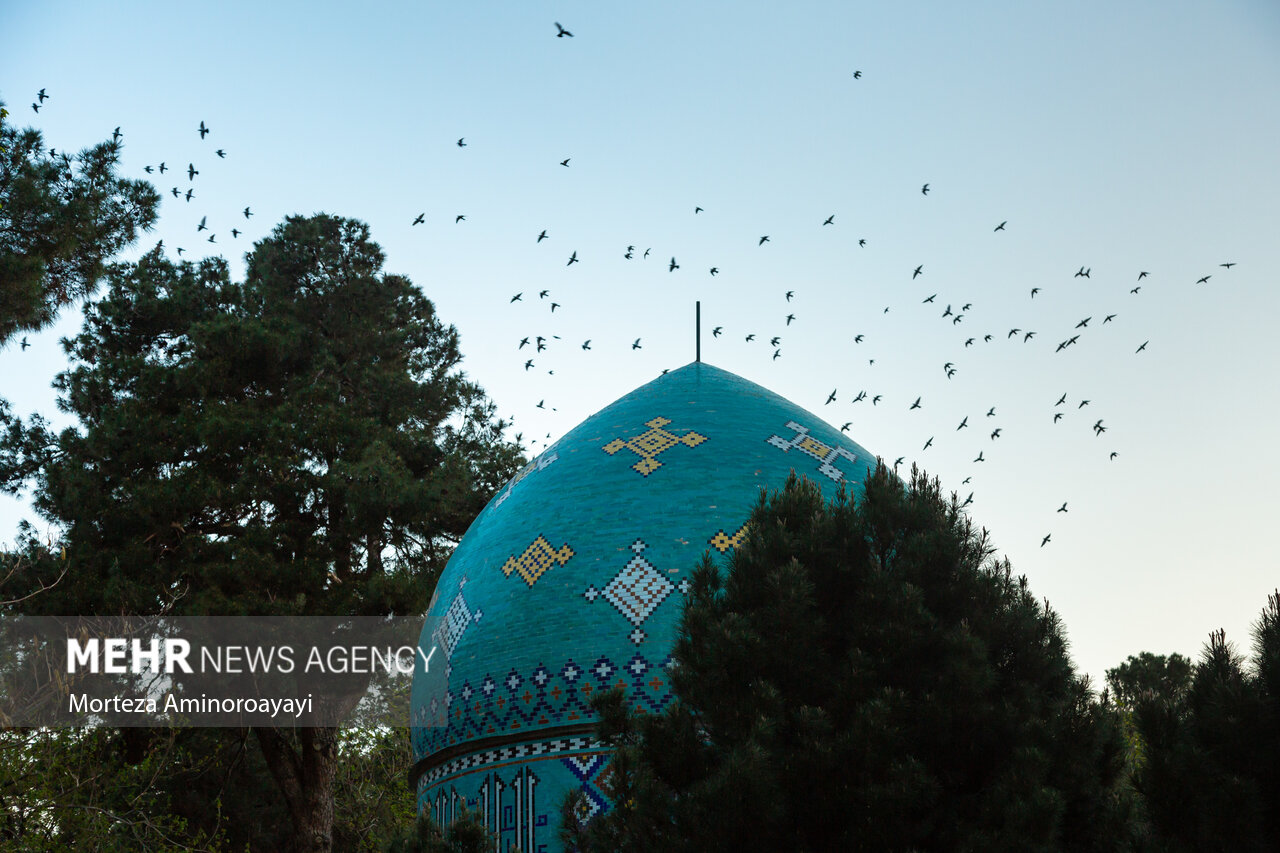
Atal’s burial site in Nishapur has become a place of pilgrimage for literary lovers and spiritual seekers alike.
Visitors often remark how the monument’s straightforward beauty reflects the simple yet profound nature of his poetry.
In an age of information overload, Attar’s approach feels especially pertinent.
He reminds us that the deepest truths are often best conveyed not through complex arguments, but through stories that speak directly to the human heart.
His legacy lives on not only in the words he wrote, but also in the revolutionary style he pioneered, which continues to inspire seekers eight centuries after his death.
Today, the influence of Attar’s work extends all over the world. His stories have been translated into many languages, allowing people from different cultures to learn from his wisdom.
Modern readers still find comfort and guidance in his stories, proving his messages of love, truth, and self-discovery are timeless.
His influence continues through other artists and writers who follow the path he forged and use stories to share important ideas.
Attar created bridges between different times and places by translating complex spiritual lessons into simple and beautiful stories.
His work is a powerful example of how stories can move hearts and unite humanity across centuries, and reminds us that the search for meaning is a journey we all share.
Report by Tohid Mahmoodpour