
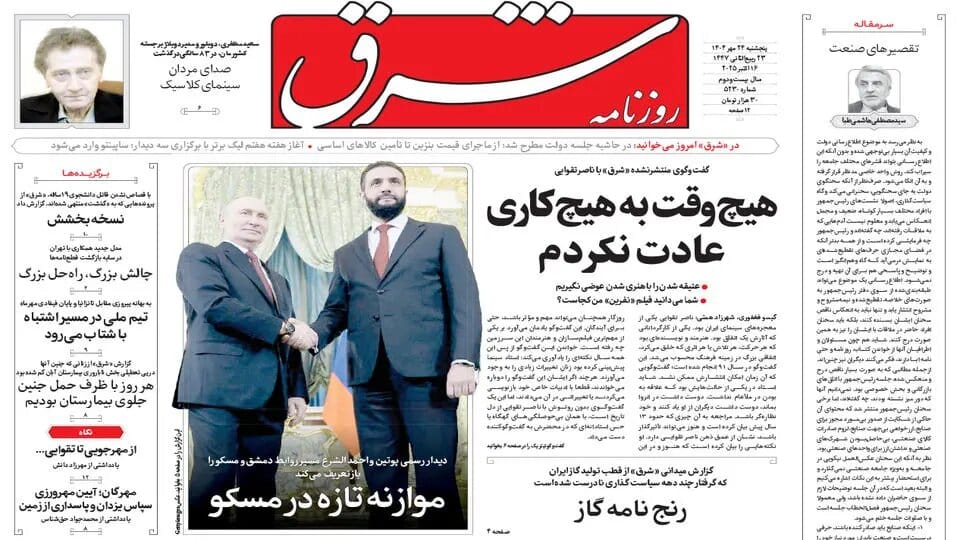
TEHRAN – Foreign Minister Shahg reviewed developments related to Iran’s nuclear involvement until the next International Atomic Energy Agency (IAEA) Council meeting.
The paper states: Experience over the past few years has shown that the IAEA’s performance against Iran has been influenced primarily by political motivations of major Western powers rather than by technical and professional issues. Now, in the so-called “post-snapback” period, this pattern is expected to continue, except that the IAEA is assessing the costs and benefits of the current situation rather than taking a definitive or overtly political position. Grossi is trying to maintain a balance between political pressure and the need to maintain the agency’s technical reliability. Recognizing that politics over professionalism is rampant within the IAEA, the Iranian government is seeking to use technical engagement as a pressure management tool at the appropriate time to avoid being drawn into a new sanctions cycle. Overall, current trends indicate that both Iran and the institution are attempting to maintain a fragile balance on the eve of the crucial November meeting. A balance between controlled cooperation and preventing a return to a confrontational atmosphere.
Jawan: President Trump unintentionally acknowledges Iranian power
Javan wrote in a commentary on President Trump’s remarks during a visit to Sharm el-Sheikh, Egypt: “Trump has sought to present Iran as a threat to regional countries by making irresponsible and shameful claims against the Iranian state, both during his visit to the occupied territories and in his speech at the Sharm el-Sheikh summit, and by defending America’s brutal crimes of Soleimani’s assassination and attack on Iran.” But his call for negotiations is an acknowledgment of Iran’s power and the failure of America’s strategy to contain Iranian influence and deterrence. Importantly, Iran’s response to the United States and the Zionist regime in the 12-day war and the inflicting of blows against these two regimes, along with maintaining and strengthening post-war preparedness, strengthened and stabilized the Islamic Republic’s position in the world. This is why the leaders of the European troika, under American orders and pressure, target the country’s economic and social peace and stability by implementing “snapback” sanctions, waiting for the collapse of the national unity and cohesion of the Iranian people so that, in their opinion, they can pave the way for the Iranian people to surrender.
Fahiktegan: Iran’s refusal to attend Sharm el-Sheikh shows Iranian authority
In an interview with foreign policy expert Seyyed Abbas Mousavi, Fahiktegan spoke about Iran’s refusal to attend the Sharm el-Sheikh summit on President Trump’s 20-Point Plan for Gaza. “This absence not only did not lead to isolation, but also helped maintain Iranian authority,” he said. Not attending such meetings aimed at glorifying a global dictator (Donald Trump) or gaining recognition from other countries for a person whose aspirations and desires are known to everyone is, incidentally, tantamount to power and authority and a symbol of independence. If there is a chance that the honor and dignity of the Iranian nation will be preserved, the Islamic Republic of Iran will definitely take decisions immediately and participate in these various meetings. As we have witnessed, the Islamic Republic of Iran has participated in many important international conferences and expressed authoritative positions. However, there is no doubt that the absence of a meeting planned for a particular purpose, or the recognition of a particular individual or a particular movement around the world, will not only not cause isolation, but will also be admired and respected by the independent governments and nations of the world.
Armand-e-Meri: Israel is exploring new plots
Amir Hayat Moghaddam, a member of parliament’s National Security and Foreign Policy Committee, told Arman-e-Meri that the Zionist regime, having failed to achieve everything it intended with the 12-day offensive, is now exploring new plots such as terrorism, economic pressure, and street riots. The Islamic Republic of Iran not only does not want tension or conflict, but has always sought to establish collective security in the Persian Gulf and West Asia. We believe that the security of this region should be ensured by the countries of the region, not by countries outside the region that are only concerned with their own interests. The presence of foreigners has never brought security, and never will. Instead, it created insecurity, arms races, and man-made crises. Today, the Islamic Republic of Iran relies on its deterrence and, within the framework of political rationality, does not allow its enemies to undermine the national interests of the country under any circumstances.