
TEHRAN – Iran’s Foreign Minister said that the presence of International Atomic Energy Agency (IAEA) inspectors is provided for by a law of the Iranian parliament.
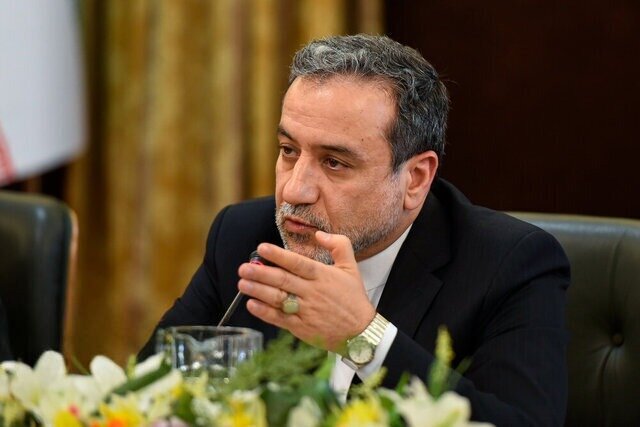
Foreign Minister Abbas Araghchi made the comments during a meeting with members of Iran’s National Security and Foreign Policy Committee when asked why IAEA inspectors are being allowed to visit Iran.
“According to the law, all requests for access to nuclear facilities must be referred to the (Iranian) Supreme Council for National Security, which will therefore decide whether permission is granted or not,” the top diplomat explained.
On this visit, inspectors were only allowed access to the Bushehr nuclear power plant to inspect the refueling process and the Tehran research reactor, which operates on 20 percent enriched fuel and is involved in the production process of radiopharmaceuticals, he added.
The IAEA withdrew its inspectors from Iran after Tehran stopped cooperating with the United Nations nuclear agency.
On July 2, Iranian President Masoud Pezeshkian gave final approval to a resolution suspending cooperation with the IAEA.
The basis for Iran’s move was a politically motivated IAEA resolution that paved the way for acts of aggression against the Islamic Republic by the United States and Israel.
The resolution was approved at a public session of Iran’s parliament on June 25th.
According to the resolution, IAEA inspectors will not be allowed to enter Iran unless the security of Iran’s nuclear facilities and peaceful nuclear activities is guaranteed, which requires approval from Iran’s Supreme National Security Council.
On June 13, in an unprovoked and brazen act of aggression, Israel targeted Iranian military commanders and nuclear scientists who were on the sanctions list based on an IAEA report. Israel also killed civilians.
On June 22, U.S. forces bombed nuclear facilities in Natanz, Fordow, and Isfahan in violation of the United Nations Charter, international law, and the Treaty on the Non-Proliferation of Nuclear Weapons (NPT).
IAEA Director-General Rafael Grossi remained silent. Although he did not condemn the invasion, he drew criticism from Iranian officials.
The agency then called for the resumption of surveillance and verification activities in Iran.
The challenge for the Ministry of Foreign Affairs is to neutralize and avoid sanctions: Mr. Araguchi
Meanwhile, Iran’s foreign minister also said in a meeting with parliamentarians that his ministry’s agenda also includes neutralizing and circumventing sanctions.
He reiterated that Tehran has not withdrawn from the 2015 Iran nuclear deal, known as the Joint Comprehensive Plan of Action (JCPOA), because it gives Iran the right to enrich uranium, has been approved by the United Nations Security Council, and some of its provisions are in the country’s interests.
Britain, France and Germany imposed a snapback on August 28, beginning a 30-day process to reinstate all UN sanctions against Iran.
Despite last-ditch efforts by Russia and China to maintain diplomacy, the UN Security Council failed to reach an agreement on September 26. Two days later, the E3 and the US declared sanctions reinstated and called on UN member states to implement them.
Tehran categorically rejects the claims, saying it was the United States and its European allies who undermined the 2015 nuclear deal by not keeping their promises.
Iranian officials insist that U.N. member states are under no obligation to comply with unilateral and illegal measures.
Iran’s position is rooted in UN Security Council Resolution 2231, which approved the 2015 nuclear deal and formally lifted previous sanctions on Tehran’s nuclear program.
Russia firmly refused to reinstate sanctions against Iran, arguing that the snapback mechanism was being applied incorrectly. The Russian government warned that the resolution could be counterproductive.
China echoed Moscow’s position on the European Troika’s controversial politically-driven measures, stressing that unilateral actions undermine multilateral diplomacy.