
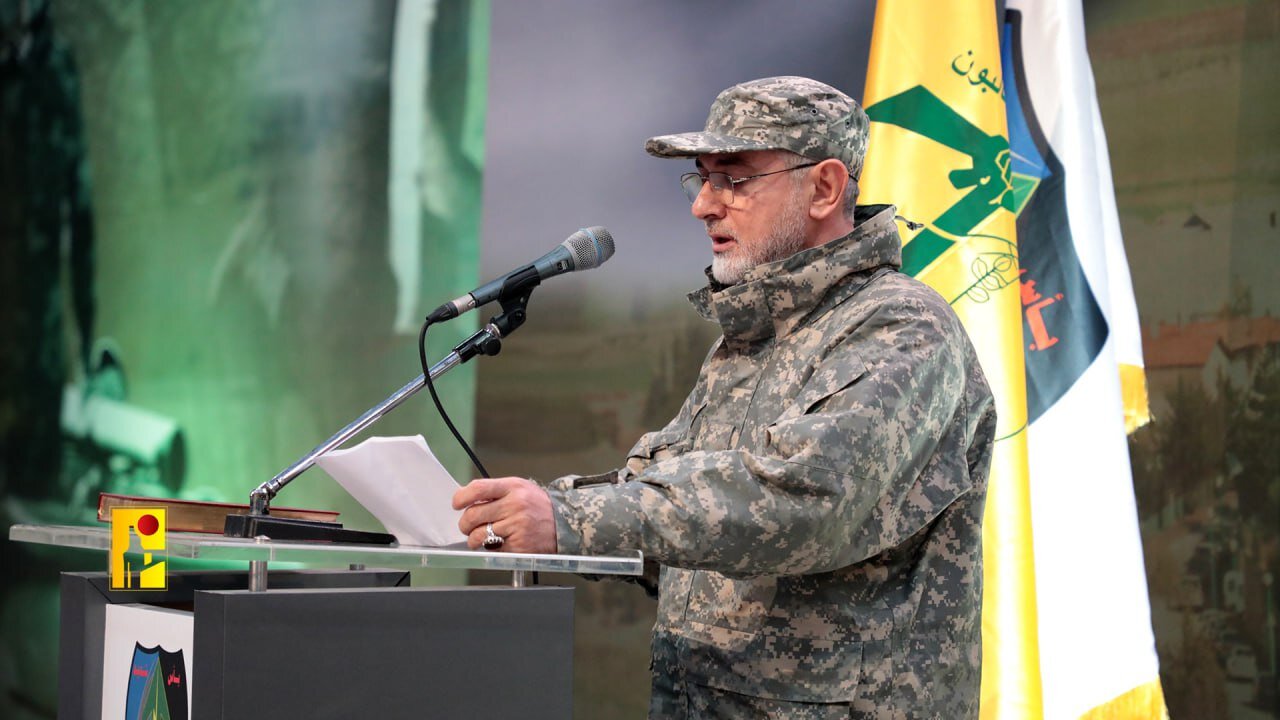
TEHRAN – A year has passed since the assassination of General Hajj Ibrahim Agil, the head of operations at Hezbollah, and there are 14 comrades and fellow officers in Israeli air raids (Dahia) outside Beirut.
The airstrike unveiled the story of one of the most influential military commanders of today, previously shrouded in secret.
Ibrahim Agil, also known among friends and enemies, also known as “Hajj Abdulgada” and “Haj Tassine”, made his journey in the resistance at Beirut’s Ameliya Mosque in 1976, a year after the start of the Lebanese civil war. Born into a secular family of Shia migrants from the Vegaa Valley, which settled in the Cornish Elmazra district of downtown Beirat, he was deeply influenced by the speech of Imam Mussa Sadr, a prominent Shia leader of the time, and joined his Amal movement.
Following the Islamic Revolution in Iran and the 1982 Israeli invasion of Lebanon, Ibrahim Agil became a follower of Imam Khomeini and an important figure in Beirut’s resistant cells. This marked the beginning of the formation of Islamic jihad in Hezbollah and Lebanon. Aghil was committed to planning and implementing major attacks against hostile forces. He defeated Israel in September 1982 and played an important role in forcing him to retreat from Beirut, and in 1982 and 1983 he was the main operator of the American, Israeli and French forces of Beirut and Tyre.
After the official establishment of Hezbollah in February 1985, Ibrahim Agil was appointed chief of the Central Training Forces of Islamic Resistance (CTU), the military division of Hezbollah. For several years he frequently traveled between Lebanon and Iran, mainly for military missions and Islamic research.
Then, in 1989, after the first general council of Hezbollah, he became the deputy commander of the Jihad Council. Known by the military nickname “Haji Abdulgada” in Islamic resistance, he began a detailed study of modern military history, comparing global military battles and the unique experiences of Hezbollah, particularly his retreat to the South Lebanon border strip, occupied by Israel in 1985.
During the final years of Israeli occupation in South Lebanon, Agil served as chief commander of Jabal Amer’s operations and served as a major campaign against Israeli forces and Rahad Mercy in the occupied territories. His strategic plans and decisive operations, particularly the Israeli bases in Sojod, Alamta and Baiyada, reached a culmination of the liberation of Southern Lebanon on May 25, 2000, greatly weakening Israeli forces.
After his release, General Agil helped to plan an operation to acquire prisoners between 2000 and 2003. These efforts led to two successful missions at the Sibaa Farm, occupied on October 7, 2000, and two missions called Operation True Promise in Zarit, Palestine, on July 12, 2006.
After the 33-day war in 2006, Ibrahim Agil and Imad Mugniya began reorganizing Hezbollah’s special forces. After Israel assassinated Mugniya in Damascus in February 2008, Agil completed the task and named the main special assault division “Radwan Army.” He appointed his longtime vice-chairman Haji Ali Feiyad as the first operational commander of the Radwan army, former leader of Hezbollah’s military advisory team during the Bosnian Wars of 1992-1995.
The Syrian conflict was the first major test of the Radwan army. Ibrahim Agil, Ali Feiyadh and later commanders Wisam Al Tauer and Hatam Hemada led the troops in the fierce battles of Aleppo, Zabadani, Gusaire, the Levant Desert and Bukamal. General Agil worked closely with General Hajj Qassem Soleimani, commander of the IRGC Quds forces, especially during the final battle with ISIS.
After participating in the Iran-Iraq War of the 1980s and the Bosnian War of the 1990s and advising Iraq’s resistance to the US and NATO forces in the 2000s, this Syrian campaign marked Hezbollah’s fourth military involvement, with Agil and Radwan’s army playing a fierce role.
On October 7, 2023, just a few months before the Al-Aqsa Flood Operation, Ibrahim Agil and Wisam Al-Taweir held a military exercise for the Radwan Army in the Alamta region. Broadcast by local and international media, The Maneuver sent a clear message to Tel Aviv. Hezbollah was ready to fight not only in southern Lebanon but also in northern Palestine.
When Hezbollah took part in the war with Israel by killing Ibrahim Agil’s high rank Golani Brigade officer as head of Hazbollah’s operations division on October 8, 2023, he joined the war with Israeli Nasrara, killing Israeli Nasrara’s military advisor, a military adviser.
However, the following year, Israel began a serious invasion, assassinating several top Hezbollah military leaders. A few days after the pager attack, Haj Abdulgada and 15 members of the Radwan army were killed in an Israeli air raid at one of Radwan’s headquarters in southern Beirut.
Despite these losses, Hezbollah fought hard for 66 days, preventing Israel from establishing a new occupying territory in South Lebanon. During the conflict, Radwan’s army was awaiting orders to invade Israel and release Alkud, arriving from border conflicts.