
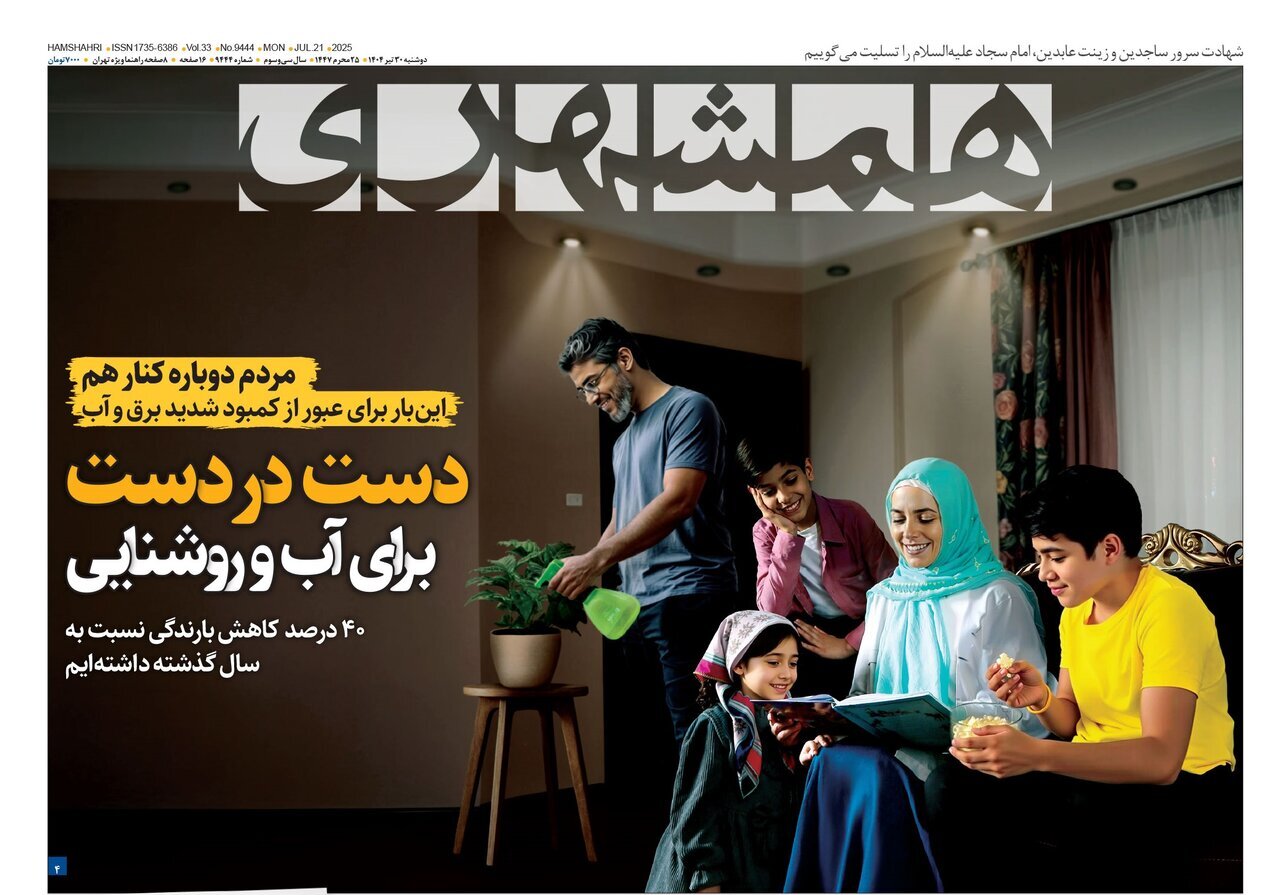
TEHRAN – Hamshari interviewed former diplomat Ali Bahadri Jafro about the dangerous and direct involvement of the United States in Israel’s 12-day war with Iran.
He said: The direct US military action that it claims supports world peace is a direct attack on the foundations of the existing international order. The US military attack on Iran’s peaceful nuclear facilities could result in dangerous crimes against all humanity if the Islamic Republic government had not taken appropriate precautions to protect the rich uranium and other security measures associated with nuclear sites. Trump then officially announced that the war was a joint project between him and Netanyahu. In response, Iran launched a counterattack and summoned the right to self-defense under Article 51 of the UN Charter. However, rather than acknowledging this legal framework, the Western Bloc has chosen to cooperate with Israel in intercepting Iranian missiles aimed at an aggression regime. This action appears to undermine the spirit of the UN Charter, which was established to prevent “the warmth of seeking power under the mask of peace and law.”
Sazandegi: Europe feels on the sidelines and threatens to snapback
In the commentary, Southern Degi addressed the German Foreign Minister’s statement on the snapback mechanism and continuation of the diplomatic process with Iran. The German Foreign Minister said he had contacted Aragut after negotiations and agreed to continue the diplomatic process. Over the past few days and weeks, the statements of European Foreign Minister Troika have strengthened their position over the past few days and weeks, putting a snapback mechanism on the table as a pressure tool for Tearan. The key point is that they only see negotiations between Tehran and Washington, and that they are on the sidelines. Therefore, we see that despite trying to present themselves as influential and effective actors in future negotiations, they are still subordinate to the US and are attempting to use the leverage of the snapback mechanism as a threat or pressure tool. They are now trying to accelerate the negotiation process and immediately push Iran to the negotiation table.
SOBH-E-NO: Already activated mechanism
In its analysis, SOBH-E-NO argued that the current situation in Iran effectively reflects the activation of the snapback mechanism given that P5+1 countries do not respect their commitment under the JCPOA. The US withdrew from the agreement in May 2018. As a result, meaningful dialogue on Iran’s nuclear program should focus on extending the snapback deadline. Iran is facing betrayal in negotiations and attacks on its nuclear facility, and is now approaching the issue with a significantly different perspective. If Europe activates snapback mechanisms, Iran’s most strategic response may be to embrace “nuclear ambiguity.” Withstanding a simultaneous conflict between both the US and Israel and the full weight of so-called “crippled” US sanctions, it is no longer possible to be forced to retreat or surrender under the threat of sanctions or war. In fact, the snapback mechanism is already moving, and Iran is moving beyond the stages threatened by force.
Shargh: Regional and economic fallout of possible NPT pullouts in Iran
One less-studied aspect is the impact of Iran’s potential withdrawal from the NPT on regional and economic dynamics. In the Middle East, this action could lead to a nuclear weapons race, especially if countries such as Saudi Arabia and Türkiye decide to develop nuclear programs. This scenario can significantly impair regional stability and lead to increased geopolitical tensions. From an economic standpoint, withdrawal from the NPT and the return of sanctions under Chapter 7 (UN Security Council) could put more pressure on the Iranian economy and make it more vulnerable. Overall, Iran’s withdrawal from the NPT should be said to be a decision that has widespread consequences that could strengthen or isolate Iran’s position as an independent actor. The success of this strategy depends on its ability to manage Iran’s international pressure, maintain support from its eastern allies, and avoid military conflicts. This move could lead to a redefine Iran’s role in the international system. However, without careful research, this decision could lead to escalation of regional and global crises.