
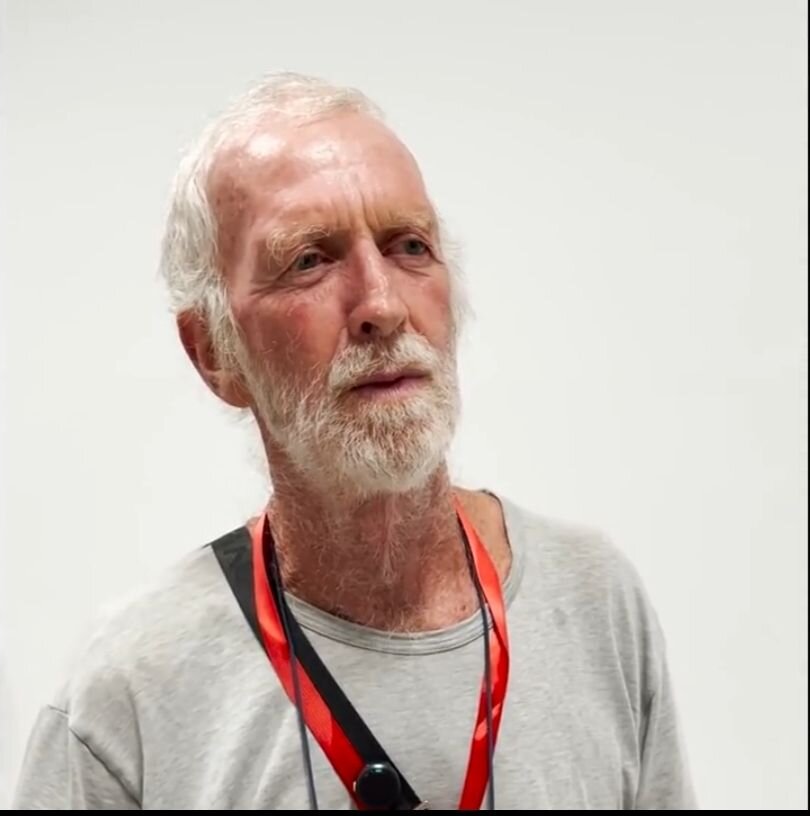
Tehran-Sumud Flotilla aims to bring together volunteers and sailing ships from all over the Mediterranean to challenge Israeli blockade and bring solidarity to Gaza. Dozens of boats are preparing to sail from Italy. Among them is Claudio, an Italian activist from Sicily, affiliated with the international solidarity movement who shared his perspective with the Tehran era in Tunis.
Would you like to introduce yourself? Where did you come from and what would take you to Tunisia?
I’m Claudio from Italy. I arrived here by sailing boat from Sicily and delivered it for the fleet. I came on Thursday. Another boat arrived yesterday, and perhaps another boat arrived tomorrow. There are Sicily and Sardinian sailing ships, and they are preparing to depart for Palestine from here.
How many Italian people and boats are planning to join the fleet?
From Italy, there may be about 40 boats from Catania and Syracuse. Some also come from Genoa. I’m joining them in Catania – it’s really a big effort from Italy.
Which institutions do you represent?
No, I don’t represent the government or NGOs. I’m in an international solidarity movement – they’ve been active in Palestine many times. I was in Palestine until May last year. Our existence has protective presence. We try to support the shepherds and the farmers.
Are you ready to face consequences if your fleet is intercepted when you reach the Palestinian seas?
Of course, it’s ready. I’ve been arrested many times before, so I’m not particularly afraid. Maybe you’ll lose your job, but I’m retired so I don’t have to worry about that. If they catch you and put you in jail, you have to accept the risk. The worst possible situation is to experience what the Palestinians are already experiencing.
What motivated you to join Flotilla and travel to Tunisia?
I am motivated by a historic struggle for liberation – the resistance movements in South Africa, Nigeria and Vietnam have been in the last century. It’s now Palestine’s turn. If Palestine won and can’t survive, I think a lot of principles are at stake. I feel that solidarity is necessary.
He also mentioned recent attacks and wider regional tensions. What are your views on the current situation and the role of Israel’s leadership?
From my perspective, leaders like Netanyahu often choose to be aggressive. There have been recent strikes and attacks that have killed many people. These events are driving the area into further violence. I think some leaders feel they have to continue bombing. Otherwise, they face political consequences. That’s my impression and my criticism.