
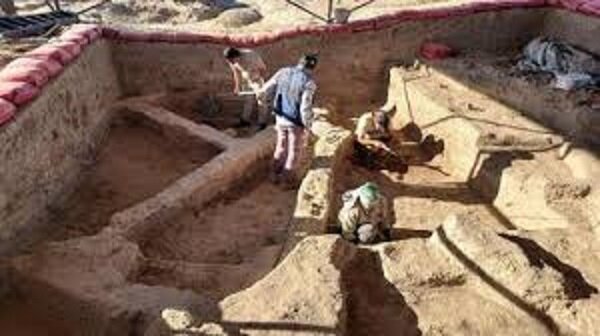
Tehran – The Choga Golan region of Melan County, Ilam province, is the oldest cradle of prehistoric archaeology experts, Iran and Western Asia’s agriculture.
He told Isna that many artifacts have been identified in human settlements in the Choga Golan region, which are related to various eras in human life. He added that the human settlements and life in the area continue due to the constant flow of the Kongjan Cham River.
He noted that archaeological studies showed that the late Ali Mohammad Harilian had a successful investigation into Mehran County and identifying Choga Goran I and Choga Goran II sites in the Goran area.
Archaeologists said that in addition to the Golan site and its ancient aqueduct, the ruins of Galovev Karabanserai, ancient hills and Islamic settlements were discovered in 2003 and recorded to be listed on the National Heritage List.
He added that in the same year, archaeologist Mohsen Zaidi had investigated the eastern and buffer zones between Mehran and the Delaran Plains, identifying sites from early writing to historical periods.
Mahmoudian also noted that excavations began at Golan Hill for 2010 mapping. The drilling continues for two seasons, with dating of carbon-14 samples showing long-term residence in the area from late 10,000 to late 8,000 BC.
He explained that the excavations at the Choga Golan site found evidence of early plaster baking and ancient architecture. Chowga Golan, dating back to 12,000 to 9,500 years, is known as one of the oldest sites associated with the beginnings of agriculture and rural settlements in Iran and the world, he added.
He continued that architectural ruins were found in the second season of excavation, including angled rooms with hierarchical walls and Adobe walls and painted floors.
Prehistoric archaeologists said thousands of samples of wild barley, wild wheat, lentils, peas, beans and feed were found at this excavation site, and carbon isotope studies determined that the age of these findings was between 9,800 and 11,700 years old.
He added that the key point is that such a long-term settlement is unprecedented in the Neolithic period. He noted that Neolithic men moved from hunting and collecting seeds from wild plants to planting seeds, plants and animals.
Mahmoudian said Golan is on the edge of the Zagros Mountains, where the first human attempts to raise wild plants took place. From a botanical perspective, he added that the study has obtained unprecedented relics of 30,000 plants from 75 groups over a period of 2,000 years.
He said that about two or two hundred years of cultivation of wild plants and the emergence of first domesticated plant species have been observed in the Chogagolan area. Wild specimens of different varieties of barley, wheat, lentils, chickpeas, beans, feed, and other agricultural products, mothers of today’s consumer products, have long been cultivated and consumed in Chogagoran, he added.
KD