
Political change in West Asia is rarely gentle and gradual. Rather, they tend to be abrupt, multilayered, and deeply interconnected. For decades, countries in the region have repeatedly witnessed how a single spark can change the course of history.
Among them, the countries closest to the United States and Israel—Jordan, Saudi Arabia, Bahrain, and the United Arab Emirates—may appear to have strong institutions and strong support networks, but all face potential social, security, and political vulnerabilities that make the possibility of change, however limited, plausible.
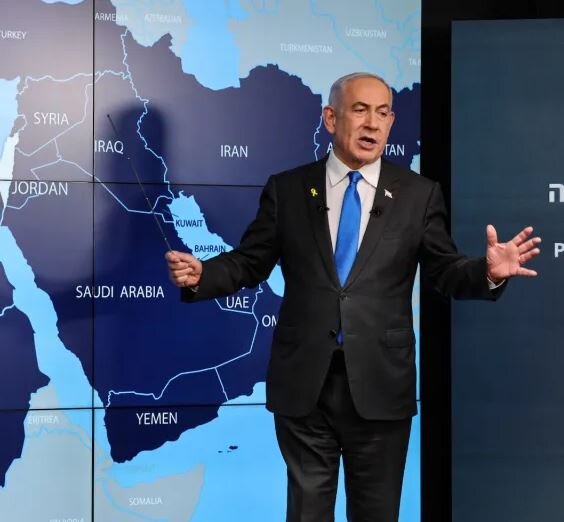
It is now a well-known fact that Israel is pursuing a “Greater Israel,” a map that envisions the territory of the ultimate “Jewish state.” This so-called Greater Israel includes several Arab and local government territories, including large parts of Jordan and Saudi Arabia. It also demands that other countries remain in a constant state of internal turmoil and insecurity to ensure that Israel remains an undefeated power in West Asia.
Given what happened before October 7 and in the two years that followed, the general understanding was that Israel would move toward dismantling the U.S.-allied Arab order only after significantly weakening the resistance and overthrowing the Iranian government, since it would require the Arab states to form a separate bloc against Tehran. But after the regime attacked Qatar this year and the United States refused to protect the Persian Gulf state despite Qatar hosting the region’s largest US military base, it became possible that Israel could move toward eroding the region’s Arab structures before achieving its goals with Iran and its allies. Moreover, the United States cannot or will not stop Israel, even if it goes against its own national interests.
The four aforementioned countries have certain gaps and vulnerabilities that Israel can exploit. If order in either country is undermined, Tehran will also be affected. Iran needs to pay close attention to possible related developments while also keeping in mind the war with Israel.
Jordan
Jordan has long defined stability through foreign aid, U.S. security assistance, and close ties with Israel. However, the reality on the ground is more complex. The country suffers from chronic shortages of natural resources, high foreign debt, high unemployment, and persistent social discontent. A wave of economic and political protests has rocked Jordan’s streets in recent years.
The Palestinian-majority demographic, combined with economic challenges and a widening gap between ruling elites and society, is creating pressure for political change. If such a change were to occur, the relationship between Jordan and Israel would be the first to be affected. Jordan’s shared border with the occupied Palestinian territories, the Quds issue, and Jordan’s strategic role in the West Bank all increase the importance of change.
Severe instability could prompt direct U.S. intervention or Israeli attempts to take control of the situation. Such actions could inflame new regional tensions and disrupt the security architecture prioritized by Washington and Tel Aviv. Jordan’s accession to Israel is very likely to occur at this time, just as the regime took advantage of the situation in Syria after the fall of Bashar al-Assad to capture new strongholds in the Arab country.
Jordan may appear quiet, but its fragile stability makes it a potential focal point for future changes, the effects of which will have immediate repercussions across West Asia.
Saudi Arabia
As perhaps the most important power in the Arab world, Saudi Arabia serves as the core of the Persian Gulf security order. Decisions on energy policy, relations with Israel, regional conflicts, and foreign affairs always have ramifications far beyond national borders. However, Saudi Arabia’s political and social structure is under pressure from both internal and external sources.
Over the past decade, rapid social reforms and radical economic restructuring have dramatically reshaped the kingdom. While these reforms have been widely praised and promoted modernization, they have also created social tensions and hidden grievances. Economic challenges such as fluctuating oil revenues, dependence on foreign investment, and the huge costs of mega-projects have placed the country on a difficult path.
Domestic conflicts between the princes, shifting external alliances, and Saudi Arabia’s dependence on U.S. military protection all pose variables that could destabilize the regime. Succession crises, political instability, and external pressures could fundamentally change the balance of power in the region.
For Iran, growing instability within the kingdom would endanger the entire Persian Gulf and cause economic and security disruption. Disruptions in the global oil market, increased foreign military presence, and escalating proxy conflicts could completely change the regional landscape.
bahrain
Bahrain is the smallest state in the Persian Gulf, and its size increases the fragility of its political and social structures. Restrictions on political freedoms and tensions between the Shiite majority and Sunni ruling families have kept the country in a state of semi-crisis for years. Past waves of protests have clearly demonstrated this underlying anxiety.
Saudi support for the Bahrain monarchy, the presence of the US Fifth Fleet, and the country’s close security cooperation with Israel all mean Tel Aviv has significant influence that can shape and influence potential political change. Reports in some Hebrew-language media in recent years have indicated Bahrain’s desire to restore relations with Iran, further unsettling the regime by suggesting that Bahrain is not doing enough to please Israel. Although Israel is unlikely to openly pursue regime change in Bahrain, it could seek to exploit domestic discord and use the need for containment as a means of pressure against Saudi Arabia. But in such situations, tensions can get out of control.
Bahrain’s proximity to Iran could be detrimental to Tehran during periods of disorder and turmoil.
united arab emirates
The United Arab Emirates has long sought to project an image of a stable, modern and investment-friendly nation, and has largely succeeded in doing so. However, like other regional actors, they are not immune to sudden political changes. Perceived tensions between Abu Dhabi and Dubai, heavy dependence on global economic stability, and UAE involvement in regional conflicts all create risks that could put pressure on the political system in times of crisis.
In recent years, the UAE has forged closer ties with Israel, expanding security and intelligence cooperation and playing an active role in regional conflicts. This alignment with the United States and Israel, combined with a highly globalized economy, makes the UAE vulnerable to economic shocks and geopolitical escalation. If change were to occur, the impact would be far-reaching.
Despite the growing cooperation between the UAE and Israel, Hebrew media shows that Israel still aspires to further development, but that regional countries are finding it difficult to achieve this as anti-Israel sentiment has increased among its citizens over the past two years. Zionists want the UAE to form deeper alignment with US and Israeli priorities and distance itself from China, which is usually in Iran’s orbit. However, any major changes in the UAE would have multifaceted implications for Iran, as the UAE’s ports are important to the country under sanctions.
The need to prepare for an unpredictable future
Each of the four countries analyzed here plays a pivotal role in West Asia’s political and security architecture. Close ties with the United States and cooperation with Israel are a double-edged sword. Although these relationships give them the illusion of security, they could be their weakest link in a potential conflict with Tel Aviv, similar to what happened with Qatar. Given Israel’s territorial ambitions and pursuit of regional turmoil, such a conflict is considered inevitable, whether in the long term or in the near future.
In such an environment, it is more important than ever to accurately assess likely trajectories, understand the consequences of each scenario, and prepare a timely response. In addition to worrying about its own conflict, Iran must also be wary of Israel’s attempts to disrupt other regional countries. This could ultimately support the regime’s goals against Iran.