
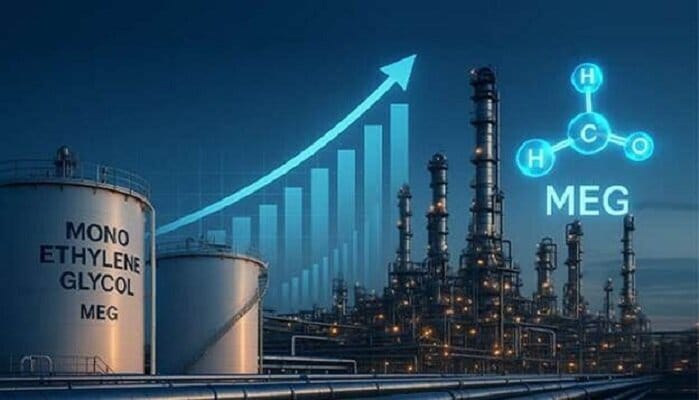
In recent years, the global monoethylene glycol (MEG) market has witnessed a significant increase in demand. This unique property makes this widely used chemical an important ingredient in many downstream petrochemical industries. From polyester fibers and plastic bottles to preventing automobiles, Meg plays an important role in the production chain.
What is monoethylene glycol (MEG)?
Monoethylene glycol (MEG) is a clear, colorless, odorless liquid with high moisture absorption properties. Water solubility and low freezing point make it suitable for a wide range of industrial applications. These properties position MEG as one of the most strategic petrochemical derivatives.
History and Production
MEG commercial production began in the early 20th century when it came to originating from ethylene oxide through hydration. This simple yet highly efficient response allows for large-scale production, and today Meg is manufactured widely in Asia, the Middle East, Europe and North America.
China has emerged as MEG’s biggest consumer, primarily due to its booming polyester and textile industry, but the Middle East has benefited from its abundant hydrocarbon resources and has become one of the leading suppliers.
Important properties of Meg
Low-freeze point → Widely used in antifreeze formulations. High solubility in water → Important for pharmaceutical and chemical applications. Chemical stability → Guaranteed long-term compatibility with industrial processes.
Industrial Applications of MEG
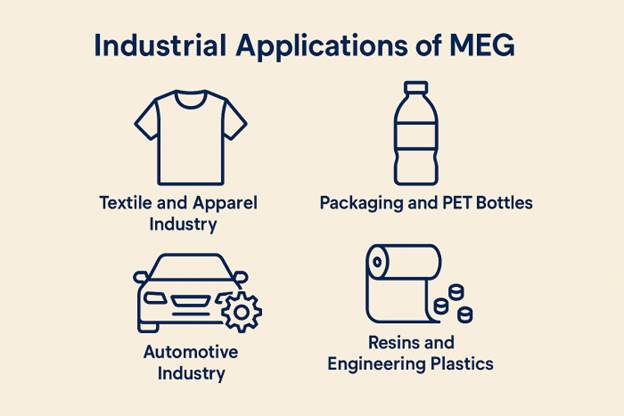
Textile and Apparel Industry
The biggest part of MEG consumption is the production of polyester fibers used in clothing, carpets, upholstery and other fabrics. The increased demand for affordable and durable textiles has contributed greatly to Meg’s growth.
Packaging and plastic bottles
Plastic bottles for beverages, water and food packaging rely heavily on Meg as raw materials. MEG demand continues to increase in this segment as global consumption of packaged products increases.
Automotive Industry
Due to the properties of antifreeze, Meg is an important component of engine coolant. It maintains effective heat transfer in car engines while preventing freezing in cold conditions.
Resin and Engineering Plastics
Industrial resins, adhesives and clear plastic films are also made from meg as raw materials. These materials are widely used in the construction, electronics and packaging industries.
New Applications
Beyond traditional applications, Meg has also attracted attention in the medical and medical sectors, where it is used in the production of specialty chemicals and pharmaceutical formulations.
Comparison with other glycols
MEG is the most widely consumed glycol, but other derivatives such as diethylene glycol (DEG) and triethylene glycol (TEG) are also present.
Deg is mainly used in fabric softeners and detergents. TEG is widely applied as a moisture absorber in natural gas processing. However, Meg dominates the global glycol market for its wide range of industrial applications.
Global market trends
The driver of growth
Several factors have contributed to a steady rise in MEG demand.
Expanding the textile and polyester industry. Increased consumption of pet packaging in the food and beverage sector. Growth of the automotive industry in developing countries. Strategic investments in petrochemical projects in Asia and the Middle East.
Regional Overview
China remains the largest consumer driven by polyester production. The Middle East has strengthened its role as a major supplier. Europe and North America continue to consume meg for textiles, packaging and automotive use.
Challenges and opportunities
Important issues
Crude oil and ethylene price fluctuations have a direct impact on MEG costs. Fierce competition among global producers.
New opportunities
Increased demand for sustainable, recyclable packaging solutions. Expanding new consumer markets in Asia and Africa. Technological innovation in polymer and resin production.
Importantly, global supply chains are also affected by international trade practices. The fluctuating tariffs, logistics challenges and regulatory barriers underscore the need for businesses to adopt efficient import and export operations to ensure a stable MEG supply chain.
Iranian meg market
Iran’s active textile, automotive and packaging industries require a consistent supply of MEG. Some of this demand is met through domestic production, but also a significant share is met through imports. As a result, the role of trustworthy trading companies in ensuring quality and continuity of supply is becoming increasingly important.
Among them, companies such as Ishtar Company are actively working to import MEG and supply local industries. Leveraging international connections, such companies provide access to standard grade MEGs that meet the requirements of downstream producers.
Conclusion
Monoethylene glycol (MEG) is the foundation of many industrial sectors, from textiles and packaging to the production of automobiles and chemicals. Due to the growing global demand and its important role in everyday products, MEG remains one of the most important derivatives of the petrochemical industry.
While the market faces challenges such as price volatility and global competition, growth opportunities, particularly in the recyclable packaging and consumer market expansion, continue to drive investment and consumption.
In countries like Iran, ensuring a stable supply of MEG is essential to maintaining industry growth, and the presence of specialized trading companies plays an important role in meeting this demand.
This article is an advertisement and Mehr’s news agency has no opinion on its content.