
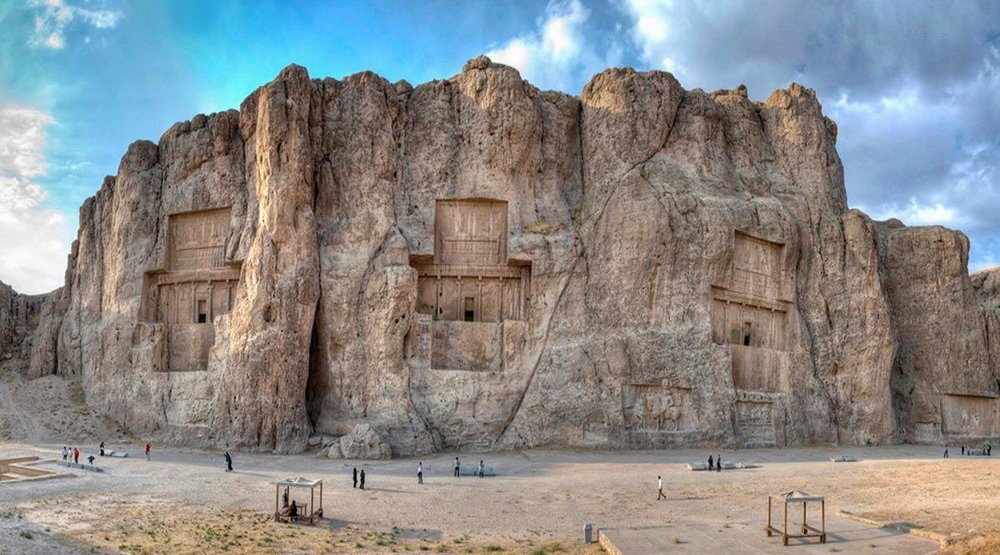
Tehran – Archaeologists have discovered funeral inscriptions related to studying abroad during the late Sasanian period at the archaeological site of Naqsh-e Rostam in Malvdasht, southern Iran.
Written in the Pahlavi script and engraved horizontally on the rock next to Studying abroad belongs to the category of funeral texts.
Historian Abolhassan Atabaki told local media that the inscription consists of seven lines, but has been heavily damaged over time, making it difficult for many characters to read. “This text contains the names of the deceased individuals who ordered the construction of this deposit,” Atabaki told Jamaran News Outlet, with the preliminary study dated works from the late Sasanian era.
Sasania history expert Najime Ebrahimi said it was the financial burial method of the time. The practice involves first placing the corpses on the mountain peaks, cleaning the flesh by cleaning birds and animals, and then depositing sun-soaked bones in a niche of stones carved into the cliff.
This method maintained the sanctity of elements such as soil that Zoroastrians consider sacred,” she said.

Ebrahimi pointed out that most known examples are in the central Marvdasht around the ancient city of Estakul and the Naqsh-e Rostam area, including sites such as Hajjiabad and Garmabad, where more than 100 bone niches have been documented.
Naqsh-e Rostam, a cliffside necropolis in the province of Fars, has been cut off the rocks of four Achemenid Kings, including Darius I, and contains many salvation from the days of Elamite, Achemenid and Sasanian. The site has long been considered a religious and cultural center. There are structures such as the Ka’ba-ye Zartosht, which reflect inscriptions, relief, and its importance in pre-Islamic Iran.
Archaeologists say the discovery of funeral inscriptions on the site may shed new light on Sazania’s late Zoroastrian burial practices and beliefs about cleansing and afterlife.
The name Naqsh-e Rostam has been translated into “Photos of Rostam” and pays homage to the legendary Iranian hero celebrated with Shahnameh and Persian Mythology. In ancient times, locals accidentally portrayed the scenery in which the sculpture under the tomb was depicted from the story of Rostam.
morning