
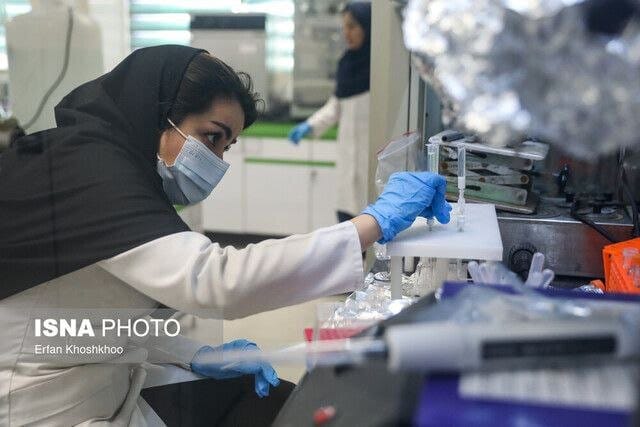
Tehran – Iran and China will support faculty in implementing 10 research projects following the fifth joint call by the Iranian National Science Foundation (INSF) and China National Natural Science Foundation (NSFC).
Grants worth 40 billion rials (approximately $45,000) for each research project will be allocated to the following areas, Isna reports:
1. Traditional medicines and medicinal plants:
Evidence-based integration and standardization of traditional Chinese and traditional Persian medicine for major diseases. Sustainable medicinal plants: ecological cultivation, biodiversity, and resilience. Application of digital and AI tools in classification, analysis, and clinical research of traditional medicines and medicinal plants.
2. Energy:
Renewable energy; Highly efficient use of traditional energy; Energy-related materials; Storage technology; Application of artificial intelligence in the energy sector.
Recent joint efforts
Supported by the Iranian National Science Foundation and the China National Natural Science Foundation, the Iranian and China workshops were held on May 31 and June 1, focusing on new ways to increase climate change resilience.
The workshop entitled “Emerging Technologies and Method for Climate Resilience” is hosted by Sharif University of Technology and Chongkin University in China. It is conducted in person and online in English. The main objective of the workshop is to identify the most innovative ways to enhance the city’s climate change resilience, the IRNA reported.
The workshop focuses on climate-responsive urban design and technology, climate risk management, risk, urban energy transition, climate recovery, water resilience, integrated systems planning, smart governance, social adaptation to climate change, and new technologies to manage climate system modeling to assess and predict climate change.
It is also highlighted in the development of collaborative solutions, international cooperation and collaboration, and joint solutions to enhance urban resilience using big data in artificial intelligence, machine learning, and climate change, and analysis and adaptation of sustainable infrastructure.
According to the former permanent representative and ambassador of the Food and Agriculture Organization (FAO), climate change has had a major impact on the agricultural sector and food security in many countries, affecting rainfall patterns, pollination, flowering, and even harvest times.
In some parts of the country, temperatures have risen 2 degrees, but the global maximum temperature is 1.5 degrees.
Studies show that once a planet’s temperature rises, the amount of evaporation increases by 23%, which has a negative effect on the agriculture and livestock sectors.
Climate change also changes plant growth patterns and disrupts the nutritional value of crops, he emphasized.
Furthermore, the unexpected effects of climate change, such as drought, floods and landslides, all have impacted food security.
Following the fourth joint call by the INSF and the NSFC, Iran and China supported the implementation of 10 of the 136 proposed research projects.
These projects covered three areas of energy: regenerative medicine (bioengineering or materials for regenerative medicine), and the environment (treatment of water and solid waste).
In addition to these research projects, three of 21 joint workshops on industrial engineering, advanced materials, climate change in construction, artificial intelligence and big data have been approved.
The proposal was initially discussed in countries. The specialized working group then evaluated the project with the International Committee. The results were then exchanged for the Chinese Academy of Sciences.
mt/mg