
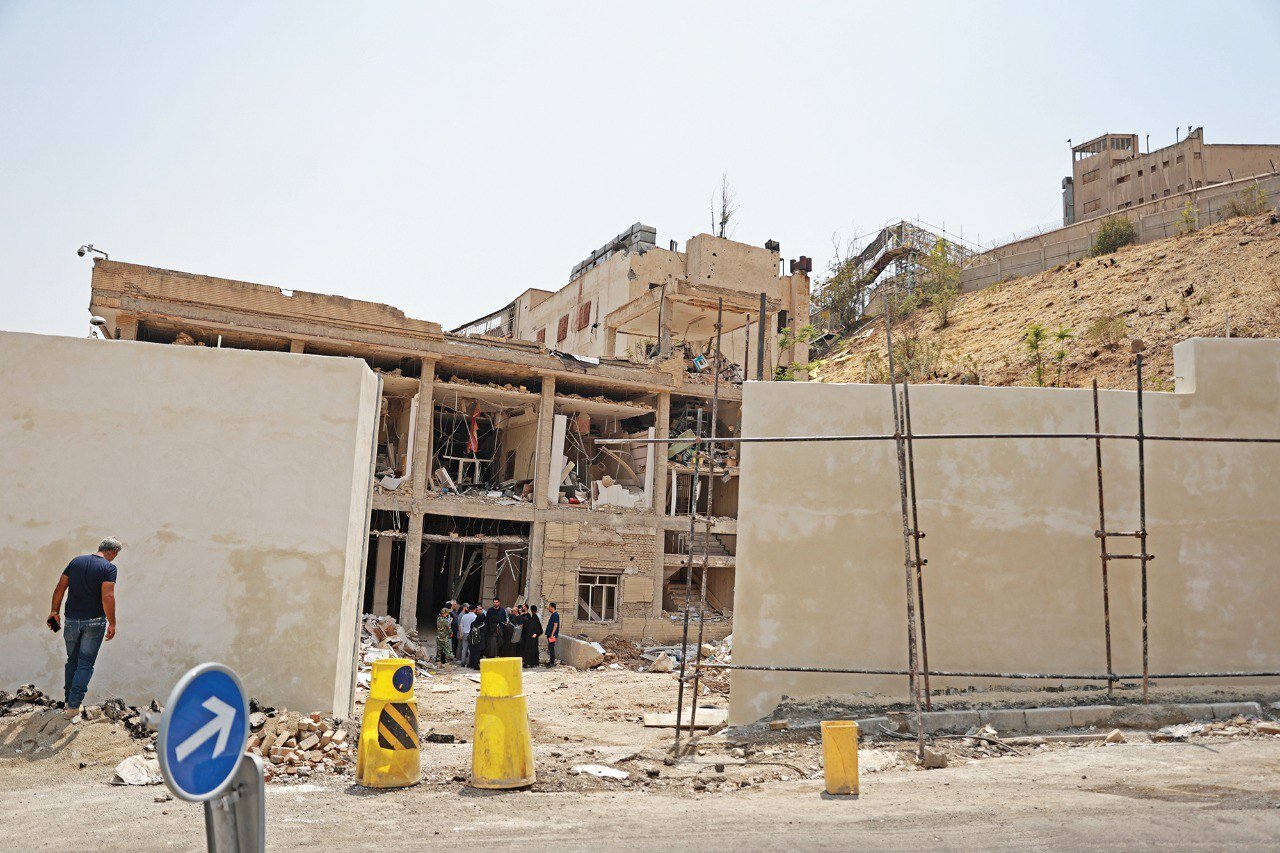
Tehran – When I visited Tehran’s Evin Prison with about 15 other journalists, I toured three heavily damaged buildings. Each structure retained its own story, but all the emotions poking out in the background were the same: sadness, mistrust, anger.
One day before the war between Iran and Israel, Evin prison, which was attacked by Israeli missiles on June 23, was stopped. Israel calls this law – war crimes under international law – a form of “symbolic attack” and liberation (whatever it means). The attack has proven to be the most deadly strike against Iran during the war, killing 110 people, hundreds of people physically injured, and countless others tackling psychological trauma.
The first stop on that hot, sunny day was the prison visit area. One of the workers accompanying us said the area was “cleaned.” This is a comment that came into the air as I stared at the faint hint of what likely was the source of joy for fallen walls, mountains of tiled rubs, and those once locked up in prison walls. “The attack hits around noon, visiting times and crammed with families,” the worker recalled in a heavy voice. He had told the story several times, but it seemed not to be easy for him. “I remember one prisoner seeking flowers. His wife and young daughter were there. I was hoping he would be released and attended his court session for financially related crimes from his home.” “When the missiles rained, I rushed to the basement with some of the prisoners, who clenched those flowers and didn’t stop crying. After the dust settled, he searched the family and eventually found their burning bodies.
The workers requested security guards, who were standing a little distance from the construction workers, to join the group and share their experiences of the attack. The guard hesitated at first, but after the journalist stuck, he finally agreed to speak. “I haven’t slept well since that day. Every time I close my eyes I can see the faces of the soldiers who were under my command,” the soldier he mentioned was a young man in his early 20s who had been compulsory military service after completing his bachelor’s degree. He joined the workforce and after completing his services it was to start a family with the girl he liked. “Alileza was very close to one of the impact zones. I was in another part of the prison that day. When I went to check out his guard tower, I found his head hanging from the rest of the wall. His body was thrown into the apartment,” the guard said. The building was at the bottom of a hill, at least 500 metres from the prison. The Guard Tower where Alireza was stationed was no longer there.
As we walked towards the second place, the silence fell over the group. Reading about the Evin prison attacks online and in the newspapers was one experience, but witnessing devastation and hearing explanations from men struggling to contain their tears was completely different. I remember feeling a sense of numbness as if the reality of uninterventional, destructive forces in our community had truly subsided without intervention from international organizations.
We spent a short time near the second location but were unable to enter due to the instability of the building. The building is a manager and houses social workers and office staff. “Eighteen female social workers have passed away here,” one member of the prison office said. He was waiting for us near the site. “One of my colleagues had her five-year-old son work that day. I believe he was sick and she wanted to keep an eye on him,” the man said. The social worker he introduced, Zahra Ebadi, was well respected in her field, known for her tireless efforts to secure the release of prisoners and help them reintegrate into life after writing. “After the attack, a large crowd gathered outside the complex. I was standing with the crowd and trying to calm them down as my murdered colleague’s sister recognised me and approached me. She continued to ask about her sister and nephew. The bodies of Zara and her son were recovered from Kura Rub two days after the attack. Her husband identified her with her wedding ring. Her son was found in the arms of another female colleague.
The third place we visited was a prison hospital. It was as badly damaged as any other site, but there were also bloody bills on the walls. By the time I arrived at this last place I was exhausted and disappointed. I wanted to finish the tour and process my thoughts to recover for a while. But what I heard there was a realization that despite this tragedy and that all the other Iranians have endured for thousands of years, we continue to be patient as a solid nation.
Again, the workers explained us the strike and atmosphere. His explanation was not only frightening, but to some extent exciting. “When the administration hit the hospital, it was full of doctors, nurses and prisoners. The scene here was a mess. The body parts and blood were everywhere,” he said. He then expressed his opinion that the Israeli regime was “silly.” “I think Israel attacked Evin’s prison to incite social unrest. What they didn’t expect is that even the prisoners here wouldn’t respond the way they wanted. We are all Iran and when our country is under attack, Iran will be the only thing that matters.” The prison staff spoke about the prisoners provided to security guards and aid workers in the aftermath of the attack. “Israel probably thought the prisoners would run away. But there were very few, most of them out of fear. Most prisoners helped us move. I remember one female doctor whose hands had been amputated. The doctor couldn’t save her hand. But she later shared on social media how the prisoner saved her life and how the country united against its enemies.