
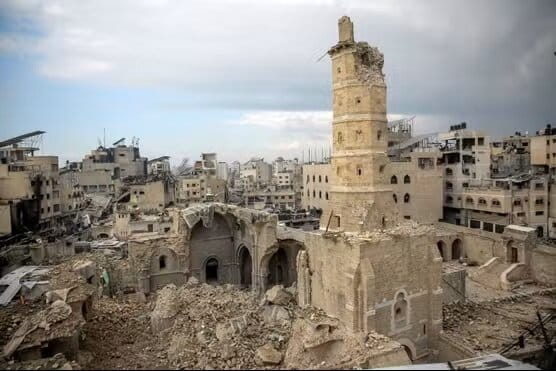
Tehran – A group of prominent Israeli and international archaeologists, researchers and museum curators have issued a harsh open letter condemning the widespread destruction of cultural heritage in Gaza and the West Bank, and accusing the Israeli government and military of violating international law and engaging in a policy of “abolition.”
Signed by scholars including Professor Rafi Greenberg of Tel Aviv University, the letter cites the recent complete destruction of a building that houses the archaeological storage of Gaza’s famous Ecole Vibrick, as a triggering event. The incident required the urgent partial transfer of tens of thousands of archaeological items, and the full extent of damage was still unknown.
“This is a continuation of a policy of destruction and disappearance in the Gaza Strip that targeted heritage sites,” the letter said. It refers to a report in Gaza that “least known military needs are not known” and in Gaza, showing that around 110 historic buildings, archaeological sites and other cultural properties have been severely damaged or completely destroyed.
Scholars argue that they violate the rules of war as listed in international treaties, including the 1954 Hague Convention on the Protection of Cultural Property in the Case of Armed Conflicts ratified by Israel.
The letter spreads criticism beyond the current conflict in Gaza to address the longstanding situation in the West Bank. It describes “ongoing violations of Israeli international law in occupied areas” and constraints on Palestinian archaeological authorities. This led to “disregarding many cultural property, appropriation by nationalist elements, and partial or total destruction.”
Given what they call “immediate planned destruction of Gaza,” the signatories issue a three-point call to urge Israeli government and the military to action.
It immediately halts the demolition of the Gaza Strip, the destruction of its cultural treasures, and attempts to cleanse non-Jewish beings.
Resuming compliance with international law, particularly treaties that determine the treatment of armed conflicts and cultural heritage during occupation.
It ends the rules of settlers’ gangs and the continued annexation of heritage in the West Bank, allowing for archaeological enforcement of Palestine in areas controlled by Palestinian authorities.
The letter concludes by framing the local heritage as a shared responsibility by saying, “Palestinian Heritage/Israel land belongs to all indigenous peoples of the land… Muslims, Christians and Jews live in this land and have supported it for centuries,” and concludes by framing the local heritage as a shared responsibility. The open letter adds important voices from the academic and heritage community to the growing international concern over the preservation of cultural history amid ongoing conflict.
morning