
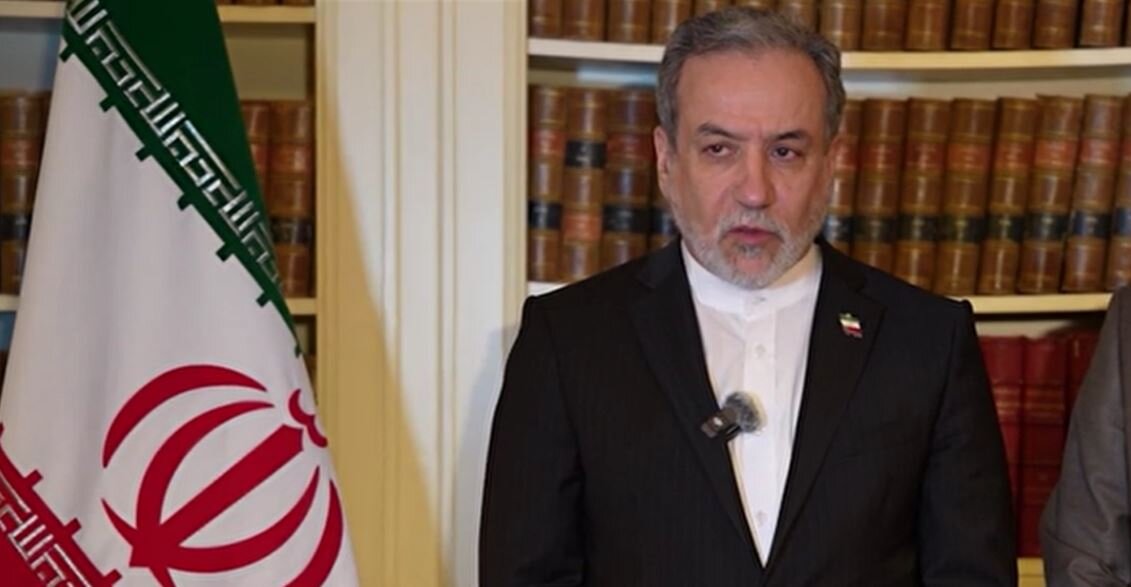
TEHRAN – Iranian Foreign Minister Abbas Araghchi and his French counterpart did not show any apparent goodwill during talks in Paris this week. In fact, neither side has released any footage or photos of the clash. However, diplomats have no hesitation about repeating talks in the future.
After arriving in Tehran, Aragushi said that the purpose of his visit to France was to continue talks between the two countries in various bilateral, regional and nuclear fields, as well as European areas such as Ukraine.
In an interview with the Islamic Republic of Iran Broadcasting Board (IRIB), Iran’s top diplomat said that although Tehran and Paris have differences on various issues, political negotiations have continued. “When it comes to bilateral issues, the issue of Mr. Esfandiari’s freedom is the most contentious issue between us,” he said.
Mahdiye Esfandiari, a recently paroled Iranian academic, was detained in France for nearly eight months solely for supporting Palestinians and the Palestinian cause on social media. The Paris public prosecutor’s office accused her of “glorifying terrorism.” Some of her 2023 posts, which resurfaced after her detention, called for an end to “Israel’s slaughter of children in the Gaza Strip.” The United Nations has announced that at least 50,000 children have been killed or injured in Israel’s war in Gaza since October 2023.
The Iranian government is seeking the extradition of Esfandiari, while France is seeking the repatriation of two spies who remain detained in Iran. Analysts claim that French authorities arrested the Iranian professor to facilitate exchanges with intelligence agents.
The Iranian nuclear issue was also on the agenda during the Paris negotiations. “During the discussion on the nuclear issue, I outlined our country’s position,” Aragushi said, adding, “At this point, the US approach makes balanced and fair negotiations impossible.”
Iran held the final round of nuclear negotiations in April, with Washington as the other party and Oman as the mediator. Talks were suspended ahead of a scheduled sixth round after the United States and Israel launched a 12-day bombing campaign against Iran on June 13, targeting nuclear facilities and civilian and military infrastructure. The attack killed around 1,100 people, most of them civilians.
Tehran says it is willing to continue negotiations, despite what many Iranians see as a betrayal of Washington’s diplomacy. However, the United States did not budge on its nuclear demands, insisting that Iran stop enriching uranium, and adding conditions for non-starting, such as limiting Iran’s missile launches.
Iran’s missile arsenal has long been one of its most important defenses against Israel and the United States. During the June war, Israel and the United States called for a cease-fire following Iran’s large-scale offensive in occupied territory and attack on the largest US military base in West Asia.
“The Islamic Republic of Iran has always been open to negotiations and has never backed away from the diplomatic process. However, negotiations have their own rules and negotiations can only take place and be successful if those rules are respected,” Araghchi said.
The French Ministry of Foreign Affairs issued a statement regarding the meeting, saying that the meeting between Aragushi and Jean-Noël Barrault included a call for the Iranian government to resume nuclear negotiations. “The ministers recalled France’s firm commitment to working with its European and American partners towards a diplomatic solution,” the statement said.
France, Germany and Britain have led their own pressure campaigns against Iran since the war ended. In August, the E3 activated a mechanism to reimpose pre-JCPOA UN sanctions against Iran, and earlier this month helped the US craft an anti-Iranian resolution at the International Atomic Energy Agency (IAEA).
The three European countries are signatories to the 2015 Iran nuclear deal, officially known as the Joint Comprehensive Plan of Action (JCPOA), which lifted sanctions in exchange for limits on Iran’s nuclear activities. But after Washington withdrew and reimposed sanctions in 2018, they failed to take practical steps to uphold the agreement. They also refused to condemn the US and Israeli attacks in June, despite them being completely illegal under the UN Charter and the IAEA mandate.
Meanwhile, Europe has also called on Iran to disclose the damage to targeted nuclear facilities and the whereabouts of its enriched uranium stockpiles, without addressing Iranian concerns that such disclosure could prompt further attacks by Israel and the United States.