
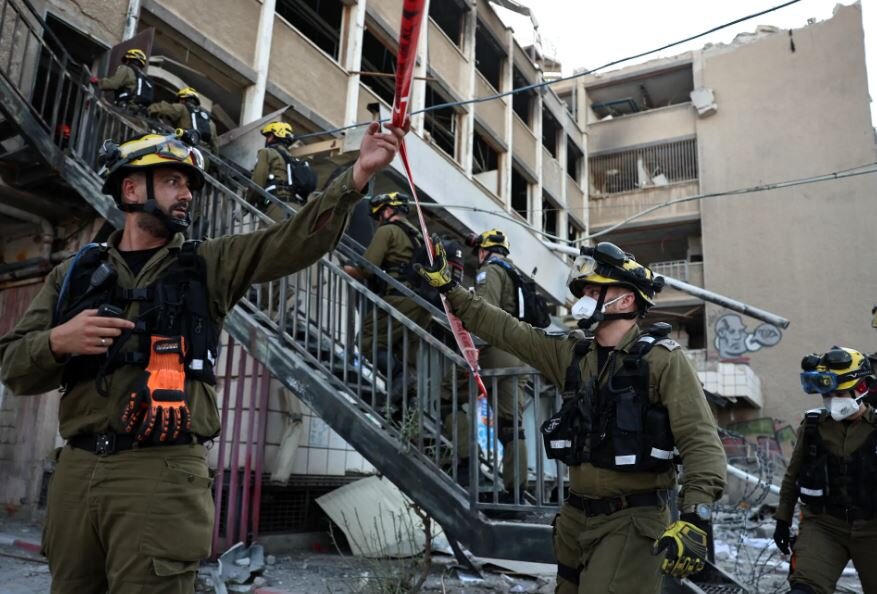
Tehran – The recent 12-day war between Iran and Israel has been a change in earthquakes, not just a flare-up in the unstable Western Asia region. The exchange of missiles and drones continued less than two weeks, but the war revealed deeper truths about a new era of power, deterrence and hybrid warfare, where social media stories could become just as important as military strikes.
How it started: Surprising attacks and quick responses
Israel was the party that started the war. Earlier on June 13, it launched airstrikes on Iran’s nuclear, military and civilian infrastructure, with Prime Minister Benjamin Netanyahu later claiming that the administration had implemented a “first-take” move to stop the development of nuclear weapons.
However, Iran’s retaliation was quick and unprecedented. Hundreds of missiles and drones rained on the occupying territory from the first day of the war to the final minutes that led to the de fecto ceasefire. At least 22 offensive waves were used to “punish” Israel, as promised by the leader of Ali Khamenei, the leader of the Islamic Revolution. For the first time in its history, Israel’s famous air defense struggled under a constant barrage of barrages, despite several other regions and Western troops coming to rescue. By the end of the war, the regime’s long-standing myth had been crushed.
One Three Wars: Military, Media, Mind
Beyond the explosion, the conflict takes place on three interlocking battlefields, each shaping the outcome as much as the missile itself.
1. Military War – A high-tech showdown in which Iran shattered hopes by launching its first direct attack from its own soil and proving that its long-range missile capabilities could penetrate Israel’s famous iron dome. Meanwhile, the Israeli response (a combination of air interception and a secret cyber strike) revealed both its technical prowess and unexpected vulnerabilities. The rules of involvement in West Asia were changing overnight.
2. Media War – This conflict saw the birth of the first true “hashtag war.” Iranian media flooded telegram channels with missile launch videos edited like Hollywood action scenes, and Israeli influencers turned bomb shelter selfies into symbols of resilience. Both sides hired an army of online trolls, but the real surprise was how the civilians became frontline reporters. They filled missile trails with smartphones, created leader memes, and turned social platforms into real-time war rooms.
3. Psychological Wars – The deepest battle was fought in the hearts of the citizens. In Tel Aviv, the sirens’ lament has shaken Israel’s sense of security to its core. If Iran can strike a will, will the government be able to protect its citizens? From Riyadh to Ankara, leaders looked closely throughout the region. The psychological barriers to the direct conflict between Iran and Israel have broken down, rewriting the playbook of the power struggle in West Asia.
This was the most powerful hybrid battle. The launch of a single missile can be a military tactic, viral video clip, or a psychological turning point. Those who master not only the physical battlefield but all three dimensions will have the advantage in the coming conflict.
Mapping of Hebrew-speaking discourse: Three important stories
An analysis of Hebrew discourse through the war between Iran and Israel reveals three dominant stories.
1. The Story of Pro-Netanyahu: This faction projected the image of a powerful, victorious Israel focused on eliminating the Iranian threat. This faction was hierarchical and excelled in narrative production rather than broad scope.
Includes important themes:
– Israel’s absolute military superiority
– Left wing incompetent
– The sacred and historical legitimacy of war
-Netanyahu’s charismatic leadership
– Integration with the Western Global Order
Alongside these were praise for military operations, left-wing ock laughs, and war justification within the deterrence framework. The story sought to strengthen Netanyahu as Israel’s only savior, praise religious symbolism, American leaders (particularly Trump), and brand their opponents as “traitors.”
2. Anti-Netanyahu tales: In contrast to the authoritarian narrative of the institution, Netanyahu critics presented Israel in a fragmented and crisis. They outperformed the Pro Netanyahu faction in their network width and diversity.
Contains recurring themes:
– Netanyahu’s war exploitation for personal gain
– The collapse of public trust
– Security and economic incompetence
– Government media hypocrisy
– The need for structural reform
The discourse criticized Netanyahu’s personality, the cult of exposed corruption, warned of internal collapse and called for a return to “democratic” principles.
3. Pro-iran’s Story: The story described Iran’s actions in the war as not only defensive, but also retaliatory and even liberating. This group was a small number, but still existed.
Includes the central theme:
– Iran’s military power and legitimate response rights
– The decline in Israel’s power
– Israeli military incompetent
– Dividing within the Zionist Association
– The ultimate failure of Zionism
Through symbolic language, the discourse fused the threat of Iran’s strength with the glory, portraying Israel as a vulnerable and decaying entity.
The battle ends, but the story endures
It’s simple, but the 12-day war was a strategic litmus test for Iran and Israel. Iran showed off the missile’s capabilities and deterrent, but Israel has reconditioned military media equipment despite its vulnerability.
However, the most enduring conflict lies in the cognitive, psychological and debateful layers. In this field, public opinion, narrative warfare and digital activity have proven as decisive as weapons. Combining aspects of network data mining, discourse analysis and warfare, this report shows that modern warfare was not only fought on air and land, but also takes place on the battlefield of meaning, stories and audiences. The future of this conflict will depend more than ever on the interaction between hard forces and soft authority.