
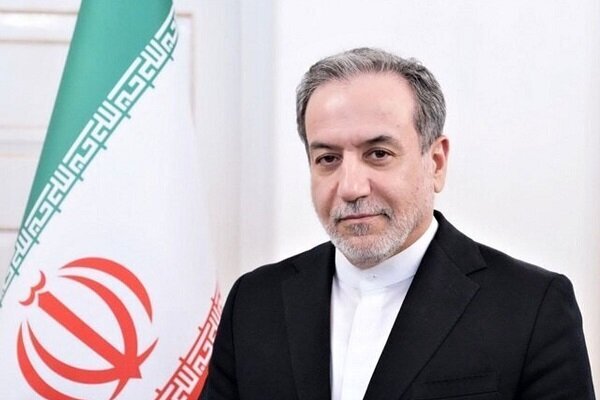
Seyed Abbas Araghchi submitted opinions to Asahi Shimbun and other Japanese media before celebrating the 80th anniversary of the Hiroshima and Nagasaki atomic bombs.
“Japan and Iran must lead the global movement for the complete abolition of all WMDs, nuclear, chemical and biological abolition,” he writes.
He noted that Iran shared the pain and suffering of WMD with Japan as it targeted chemical weapons during the war with Iraq in the 1980s.
He called the atomic bombs in Japanese cities on August 6 and August 9, 1945 “a proof of the devastating power of nuclear weapons.”
“Many survivors suffer physical and psychological wounds that have not been healed at that time,” writes Araguchi. “They have lived their lives in the shadows of those nuclear flashes, turning their trauma into tireless defenses for peace and disarmament.”
At the NATO summit meeting in June, US President Donald Trump equated the US attacks on three Iranian nuclear facilities that month with the Hiroshima and Nagasaki atomic bombs.
He told reporters, “It ended the war. I don’t want to use the Hiroshima and Nagasaki examples. But it was essentially the same thing. It ended that war.”
Araguchi had trouble with Trump’s comments, saying, “The statement was more than a historical misstep. It was a deep humiliation for the memories of the dead and the dignity of those still living with the consequences of those bombings.”
He added in Iran that “the comparison was received with certain pain and anger.”
During the Iran-Iraq War, during the Iranian-Iraq War, the city of Saldasht, northwestern Iran, was attacked by mustard gas from Iraq, killing around 130 people, leaving thousands of people permanently disabled.
Based on that experience, Aragut wrote that Iran “suffers from the effects of WMD in its own modern history.”
He added: “There are few countries as deep as us, understand the irreversible impact of WMD. We will never say it again.”
Aragut did not address Iran’s claim that its uranium enrichment programme was a peaceful purpose.
Israel had to bomb Iran’s nuclear facilities and air defense systems to remove the threat of Iran’s nuclear weapons and ballistic missiles.
Iran retaliated with a ballistic missile attack on Israel. The US joined Israel, ally, and bombed Iran’s nuclear facilities.
After a 12-day battle, a ceasefire agreement was reached by Iran and Israel.
MNA/PR