
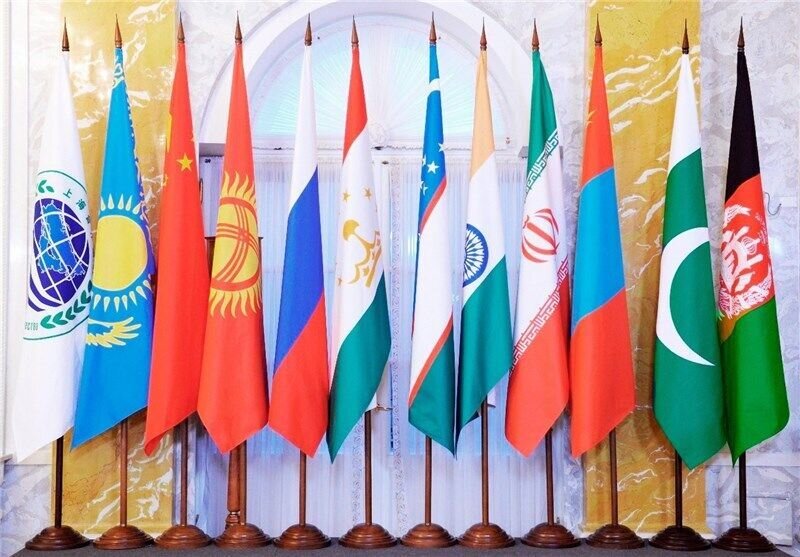
MADRID – The 25th Summit of the Shanghai Cooperation Organization (SCO) in Tianjin, China, marks a key moment for Iran and its regional strategy.
Iran, who became a full member during the late Ebrahim Raisi’s presidency in 2024, is now integrated within a forum restructuring the balance of Eurasian power. Despite sanctions and Western pressure, Iran has discovered a platform to broaden its economic horizons with its SCO, strengthen its political influence and improve its security outlook.
With founding members such as China, Russia, India and Pakistan alongside Central Asian countries, SCO operates as a coalition without absolute hegemony, privileges pragmatism and shares its interests on strict ideological integrity. Full Iran’s approval, which has been left for years due to UN Security Council sanctions, reflects the willingness of its members to expand its organization’s influence into Western Asia, transforming Iran into a bridge between the east and west. Therefore, active participation in the forum is not only diplomacy, but also economic and strategic in nature.
Economy: Opportunities and Challenges
From an economic standpoint, Iran faces a complex environment. On the one hand, SCO membership opens the door to investment and trade in strategic sectors, particularly with China and Russia, such as energy, infrastructure and technology. Participation in flagship projects such as the Belt and Road Initiative has positioned Iran as a key hub for Eurasian trade routes, strengthening land and maritime connections that can alleviate some of the constraints imposed by Western blockades and sanctions.
Iran’s abundant natural resources, particularly oil and gas, can further attract investment and strengthen its role as an energy supplier within the block. However, this opportunity also requires internal adjustments, such as improving the business environment, modernizing infrastructure, and ensuring macroeconomic stability. Access alone does not guarantee results. Iran needs to leverage these openings and improve its ability to effectively integrate into multilateral economic initiatives.
Furthermore, within the framework of sustainable development, SCO-backed cooperation in renewable energy offers another area of expansion. If this process is supported by effective governance and long-term strategic vision, Iran can diversify its economy and overcome structural constraints by matching the technical strength of its partners like China to global demand and leveraging its partners like China.
Politics and Safety: Practical Blocks
Political, the SCO emphasizes mutual respect and national sovereignty. The Tianjin Summit reaffirmed this stance, including joint condemnation of Israeli invasions, particularly attacks targeting Iranian territory that destabilizes the region. This political solidarity provides valuable diplomatic support for the Western bloc, hostile to Tehran, even if it is not unanimous on all issues.
On the security front, Iran has used the forum to strengthen its counterterrorism coordination, addressing cross-border challenges such as extremism and drug trafficking, particularly in Central and Western Asia. The SCO is not a military alliance or a collective defense agreement. This is a form that benefits Iran by enabling cooperation without compromising autonomy. The partnership between Russia and China in these areas amplifies Iran’s ability to shape conflict dynamics while maintaining sovereign decisions.
It is also worth noting that in response to US tariff and protectionist policies under Donald Trump, the practical reconciliation between China and India, with the SCO framework, is a traditional rival. This shift will broaden trade and cooperation opportunities for all members, including Iran, which sees opportunities to deepen access to Asian markets in this evolving relationship and strengthen its geopolitical integration.
Flexible multipolarity without rhetoric
It is important to emphasize that SCO’s multilateralism is neither a monolithic anti-Western nor a closed coalition. In contrast to simplified or propaganda interpretations, organizations link states with different political systems, diverse economic interests, and various strategic priorities. In Iran, this format is advantageous and allows for concrete advantages to be ensured without diluting identity.
Tehran demonstrates practical diplomacy, balancing resistance to external pressure, and showing its pursuit of functional alliances and agreements. This delicate balance allows Iran to promote its interests without being drawn into direct conflicts and dependence that could undermine the privileges of the state.
At the same time, SCO continues to serve as a forum for regional cooperation, joint development and stability. The function of today’s special connections in states like Iran has pushed international pressures and domestic orders.
Challenges and the future
SCO’s Iranian membership is a major scope of strategic steps, paving a new path for cooperation and integrating Eurasian roles as key actors. The expansion of forums with diverse profiles and states of priorities naturally calls for coordination of dialogue interests and flexible mechanisms. Here, Iran can use its diplomatic experience to act as a bridge between different positions and strengthen its impact on the local agenda.
Bloc diversity is far from being a barrier, representing the opportunity for Tehran to project political initiatives and strengthen economic relationships with its strategic partners. The SCO will provide privileged space to expand trade routes, attract investment, promote infrastructure projects and integrate energy partnerships that will increase Iran’s resilience and self-sufficiency in the face of external pressures.
Geopolitical, Iranian participation should not be understood only in defensive language. On the contrary, countries can play a constructive role in shaping common projects that contribute to regional development, security and stability. Iran’s commitment to deeper integration into Eurasia places it in a unique position without abandoning its independence or strategic identity. It is to actively contribute to the construction of a more balanced, multipolar order that reflects today’s reality.